Why the Operator You Choose Matters
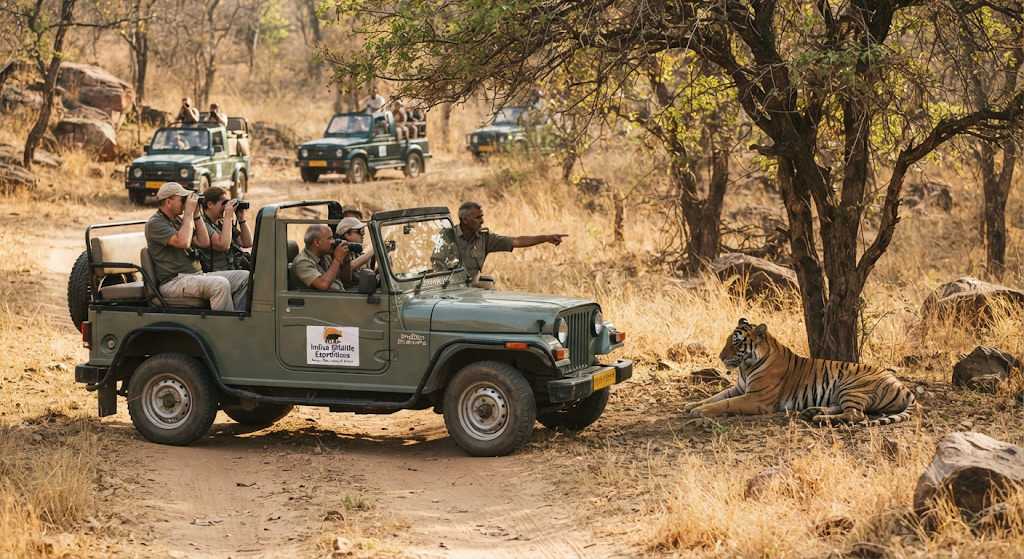
Tiger reserves and sanctuaries run on strict carrying-capacity rules — limits on how many vehicles and tourists can enter at a time. The National Tiger Conservation Authority’s own 2012 guidelines require tourist vehicles to stay a minimum distance apart to avoid crowding animals, and cap how much of a reserve’s area can be used for tourism at all. A good operator works within these limits. A bad one pressures forest guides to bend them for a better photo.
Recent Rules Are Getting Stricter, Not Looser
In November 2025, the Supreme Court tightened controls further — pushing tiger safaris toward buffer and non-forest land and banning night tourism in core zones. That direction matters for travellers too: an operator who still promises unrestricted night drives or guaranteed close-up sightings in core areas is not one working within current rules.
Signs of a Responsible Operator
- Follows official carrying-capacity and vehicle-distance rules without complaint
- Employs and trains local guides and drivers
- Limits group size and vehicle speed inside the park
- Briefs guests on not baiting animals, playing loud sounds or leaving the vehicle
- Supports, or is transparent about, conservation or anti-poaching contributions
- Doesn’t promise a guaranteed sighting — no ethical operator can promise wild animal behaviour
Questions to Ask Before Booking
- How many vehicles does your group send in per slot?
- What happens if we don’t spot the animal — do you follow the vehicle to force a sighting?
- Are your naturalists trained and are guides from the local community?
- What’s your policy on maintaining distance from animals?
Red Flags
- Ads promising “100% tiger sighting”
- Vehicles clustering around one animal
- No mention of forest department permits
- Guides encouraging loud calls or off-road driving to chase wildlife
Bottom Line
A responsible safari operator protects the very thing you paid to see. Choosing one carefully means fewer crowded jeeps around a stressed animal — and a better, more honest wildlife experience for you.


