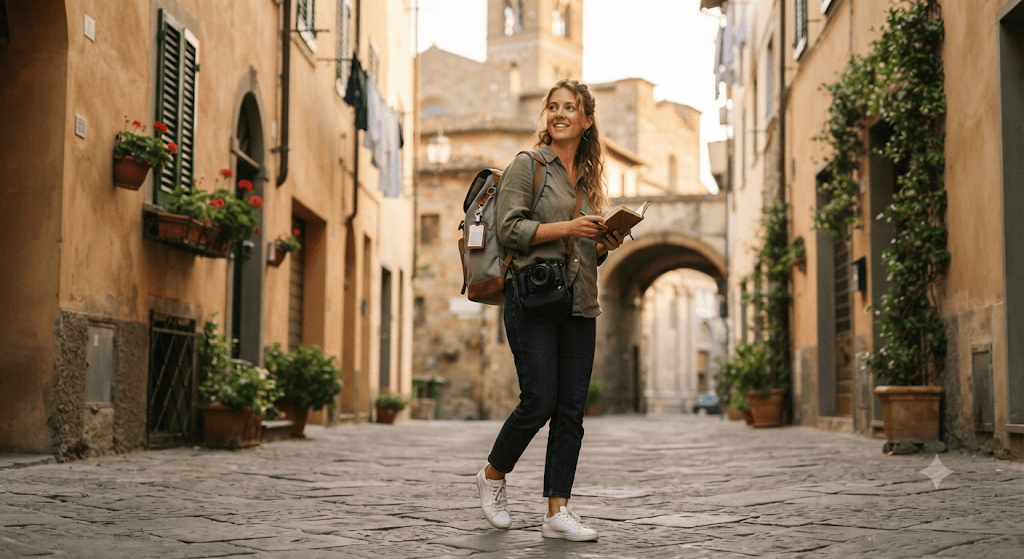
Solo travel is marketed as liberation — just you, a bag, and the open road. And it is freeing. But talk to almost any woman who’s traveled alone, and you’ll find a second, invisible itinerary running alongside the visible one: a set of quiet rules she follows without even fully realizing it.
Checking In Before It Feels Necessary
Many women share their live location with a friend or family member the moment they land somewhere new — not because something is wrong, but as a default habit. A quick “reached safely” text isn’t paranoia; it’s just part of how the trip is planned from the start.
Choosing Accommodation by Safety First, Aesthetics Second
That beautifully photographed homestay with no reviews? Often skipped — not because it isn’t tempting, but because women disproportionately factor in things like well-lit entrances, women-only hostels, or 24-hour reception before booking anything.
Timing the Day Around Daylight
Sightseeing schedules often quietly shift around when the sun sets. Plans to “wander and see where the evening takes me” get replaced with being back at the stay before dark, especially in unfamiliar cities.
Dressing for the Place, Not Just the Weather
Packing lists for solo women travelers often include an extra layer of thought: what will draw less attention here, what’s locally appropriate, what won’t invite unwanted comments — decisions made well before the trip even begins.
Having a Ready Exit Line
“I’m meeting my husband/friend/group in five minutes” is a sentence many women keep on standby, even when it’s not true, simply because it’s often the fastest way to end an uncomfortable conversation without confrontation.
Scanning the Room, Every Room
Walking into a café, train compartment, or hotel lobby and quickly noting the exits, the crowd, who’s watching — it’s such a fast, automatic habit that many women don’t even register they’re doing it anymore.
Why This Matters
None of this means women shouldn’t travel alone — millions do, and love it. But the extra layer of planning is real, and largely invisible to anyone who hasn’t had to carry it. Naming these unspoken rules doesn’t take away the joy of solo travel; it just makes visible the quiet work that goes into making that joy feel safe.