Rural Women and the Fight Against Single-Use Plastic in Local Markets

Why Local Markets Are a Plastic Hotspot

Weekly haats and local vegetable markets are where single-use plastic accumulates fastest — thin bags handed out per item, with no formal waste collection system to catch what’s left behind. In many villages, that plastic ends up burned, buried or washed into fields and water bodies.

Self-Help Groups Stepping In

Across several states, women’s self-help groups have taken on dual roles: producing cloth and jute bag alternatives for sale, and actively campaigning at local markets to get vendors and shoppers to switch away from plastic. The same groups that make biodegradable products for menstrual health or craft cooperatives are often behind these market-level plastic bans too — the skills and the SHG structure carry over.

What the Shift Actually Looks Like

  • Vendors stocking cloth or paper bags instead of plastic, often produced locally by SHG members
  • Leaf-plate and areca-leaf disposable ware replacing plastic plates at local food stalls
  • Market committees, sometimes nudged by SHGs, setting informal “no plastic bag” rules on market day
  • Awareness drives timed around local festivals and weekly market days, when plastic use spikes

The Economic Angle

This isn’t only environmental work — it’s income. Producing and selling cloth bags gives SHG members a product with steady local demand, since markets need bags every single week. That recurring demand is part of why these initiatives tend to stick, compared with one-off awareness campaigns.

What Still Gets in the Way

Cheap plastic remains easier and often slightly cheaper for vendors to access than cloth alternatives, and enforcement of any informal “ban” depends entirely on community buy-in rather than law.

Bottom Line

The fight against plastic in rural India isn’t happening through policy alone — it’s happening market day by market day, led by women’s groups who are both making the alternative and selling the idea.
E-Waste at Home: What Happens to Your Old Phones and Chargers

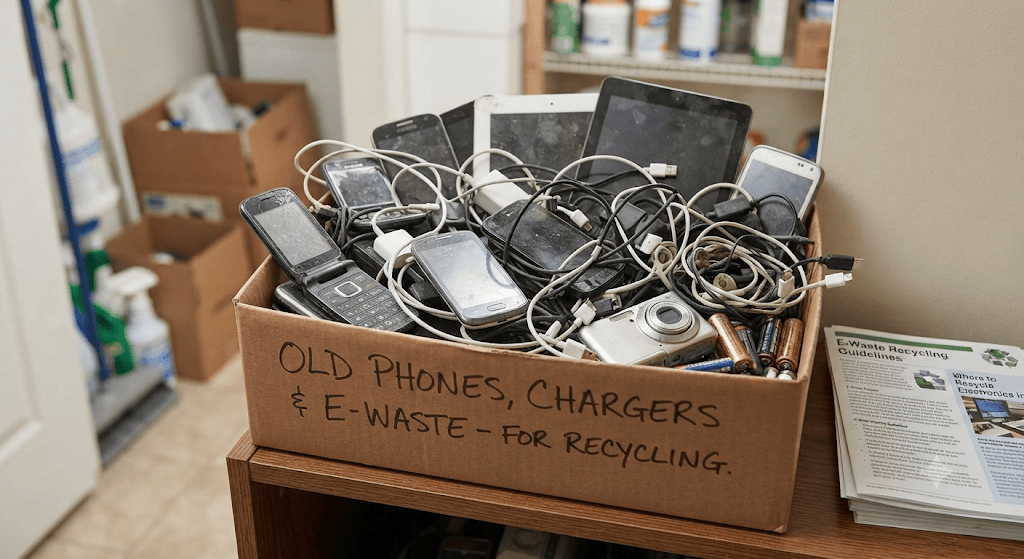
Almost every home has one — a drawer full of old phones, tangled chargers, and cables that no longer match any current device. It feels harmless sitting there, but e-waste is one of the fastest-growing and most under-addressed categories of household waste.

What Happens If It’s Thrown Away Normally

Electronics tossed into regular household trash typically end up in landfills, where components like batteries can leak heavy metals and toxic materials into soil and groundwater over time — a slow but genuinely damaging process that unfolds over years, largely unseen.

Why E-Waste Is Different From Other Trash

Unlike organic or paper waste, electronics don’t break down naturally, and many contain materials — lead, mercury, cadmium — that are hazardous when improperly disposed of, but also genuinely valuable and recoverable when processed correctly, including gold, copper, and other metals used in circuit boards.

The “Drawer Problem”

A huge share of e-waste never even reaches a landfill or a recycler — it just sits unused in homes indefinitely, which isn’t actively harmful, but also means genuinely reusable materials remain locked away instead of being responsibly recycled or the device being reused by someone else.

What Proper E-Waste Recycling Actually Does

Certified e-waste recyclers dismantle devices to separate hazardous components (which are safely processed) from valuable, reusable materials (which are extracted and reintroduced into manufacturing) — a genuinely more resource-efficient process than mining new raw materials from scratch.

Where to Actually Take It

  • Manufacturer take-back programs, which several phone and electronics brands now offer for old devices
  • Certified e-waste collection centers, increasingly available in most Indian cities
  • Retailer exchange or recycling programs, sometimes bundled with a discount on a new purchase
  • Local municipal e-waste drives, held periodically in many urban areas

Before You Recycle: Data Safety

Old phones and laptops often still contain personal data. A factory reset, and ideally removing SIM and memory cards, protects your information before handing a device off for recycling or resale.

Consider Reuse Before Recycling

A working but outdated phone, laptop, or charger may still have real value to someone else — donating functional electronics, or reselling them through a resale platform, extends their usable life before recycling becomes the more appropriate final step.

Bottom Line

That drawer of old electronics isn’t neutral — it’s either a missed recycling opportunity or, if eventually thrown out carelessly, a genuine environmental hazard. A single trip to a proper e-waste collection point turns years of accumulated clutter into responsibly processed material instead.

Plastic-Free Periods: Are Reusable Products Actually Worth It?

Reusable menstrual products get recommended constantly for their environmental benefits, but the practical side of actually switching — comfort, cost, hygiene, learning curve — gets far less honest discussion. Here’s a grounded look at what the switch actually involves.

The Waste Problem With Disposables

A single person using disposable pads or tampons generates a significant amount of non-biodegradable waste over their menstruating years — most of it made from plastic that will outlast the person who used it by centuries. This is the core environmental argument for reusables, and it’s a real one.

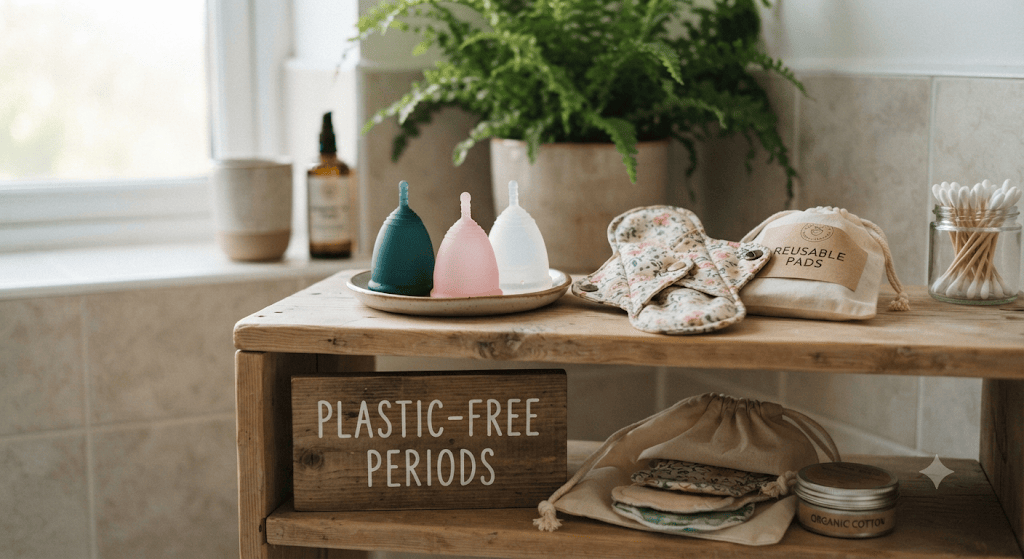
Menstrual Cups: The Learning Curve Is Real

Menstrual cups have the steepest initial learning curve of any reusable option — folding, insertion, and removal take a few cycles to get comfortable with. Most people who stick with it past the first two or three cycles report it becoming easy, but the early frustration is genuine and shouldn’t be dismissed.

Reusable Cloth Pads: The Gentler Switch

Cloth pads function almost identically to disposable pads, just washed and reused, making them a much easier first step into reusable products without requiring any new technique to learn. The tradeoff is needing proper washing facilities and a bit more laundry.

The Cost Math Over Time

Reusable products cost significantly more upfront — a good menstrual cup or a set of cloth pads can cost as much as several months of disposables. But since they last years, not months, the long-term cost is substantially lower, often paying for itself within a year or so of consistent use.

Hygiene Considerations

Reusable products require proper cleaning — boiling cups between cycles, thoroughly washing cloth pads — which takes more active effort than simply disposing of a used product. For people without reliable private washing access, this is a genuine practical barrier, not a minor inconvenience.

They’re Not All-or-Nothing

Many people who switch don’t go 100% reusable — using cups or cloth pads at home and disposables while traveling or in situations with limited hygiene facilities is a common, practical middle ground rather than an everything-or-nothing choice.

Bottom Line

Reusable menstrual products genuinely reduce waste and save money over time, but they come with real upfront cost, a learning curve, and hygiene logistics that aren’t right for every situation. They’re worth trying, but not something to feel obligated to switch to completely — a partial switch still meaningfully reduces waste compared to full reliance on disposables.

Small Daily Habits That Reduce Your Carbon Footprint

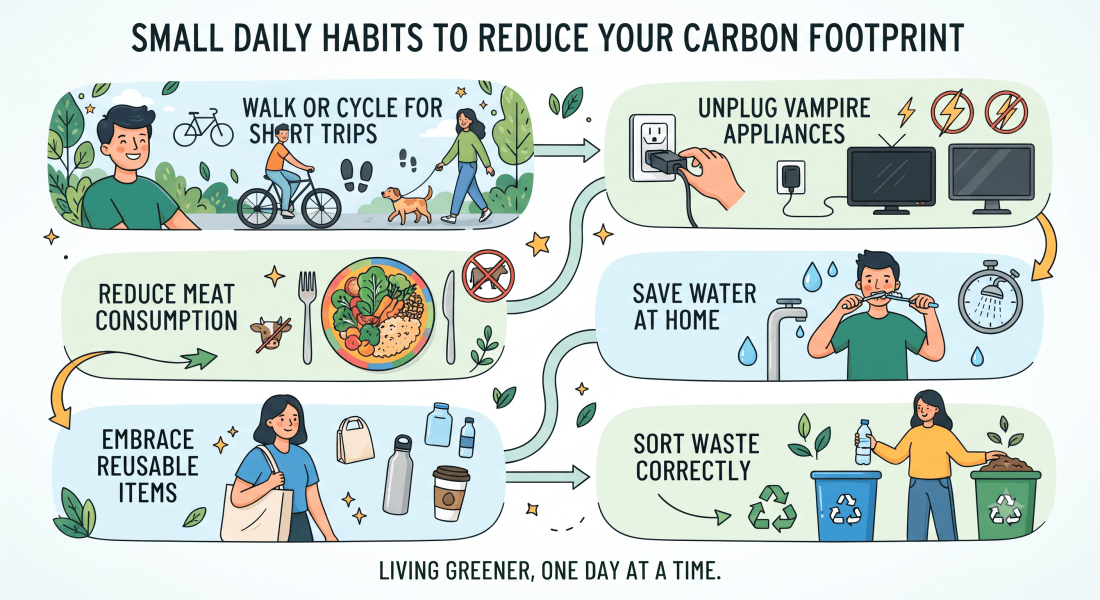
Cutting your carbon footprint doesn’t require a lifestyle overhaul. Most of the impact comes from small, repeatable habits — the kind that fit into an already busy day without feeling like a sacrifice.

Rethink Your Commute

Even swapping one or two car trips a week for walking, cycling, or public transport adds up over a year. If a full switch isn’t practical, carpooling with a colleague or neighbor cuts emissions per person without changing your route.

Unplug What You’re Not Using

Devices left plugged in — chargers, appliances, routers on standby — draw small amounts of power constantly. Unplugging them when not in use, or using a power strip you can switch off at once, is a near-zero-effort habit with a real cumulative effect.

Cut Down on Single-Use Plastic

Carrying a reusable water bottle, a cloth bag, or a steel tiffin instead of relying on single-use plastic each day reduces both your waste output and the emissions tied to producing that plastic in the first place.

Eat a Little More Local, a Little Less Processed

Food that travels shorter distances and requires less processing generally has a smaller carbon footprint. You don’t need to go fully local or vegetarian overnight — even shifting one or two meals a week toward local, less-processed options makes a difference over time.

Be Deliberate About Water Use

Shorter showers, turning off the tap while brushing your teeth or washing dishes, and fixing leaky taps promptly all reduce the energy used to heat, pump, and treat water — a footprint most people don’t think about day to day.

Buy Less, Use Longer

Fast fashion and short-lived gadgets both carry a heavy production footprint. Choosing quality over quantity, repairing instead of replacing, and reusing what you already have cuts down on manufacturing emissions far more than any single “eco” purchase can.

Bottom Line

None of these habits require a big budget or a dramatic lifestyle change. They’re small adjustments that, done consistently, add up to a meaningfully lighter footprint — proof that everyday choices matter just as much as big environmental policies.