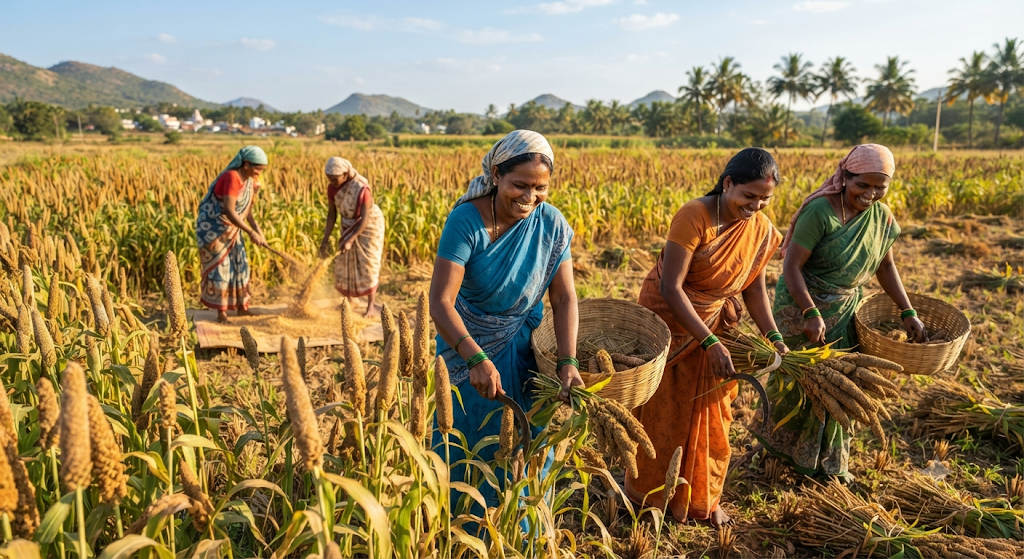
A Grain Policy That Looked Elsewhere
For decades, agriculture policy and public food systems in India leaned heavily towards rice and wheat. Millets, which are hardy, drought-tolerant and nutrient-rich, were pushed to the margins even though tribal and small farming communities had long depended on them. In 2023, the UN marked the International Year of Millets after an India-sponsored resolution, and national attention grew.
Women Doing the Revival
Dharwad, Karnataka. A women’s self-help group in Mattigatti village revived 77 nearly forgotten varieties of ragi (finger millet), with seed and technical support from an organic farmers’ association. They faced unpredictable rainfall, but the seeds they saved are now shared with other farmers.
Dindori, Madhya Pradesh. A development project that began in 2013-14 started with 1,497 women farmers from 40 villages, mostly from Gond and Baiga communities, growing kodo and kutki millets on about 749 acres. Their self-help group federation handled procurement and mechanical de-hulling, which replaced the slow task of hand-pounding.
Udaipur, Rajasthan. An NGO-supported women’s group grows millets, sells packaged millet products at city events and serves millet lunches, building both income and pride in a traditional food.
Chizami, Nagaland. Women act as custodians of seed diversity, including foxtail millet, and are beginning to sell surplus for income.
Why Millets Make Sense
- They need less water and handle heat and drought better than many major crops
- They grow with low input costs
- They’re nutritious and can anchor local diets
What Still Needs Work
Market outlets are still developing in many areas, processing is labour-heavy without machines and consumers need more convenient millet products.
How to Support Them
- Buy millets from women-led groups and FPOs
- Ask local restaurants and cafes if they serve millet dishes
- Try cooking one new millet each month
Bottom Line
Millets never really disappeared. They were kept alive by farmers, mostly women, who refused to let them go. Now the rest of us are catching up.


