Traveling During Your Pregnancy: What Actually Works

The Second Trimester Is Usually the Sweet Spot

Most of the nausea and extreme fatigue of the first trimester has typically eased by the second, and the size and discomfort of the third haven’t set in yet. This is why most doctors and experienced travelers point to weeks 14–27 as the most comfortable window for trips, though every pregnancy is different enough that this is a general pattern, not a guarantee.

Get the Green Light First, Not as an Afterthought

A quick check-in with your doctor before booking — not just before departure — helps you plan around any pregnancy-specific risk factors, flag destinations with limited medical access, and get clarity on any airline documentation you might need closer to your due date.

Comfort Gear Is Not Optional Luxury

A compression sock pair, a travel pillow that actually supports your lower back, and snacks that settle an unpredictable stomach aren’t indulgences on a pregnancy trip — they’re the difference between a manageable journey and a miserable one. Packing light matters more than usual, since you’ll have less patience for wrestling heavy bags.

Build In More Stops Than You Think You Need

Long stretches without movement increase discomfort and circulation issues. Choosing itineraries with natural breaks — a stopover flight instead of one long haul, a road trip with planned rest points — makes a real difference in how your body handles the trip.

Know Where the Nearest Hospital Is, Always

This isn’t about expecting something to go wrong — it’s about removing one more thing to figure out under stress if it does. Knowing the nearest reliable medical facility at every stop is a five-minute research task that buys real peace of mind.

Bottom Line

Traveling while pregnant isn’t off-limits — it just asks for more intentional planning than your usual trips did. Get the medical go-ahead, pack for comfort, and build slack into the schedule.

Period Poverty in India: What’s Actually Being Done About It

If you’ve ever had to ask a stranger for a pad, skip school because you didn’t have access to menstrual products, or use a rag, sand, ash, or newspaper during your period — you already know what period poverty feels like. For millions of women and girls across India, this isn’t a hypothetical. It’s a monthly reality.

Period poverty isn’t just about not being able to afford a pack of sanitary pads. It’s a tangle of three things: lack of access to safe menstrual products, lack of access to clean water and private toilets to manage periods hygienically, and — maybe the most stubborn of all — the silence and shame that stops girls from asking for help in the first place.

The Scale of the Problem

Government surveys have repeatedly shown that a large share of menstruating women in India still don’t use hygienic methods of protection, especially in rural areas. The gap isn’t uniform either — it varies sharply by state, by income, and by whether a girl is still in school. Many girls drop out of school entirely once they start menstruating, not because they want to, but because their school has no functioning toilet, no privacy, and no way to manage a leak with dignity.

This isn’t a “women’s issue” tucked away in a corner. It affects education outcomes, workforce participation, and public health — which is exactly why it deserves more attention than it gets.

What’s Actually Being Done

The good news is that period poverty in India isn’t being ignored anymore. Here’s where real movement is happening:

1. GST removal on sanitary products. In 2018, after sustained public pressure and activism, India removed the 12% GST that had been levied on sanitary napkins. It was a small line item that made a real difference in affordability at scale.

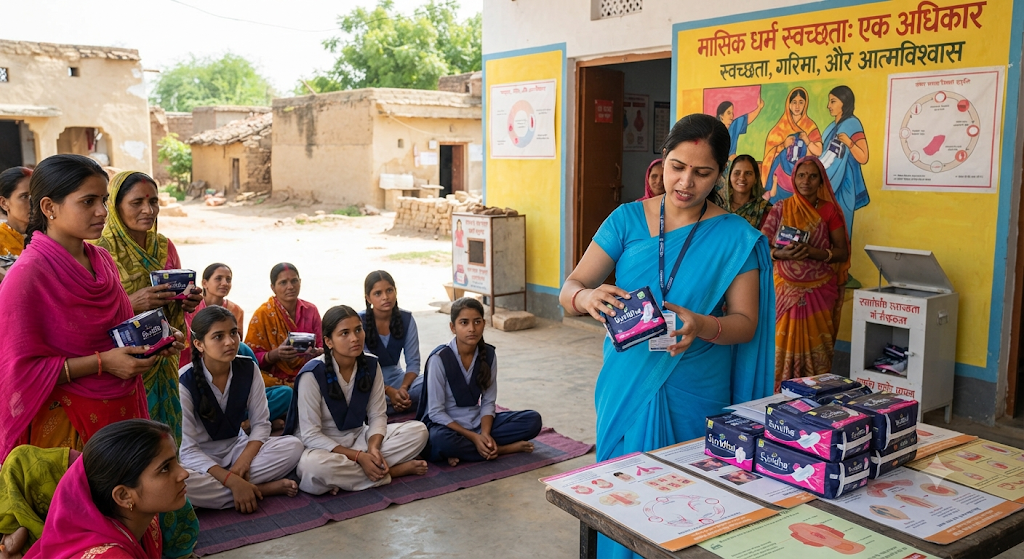
2. Government distribution schemes. Programs at both the central and state level have worked to supply subsidized or free sanitary pads through schools and primary health centres, particularly targeting rural and adolescent girls. Coverage is uneven, but the intent — and the infrastructure — now exists in places it didn’t before.

3. Menstrual health in the school curriculum. Several states have started integrating menstrual hygiene education into school health programs, training teachers and health workers to talk about periods without euphemism or embarrassment, and installing incinerators and sanitary vending machines in government schools.

4. NGOs closing the last-mile gap. Organizations working at the grassroots level — going village to village, training local women as menstrual health educators, manufacturing low-cost sanitary pads through community-run micro-enterprises — have often reached places that policy alone hasn’t. Some of the most effective models pair product distribution with education, because handing someone a pad without addressing the stigma around periods only solves half the problem.

5. Sustainable and reusable alternatives. Menstrual cups, cloth pads, and period underwear are getting more visibility, both as a cost-saving option for low-income households and as a lower-waste alternative to disposable pads, which are a genuinely enormous environmental burden — most contain plastic and take centuries to break down.

Where the Gaps Still Are

For all this progress, period poverty hasn’t been solved — not close. Distribution schemes don’t always reach the most remote areas. Products supplied by some programs are inconsistent in quality. And the biggest gap of all is cultural: even where products are available, shame and silence still keep many girls from using them confidently, or from talking to a parent, teacher, or doctor when something feels wrong.

Access without education is a half-measure. A girl who has a pad but has never been told what a period actually is, why it happens, or that it’s nothing to be ashamed of, is still navigating this mostly alone.

What You Can Actually Do

You don’t need to run an NGO to make a dent in this. A few starting points:

  • Support grassroots organizations directly working on menstrual health in your city or state — many are chronically under-resourced and rely on small, recurring donations more than one-time large ones.
  • Normalize the conversation at home. If you have younger sisters, cousins, or nieces, be the person who talks about periods like it’s just biology — because it is.
  • Donate products, not just money, during pad drives, especially before monsoon season and before the school year starts, when supply often runs low.
  • Choose sustainable products where you can, and talk about them openly — cups and reusable pads are still seen as niche in a lot of households, and visibility helps.

Period poverty sits at the intersection of everything this blog cares about — women’s dignity, environmental impact, and access to basic health infrastructure. It’s a solvable problem. It just needs more people treating it like the public health issue it actually is, instead of a private embarrassment to whisper about.

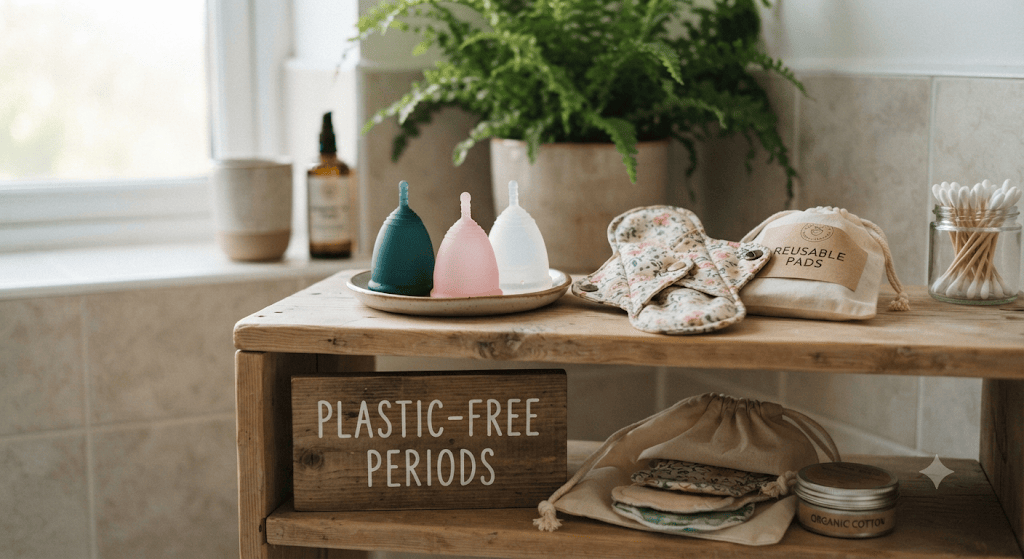
Plastic-Free Periods: Are Reusable Products Actually Worth It?

Reusable menstrual products get recommended constantly for their environmental benefits, but the practical side of actually switching — comfort, cost, hygiene, learning curve — gets far less honest discussion. Here’s a grounded look at what the switch actually involves.

The Waste Problem With Disposables

A single person using disposable pads or tampons generates a significant amount of non-biodegradable waste over their menstruating years — most of it made from plastic that will outlast the person who used it by centuries. This is the core environmental argument for reusables, and it’s a real one.

Menstrual Cups: The Learning Curve Is Real

Menstrual cups have the steepest initial learning curve of any reusable option — folding, insertion, and removal take a few cycles to get comfortable with. Most people who stick with it past the first two or three cycles report it becoming easy, but the early frustration is genuine and shouldn’t be dismissed.

Reusable Cloth Pads: The Gentler Switch

Cloth pads function almost identically to disposable pads, just washed and reused, making them a much easier first step into reusable products without requiring any new technique to learn. The tradeoff is needing proper washing facilities and a bit more laundry.

The Cost Math Over Time

Reusable products cost significantly more upfront — a good menstrual cup or a set of cloth pads can cost as much as several months of disposables. But since they last years, not months, the long-term cost is substantially lower, often paying for itself within a year or so of consistent use.

Hygiene Considerations

Reusable products require proper cleaning — boiling cups between cycles, thoroughly washing cloth pads — which takes more active effort than simply disposing of a used product. For people without reliable private washing access, this is a genuine practical barrier, not a minor inconvenience.

They’re Not All-or-Nothing

Many people who switch don’t go 100% reusable — using cups or cloth pads at home and disposables while traveling or in situations with limited hygiene facilities is a common, practical middle ground rather than an everything-or-nothing choice.

Bottom Line

Reusable menstrual products genuinely reduce waste and save money over time, but they come with real upfront cost, a learning curve, and hygiene logistics that aren’t right for every situation. They’re worth trying, but not something to feel obligated to switch to completely — a partial switch still meaningfully reduces waste compared to full reliance on disposables.

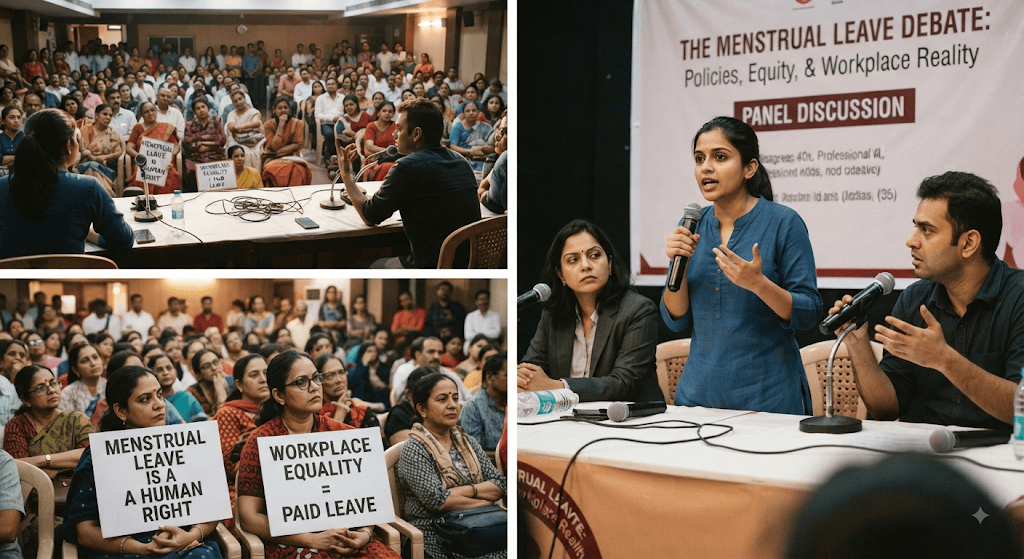
Menstrual Leave Debate: What Indian Women Actually Think

Menstrual leave resurfaces in Indian public conversation every year or two — a company announces a policy, a state proposes a bill, and the debate reignites. But between the headlines, the actual opinions of women who’d use such leave often get lost. Here’s a more grounded look at where the conversation stands.

What’s Actually Being Proposed

Menstrual leave generally refers to paid time off — usually one to two days a month — specifically for menstrual pain or discomfort, separate from standard sick leave. A few Indian states and companies have piloted such policies, though nationwide legislation has repeatedly been debated without becoming law.

The Case in Favor

Supporters argue that for a meaningful share of menstruating employees, symptoms like severe cramps or fatigue genuinely affect the ability to work productively, and that treating this as a normal, non-stigmatized part of employment — rather than something to push through silently — is simply overdue recognition of a real physical reality.

The Case Against (Even From Women)

A notable portion of the pushback doesn’t come from men, but from women themselves, worried that formal menstrual leave could reinforce workplace bias — that employers might hesitate to hire or promote women, consciously or not, anticipating “extra” leave usage. Some also feel it singles out a normal bodily function as a workplace liability rather than normalizing it.

A Third View: Flexibility Over Formal Leave

Many working women land somewhere in between — less interested in a rigid “menstrual leave” category, and more interested in flexible policies (like work-from-home options or flexible hours during difficult days) that don’t require formally naming the reason.

What This Reflects About Workplace Culture

The debate isn’t really only about a few days off — it’s a proxy for a bigger question about whether Indian workplaces can accommodate real, everyday realities of women’s health without treating them as either taboo or as grounds for discrimination.

Bottom Line

There’s no single “women’s opinion” on menstrual leave — it’s a genuinely split conversation, shaped as much by fear of workplace bias as by the real physical need the policy is meant to address. Any serious policy discussion probably needs to grapple with both sides, not just the loudest one.

How to Make Your Periods More Eco-Friendly (Menstrual Cups, Cloth Pads & More)

Somewhere between the ages of thirteen and now, most of us have gone through hundreds, maybe thousands, of disposable pads or tampons without ever really pausing to think about where they end up. I didn’t either — until I actually sat down and did the math on how much plastic one period alone quietly generates, month after month, year after year.

That math is what nudged me toward switching things up. It wasn’t overnight, and it wasn’t perfect. But here’s what I’ve learned along the way.

Why this even matters

A single disposable pad can contain the plastic equivalent of about four plastic bags, and most take centuries to break down. Multiply that by a lifetime of periods, and the number gets uncomfortable fast. None of this is said to guilt anyone — most of us were just never given other options growing up. But once you know better options exist, it’s worth at least knowing what they are.

Menstrual Cups

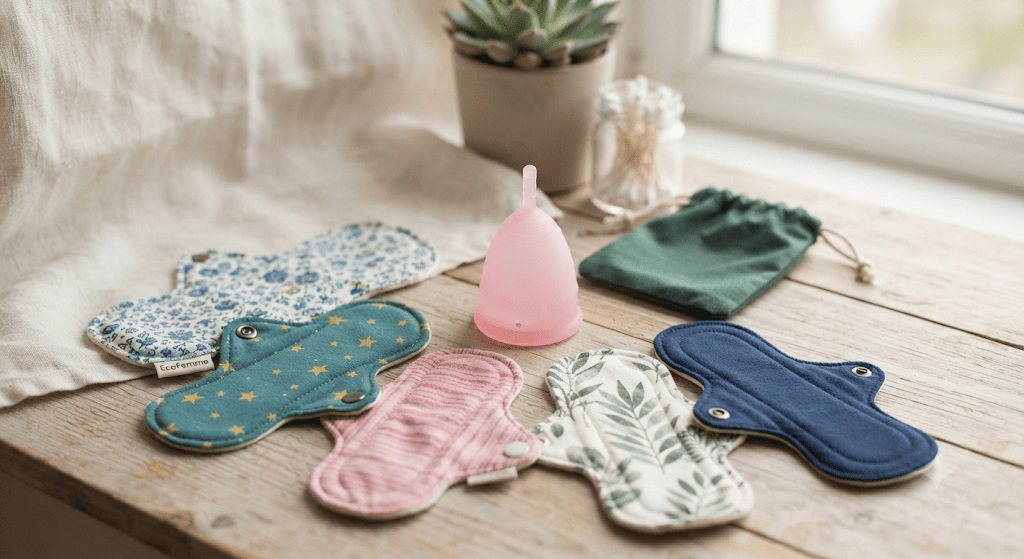
This was the one I was most nervous about, and also the one that ended up changing the most for me. A menstrual cup is a small, flexible silicone cup that collects (rather than absorbs) flow, and can be worn for up to 8-12 hours depending on flow. One cup, with proper care, lasts several years — which means the “waste” from years of periods shrinks down to essentially one small object.

The learning curve is real for the first cycle or two — figuring out folding techniques, finding the right size, getting comfortable with insertion and removal. I won’t pretend that part was smooth. But by the second cycle, it stopped feeling unfamiliar, and by the third, I couldn’t imagine going back.

Reusable Cloth Pads

For days when a cup doesn’t feel right, or for anyone easing in more gradually, cloth pads are a solid middle step. They work exactly like disposable pads but are washable and reusable for years. A lot of brands now make ones with the same wings, absorbency levels, and comfort you’d expect from disposable versions — the only extra step is a quick rinse and wash after use.

Period Underwear

This one requires zero adjustment period (no pun intended). It looks and wears like regular underwear but has built-in absorbent layers. It’s especially useful for lighter days, overnight wear, or as backup alongside a cup. For anyone hesitant to jump straight into cups, this is often the gentlest starting point.

What I’d tell someone just starting out

Start with one switch, not all of them at once. Trying to overhaul your entire routine in one cycle is a fast way to feel overwhelmed and give up. Pick the option that feels least intimidating and let that be the only change for a cycle or two.

Give it more than one try. The first cycle with a cup or cloth pad is rarely the smoothest — that’s normal, not a sign it’s “not for you.” Most of the discomfort is about unfamiliarity, not the product itself.

It’s okay to mix and match. You don’t have to pick just one. Plenty of people use a cup for heavy days, period underwear for light days, and keep a couple of disposables around for emergencies. Sustainability doesn’t require perfection — it just asks for a direction.

The bigger picture

Switching how you manage your period isn’t going to single-handedly fix a global waste problem, and it doesn’t need to be framed that way to be worth doing. It’s a small, personal choice that adds up over a lifetime — less waste, less recurring cost, and for a lot of people, honestly, more comfort once the adjustment period (again, no pun intended) is over.

Have you tried any of these? I’d genuinely love to hear what worked or didn’t for you.