The Work Nobody Sees
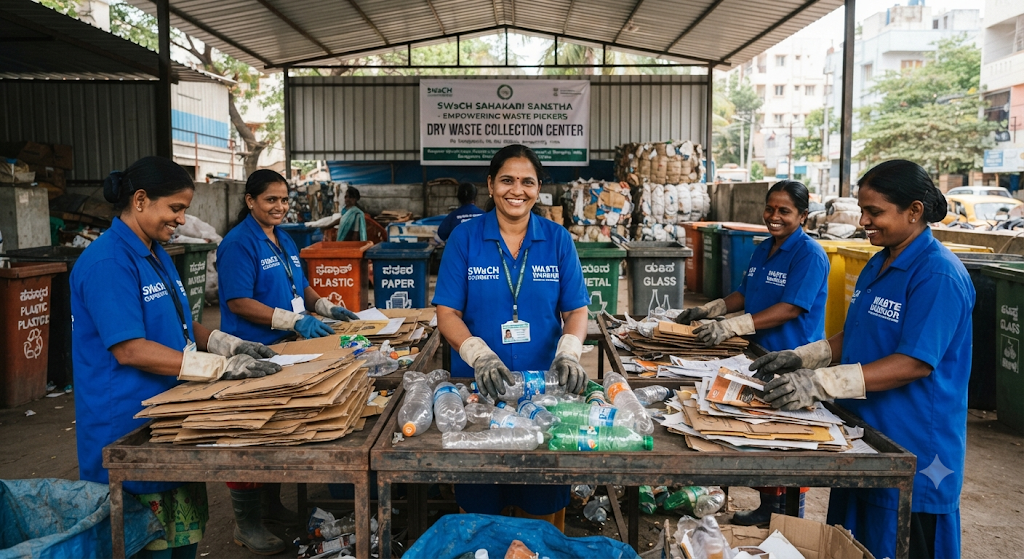
Waste pickers sort through household and street waste, pulling out paper, plastic and metal that can be recycled. They keep material out of landfills and save city governments money, yet for decades their work went unrecognised and was often treated with disrespect.
How Pune’s Model Began
In 1993, waste pickers in Pune and Pimpri Chinchwad formed a trade union called Kagad Kach Patra Kashtakari Panchayat (KKPKP). After India’s 2000 solid waste rules required segregation and door-to-door collection, the union saw an opening. A pilot with the Pune Municipal Corporation began in 2005, and the cooperative SWaCH was formally set up in 2007. It is described as India’s first cooperative wholly owned by self-employed waste pickers.
What SWaCH Does
Members collect segregated waste from homes, offices and shops, usually working in pairs. They are paid mainly through user fees from households, supplemented by what they earn from selling recyclables. Photo ID cards issued to members are now recognised by the authorities.
Figures vary across sources and years, but SWaCH is reported to have several thousand members, a large majority of them women, serving hundreds of thousands of households. One city-prize profile notes that members’ collective annual earnings rose from about 12.6 million rupees in 2010 to 63 million rupees in 2018. The model has also inspired similar efforts in other cities, including Bengaluru.
Why Women Matter Here
Reports describe the membership as predominantly women, many from marginalised communities. For them, the cooperative offers an ID, a steadier income and some protection from harassment, as well as benefits like insurance and education support for their children.
What Still Needs Fixing
Stigma remains, user fee collection can be uneven and contracts with city governments need to be renewed. Waste pickers also still face health risks when households don’t segregate properly.
How You Can Help
- Segregate wet and dry waste at home and keep sanitary waste separately wrapped
- Pay the user fee on time and treat collectors with courtesy
- Avoid mixing glass or sharp objects into general waste
- Ask your local body whether waste pickers are formally integrated in your city
Bottom Line
Women waste pickers are among the quiet backbones of urban sustainability. A cooperative gave them recognition and a contract. The rest of us only need to do our small part of sorting.


