The Unspoken Rules Women Still Follow While Traveling Alone

Solo travel is marketed as liberation — just you, a bag, and the open road. And it is freeing. But talk to almost any woman who’s traveled alone, and you’ll find a second, invisible itinerary running alongside the visible one: a set of quiet rules she follows without even fully realizing it.

Checking In Before It Feels Necessary

Many women share their live location with a friend or family member the moment they land somewhere new — not because something is wrong, but as a default habit. A quick “reached safely” text isn’t paranoia; it’s just part of how the trip is planned from the start.

Choosing Accommodation by Safety First, Aesthetics Second

That beautifully photographed homestay with no reviews? Often skipped — not because it isn’t tempting, but because women disproportionately factor in things like well-lit entrances, women-only hostels, or 24-hour reception before booking anything.

Timing the Day Around Daylight

Sightseeing schedules often quietly shift around when the sun sets. Plans to “wander and see where the evening takes me” get replaced with being back at the stay before dark, especially in unfamiliar cities.

Dressing for the Place, Not Just the Weather

Packing lists for solo women travelers often include an extra layer of thought: what will draw less attention here, what’s locally appropriate, what won’t invite unwanted comments — decisions made well before the trip even begins.

Having a Ready Exit Line

“I’m meeting my husband/friend/group in five minutes” is a sentence many women keep on standby, even when it’s not true, simply because it’s often the fastest way to end an uncomfortable conversation without confrontation.

Scanning the Room, Every Room

Walking into a café, train compartment, or hotel lobby and quickly noting the exits, the crowd, who’s watching — it’s such a fast, automatic habit that many women don’t even register they’re doing it anymore.

Why This Matters

None of this means women shouldn’t travel alone — millions do, and love it. But the extra layer of planning is real, and largely invisible to anyone who hasn’t had to carry it. Naming these unspoken rules doesn’t take away the joy of solo travel; it just makes visible the quiet work that goes into making that joy feel safe.
How to Make Your Periods More Eco-Friendly (Menstrual Cups, Cloth Pads & More)

Somewhere between the ages of thirteen and now, most of us have gone through hundreds, maybe thousands, of disposable pads or tampons without ever really pausing to think about where they end up. I didn’t either — until I actually sat down and did the math on how much plastic one period alone quietly generates, month after month, year after year.

That math is what nudged me toward switching things up. It wasn’t overnight, and it wasn’t perfect. But here’s what I’ve learned along the way.

Why this even matters

A single disposable pad can contain the plastic equivalent of about four plastic bags, and most take centuries to break down. Multiply that by a lifetime of periods, and the number gets uncomfortable fast. None of this is said to guilt anyone — most of us were just never given other options growing up. But once you know better options exist, it’s worth at least knowing what they are.

Menstrual Cups

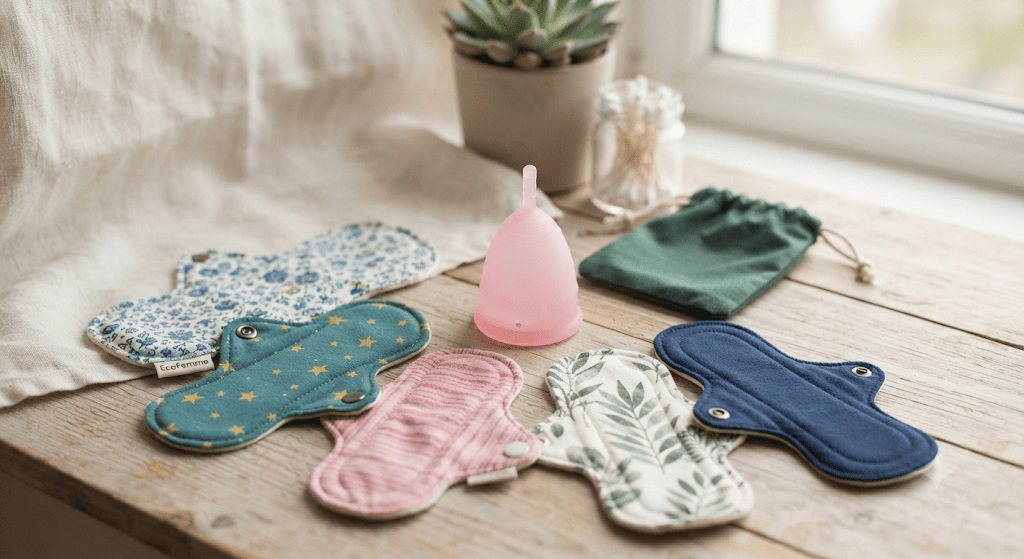
This was the one I was most nervous about, and also the one that ended up changing the most for me. A menstrual cup is a small, flexible silicone cup that collects (rather than absorbs) flow, and can be worn for up to 8-12 hours depending on flow. One cup, with proper care, lasts several years — which means the “waste” from years of periods shrinks down to essentially one small object.

The learning curve is real for the first cycle or two — figuring out folding techniques, finding the right size, getting comfortable with insertion and removal. I won’t pretend that part was smooth. But by the second cycle, it stopped feeling unfamiliar, and by the third, I couldn’t imagine going back.

Reusable Cloth Pads

For days when a cup doesn’t feel right, or for anyone easing in more gradually, cloth pads are a solid middle step. They work exactly like disposable pads but are washable and reusable for years. A lot of brands now make ones with the same wings, absorbency levels, and comfort you’d expect from disposable versions — the only extra step is a quick rinse and wash after use.

Period Underwear

This one requires zero adjustment period (no pun intended). It looks and wears like regular underwear but has built-in absorbent layers. It’s especially useful for lighter days, overnight wear, or as backup alongside a cup. For anyone hesitant to jump straight into cups, this is often the gentlest starting point.

What I’d tell someone just starting out

Start with one switch, not all of them at once. Trying to overhaul your entire routine in one cycle is a fast way to feel overwhelmed and give up. Pick the option that feels least intimidating and let that be the only change for a cycle or two.

Give it more than one try. The first cycle with a cup or cloth pad is rarely the smoothest — that’s normal, not a sign it’s “not for you.” Most of the discomfort is about unfamiliarity, not the product itself.

It’s okay to mix and match. You don’t have to pick just one. Plenty of people use a cup for heavy days, period underwear for light days, and keep a couple of disposables around for emergencies. Sustainability doesn’t require perfection — it just asks for a direction.

The bigger picture

Switching how you manage your period isn’t going to single-handedly fix a global waste problem, and it doesn’t need to be framed that way to be worth doing. It’s a small, personal choice that adds up over a lifetime — less waste, less recurring cost, and for a lot of people, honestly, more comfort once the adjustment period (again, no pun intended) is over.

Have you tried any of these? I’d genuinely love to hear what worked or didn’t for you.

The Hidden Environmental Cost of Fast Fashion (And What I Switched To Instead)

For years, a “good haul” meant five new things for the price of two, worn a handful of times, replaced the moment they looked slightly tired. I didn’t think of it as wasteful — I thought of it as smart shopping. It took me a while to realize how much was hiding behind that word “smart.”

The cost that doesn’t show up on the price tag

Fast fashion is cheap at checkout because the real cost gets pushed somewhere else — onto water systems polluted by dyeing processes, onto landfills piling up with clothes that take decades to break down, onto garment workers paid too little to make clothes designed to fall apart in a year. None of that shows up on the tag. It just gets quietly absorbed somewhere we don’t have to look at.

The average piece of fast fashion is worn only a handful of times before it’s discarded. That’s not a flaw in how we use clothes — it’s the business model working exactly as designed. Cheap enough to feel disposable, trendy enough to feel outdated fast, so the next order feels necessary rather than optional.

What made me actually stop and look

It wasn’t one dramatic moment — it was noticing my own closet. Half of it barely worn, the rest already pilling or fading after a few washes. I’d spent more money buying “more” than I would have spent buying “better,” and had less to show for it in the long run. That math finally bothered me enough to change something.

What I switched to instead

Cost-per-wear over cost-per-item. A ₹3,000 piece worn fifty times costs far less per wear than a ₹500 piece worn three times before it falls apart. I started asking myself not “can I afford this” but “will I actually wear this fifty times” — a much harder, much more honest question.

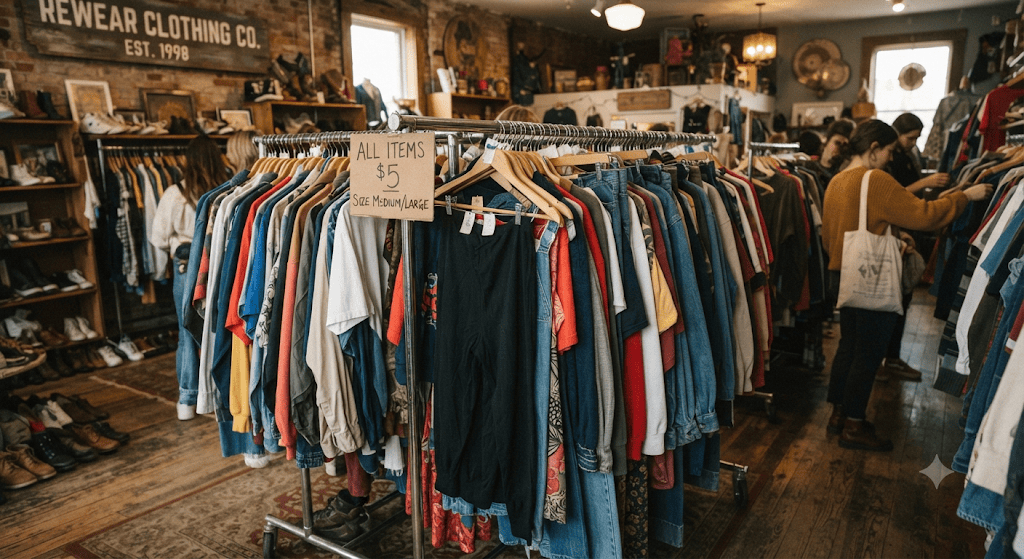
Thrift and pre-loved first. Some of my favorite pieces now are secondhand — better quality than what I could’ve afforded new, and no new production required at all. It took some adjusting to enjoy the hunt instead of expecting instant matches, but it’s become one of my favorite ways to shop.

Repair before replace. A loose button or a small tear used to mean the end of a garment’s life for me. Now it means five minutes with a needle and thread, or a trip to the local tailor. It’s a small habit, but it’s kept clothes in rotation far longer than they would have lasted otherwise.

Fewer, better basics. Instead of chasing every trend, I built a smaller wardrobe of pieces that mix and match easily and don’t scream “this season only.” It’s less exciting in the moment of buying, but far more satisfying every single day after.

Supporting slower, local brands when I can. They cost more upfront, almost always. But knowing where something was made, and that the people making it were paid fairly, has made spending on clothes feel less like guilt and more like an actual choice.

This isn’t about guilt

I still buy new clothes. I still enjoy getting dressed up for something. This isn’t about swearing off fashion or judging anyone’s closet — it’s about noticing that “cheap” and “smart” aren’t always the same thing, and that slowing down the buying just a little changes both what ends up in your closet and what ends up outside it, in places we don’t see.

Small shifts in how we shop won’t fix an entire industry on their own. But they do change what we’re quietly funding every time we check out — and that’s worth paying attention to.

Have you made any changes to how you shop for clothes? I’d love to hear what’s worked for you.

Why Traveling Alone Changed How I See the World

The first time I traveled alone, I spent the entire first day waiting for something to feel wrong. No one to check in with about where to eat, no one to ask “should we go left or right,” no one to notice if I got quiet for a while. I kept expecting the loneliness to hit. It never quite did — and that surprised me more than the trip itself.

What hit instead was something closer to clarity.

You stop performing the trip

When you travel with people, even the ones you love most, there’s a quiet, constant negotiation happening — where to go, what to skip, how long to stay somewhere, whose pace to follow. Most of it is so small you don’t even notice you’re doing it. Alone, all of that disappears. I sat in a café for two hours longer than any “reasonable” itinerary would allow, simply because I wasn’t done sitting there. No one needed convincing. No one was checking their phone for the next plan. It was just me, deciding, in real time, what I actually wanted — not what would keep the group happy.

I didn’t realize how rarely I did that until I noticed how unfamiliar it felt.

You start noticing things you’d normally talk over

Conversation is wonderful, but it also fills space that silence would otherwise use for noticing. Alone, I found myself actually looking at things — the way light moved across a wall in the afternoon, a conversation between two strangers at the next table, the specific sound a place makes when it’s mostly empty. None of it was dramatic. All of it stayed with me longer than most conversations from group trips ever have.

You become genuinely resourceful, not performatively brave

There’s a difference between being told you’re capable and actually finding out. Booking the wrong train and figuring out the fix yourself. Getting mildly lost and asking a stranger for directions in a language you don’t fully speak. None of these moments felt like adventure while they were happening — they felt inconvenient, honestly. But somewhere after the trip, I noticed I’d stopped assuming I’d need someone else to handle the hard parts. That confidence didn’t come from a pep talk. It came from evidence.

Safety planning becomes second nature, not paranoia

I won’t pretend solo travel, especially as a woman, doesn’t require extra thought — it does, and pretending otherwise helps no one. Sharing your live location with someone you trust, choosing accommodations with good lighting and reviews from other solo women travelers, trusting your gut the moment something feels off rather than talking yourself out of the feeling — these aren’t signs of fear. They’re just part of how you plan responsibly, the same way you’d check the weather before packing. Once they become habit, they stop feeling heavy.

You come back different in ways that are hard to explain

The strangest part of solo travel isn’t the trip — it’s the return. I came back and couldn’t quite explain what had changed, because nothing dramatic had happened. No grand epiphany, no life-altering encounter. Just dozens of small moments of choosing for myself, noticing more, and trusting my own judgment without a second opinion in the room. Somehow that adds up to something that feels a lot like knowing yourself a little better than before you left.

You don’t need a big, symbolic reason to travel alone. Sometimes the only reason you need is that no one else’s plan will show you what yours looks like.

Have you traveled solo before? I’d love to know what surprised you most about it.

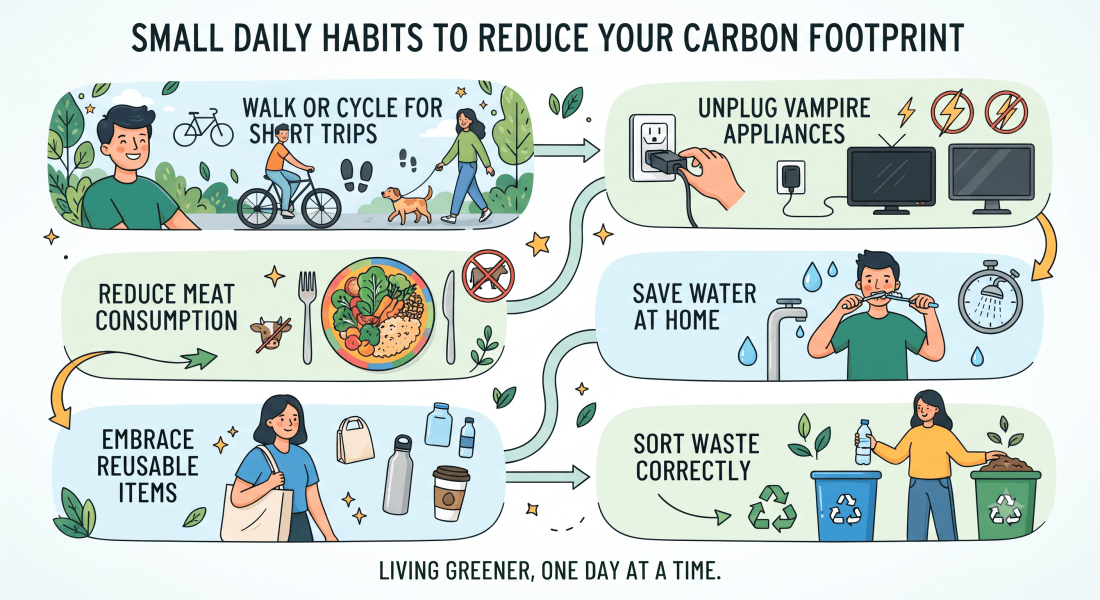
Small Daily Habits That Reduce Your Carbon Footprint

Cutting your carbon footprint doesn’t require a lifestyle overhaul. Most of the impact comes from small, repeatable habits — the kind that fit into an already busy day without feeling like a sacrifice.

Rethink Your Commute

Even swapping one or two car trips a week for walking, cycling, or public transport adds up over a year. If a full switch isn’t practical, carpooling with a colleague or neighbor cuts emissions per person without changing your route.

Unplug What You’re Not Using

Devices left plugged in — chargers, appliances, routers on standby — draw small amounts of power constantly. Unplugging them when not in use, or using a power strip you can switch off at once, is a near-zero-effort habit with a real cumulative effect.

Cut Down on Single-Use Plastic

Carrying a reusable water bottle, a cloth bag, or a steel tiffin instead of relying on single-use plastic each day reduces both your waste output and the emissions tied to producing that plastic in the first place.

Eat a Little More Local, a Little Less Processed

Food that travels shorter distances and requires less processing generally has a smaller carbon footprint. You don’t need to go fully local or vegetarian overnight — even shifting one or two meals a week toward local, less-processed options makes a difference over time.

Be Deliberate About Water Use

Shorter showers, turning off the tap while brushing your teeth or washing dishes, and fixing leaky taps promptly all reduce the energy used to heat, pump, and treat water — a footprint most people don’t think about day to day.

Buy Less, Use Longer

Fast fashion and short-lived gadgets both carry a heavy production footprint. Choosing quality over quantity, repairing instead of replacing, and reusing what you already have cuts down on manufacturing emissions far more than any single “eco” purchase can.

Bottom Line

None of these habits require a big budget or a dramatic lifestyle change. They’re small adjustments that, done consistently, add up to a meaningfully lighter footprint — proof that everyday choices matter just as much as big environmental policies.

A Weekend Guide to a Nearby Eco-Tourism Spot

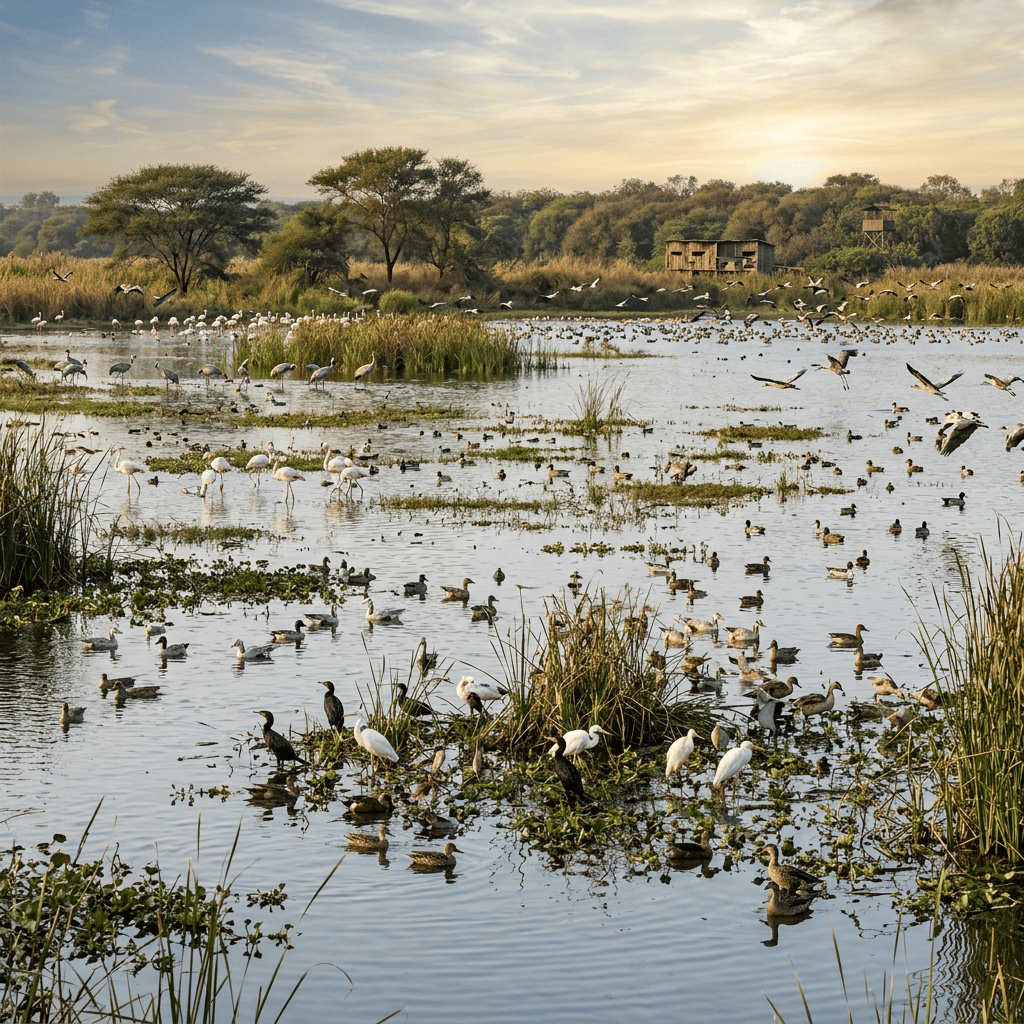
Wetland populated with numerous waterbirds including flamingos, egrets, and ducks, surrounded by trees and vegetation under a warm sunset sky

If you’re in Delhi NCR and craving a break from concrete and traffic, you don’t need to travel far. Sultanpur National Park, in Gurugram district, is one of the region’s best-kept eco-tourism gems — and it makes for a perfect one-day or half-day weekend trip.

About the Park

Sultanpur is a wetland sanctuary spread across roughly 142 hectares, located about 15 km from Gurugram and around 50 km from Delhi on the Gurgaon–Farukh Nagar Road. It began as a bird sanctuary in the early 1970s after ornithologist Dr. Salim Ali flagged the wetland’s ecological importance to the Haryana government, and it was upgraded to national park status in 1989. Today, it holds the distinction of being Haryana’s first Ramsar-designated wetland — a mark of international recognition for wetland conservation.

What You’ll See

The park is home to over 250 species of resident and migratory birds. Winter (roughly October to March) is peak season, when migratory visitors like Greater Flamingos, Northern Pintails, Eurasian Wigeons, and Bar-headed Geese arrive from as far as Central Asia and Siberia. Beyond birds, you may also spot jackals, mongooses, and nilgai (blue bulls) wandering the grounds.

Getting Around

The park has a network of walking trails circling the central marsh, along with four watchtowers (machans) for uninterrupted birdwatching. There’s also an Educational Interpretation Centre for first-time visitors who want context on the ecosystem before heading out on the trails.

Weekend Plan

  • Morning (7–10 AM): Best time for birdwatching, since birds are most active early. Carry binoculars if you have them.
  • Mid-morning: Walk the marsh-side trails and climb a watchtower or two.
  • Before noon: Head back before the sun gets too strong, especially outside winter months.

Practical Tips

  • Entry has a nominal fee, with separate charges for camera equipment — check current rates before you go.
  • The nearest railway stations are Gurugram, Garhi Harsaru, and Farrukhnagar; the nearest airport is Indira Gandhi International.
  • Winter is the best season to visit; summers get hot, and monsoon can make some patches harder to access.
  • Basic facilities like parking, toilets, and drinking water are available on site.

Why It’s Worth the Trip

You don’t always need a hill station or a beach for a proper reset. A few hours by a quiet wetland, watching flamingos wade through still water, does the job just as well — and it’s close enough to fit into a single weekend morning.

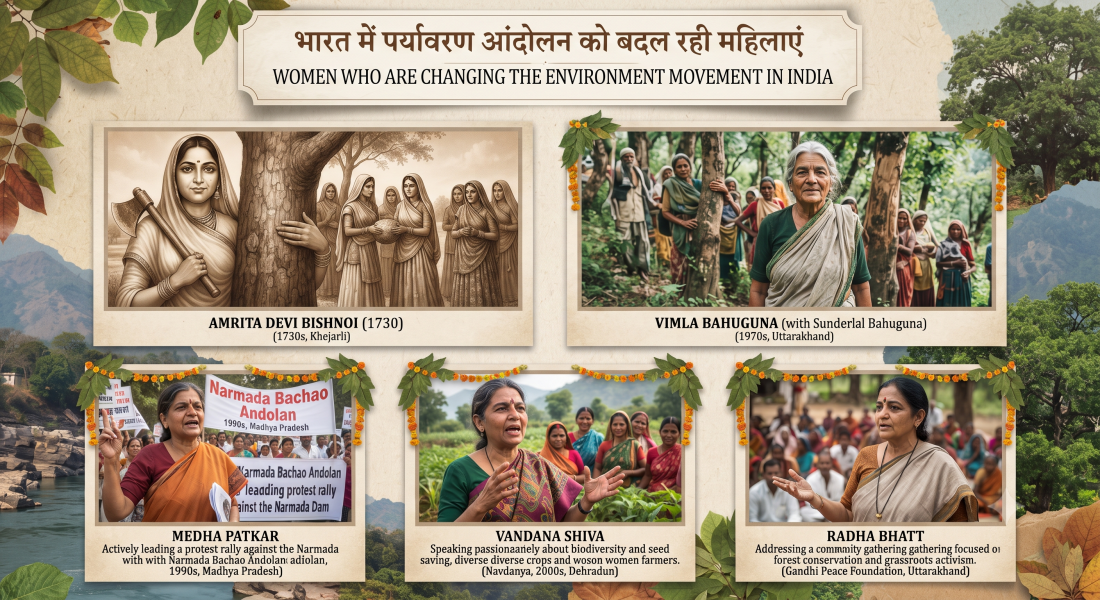
Women Who Are Changing the Environment Movement in India

India’s environmental movement has been shaped by women at every stage — from centuries-old sacrifice to present-day grassroots leadership. Here are a few whose work deserves to be known better.

Amrita Devi Bishnoi (18th century)
Long before “environmentalism” was a word, Amrita Devi gave her life protecting Khejri trees in her Rajasthan village from being cut down for royal construction — her three daughters followed her example. Her sacrifice remains one of the earliest known acts of environmental resistance in India.

Vimla Bahuguna
A key organizer of the Chipko Movement in the 1970s, Vimla worked closely with rural women across the Himalayan region to mobilize the tree-hugging protests that stopped commercial logging — a movement that became a global symbol of grassroots environmental action.

Medha Patkar
Founder of the Narmada Bachao Andolan in 1989, Medha Patkar has spent decades opposing large dam projects that displaced hundreds of thousands of people, using hunger strikes and sustained public advocacy to bring the issue to national attention.

Vandana Shiva
A leading voice in the global ecofeminist movement, Vandana Shiva has long advocated for farming systems that center women’s roles in agriculture, challenging exclusionary practices in how land and resources are managed.

Radha Bhatt
A Gandhian social worker connected to the Chipko movement, Radha Bhatt has spent decades on environmental conservation and women’s empowerment work in Uttarakhand, and was honored with the Padma Shri in 2025 for her contributions.

These stories span centuries, but the thread connecting them is the same — women showing up, again and again, for causes that often didn’t credit them enough at the time. Worth remembering, and worth continuing.

How to Pack Sustainably for Your Next Trip

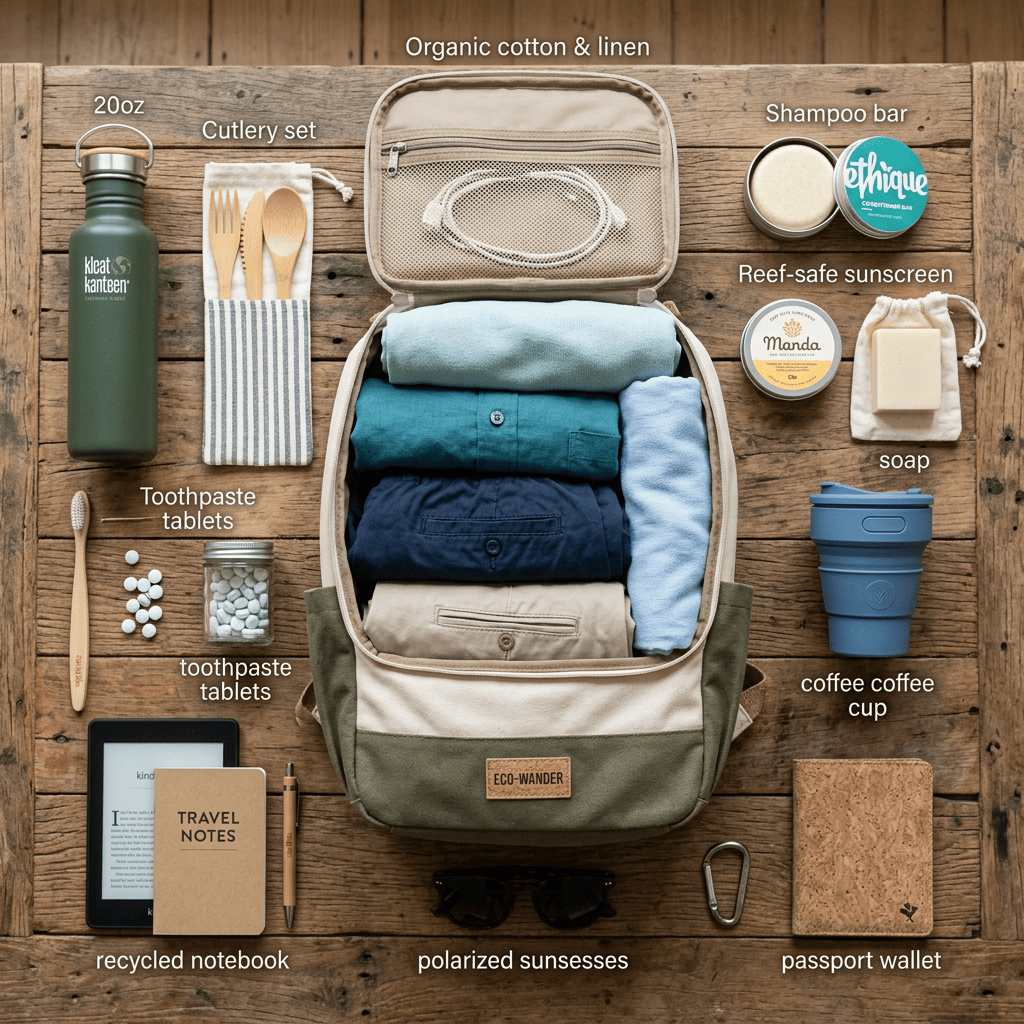
Eco-friendly travel essentials including reusable water bottle, cutlery set, toothpaste tablets, natural sunscreen, shampoo bar, soap, collapsible cup, notebook, sunglasses, and passport wallet around a packed backpack

Packing sustainably doesn’t mean carrying less — it means carrying smarter. A few thoughtful swaps in your travel bag can significantly cut down on waste, without adding extra effort to your trip.

1. Reusable toiletry bottles
Instead of buying travel-size plastic bottles every trip, refill small silicone or steel containers with your own shampoo, conditioner, and lotion. They last for years of travel.

2. A solid toiletry kit
Shampoo bars, solid perfume, and bar soap skip liquid restrictions at airport security entirely, and cut out plastic packaging completely — a genuinely practical swap, not just an eco one.

3. Packing cubes over plastic bags
Fabric packing cubes replace the pile of disposable plastic bags most people use to organize a suitcase — and they keep things far more organized trip after trip.

4. A foldable tote or day bag
A lightweight cloth tote folds into almost nothing but is invaluable for markets, day trips, or avoiding a plastic bag when shopping on the go.

5. Reusable cutlery and a collapsible cup
Small, but useful for flights, street food, or long train journeys — skips single-use plastic cutlery and cups without adding real weight to your bag.

6. A power bank instead of disposable batteries
Rechargeable over disposable, for any gadgets you’re carrying — small change, but it adds up across every trip.

None of these require buying a whole new travel wardrobe — just swapping the disposable version for a reusable one, one item at a time, as your old ones wear out.

Eco-Friendly Products I Actually Use Daily

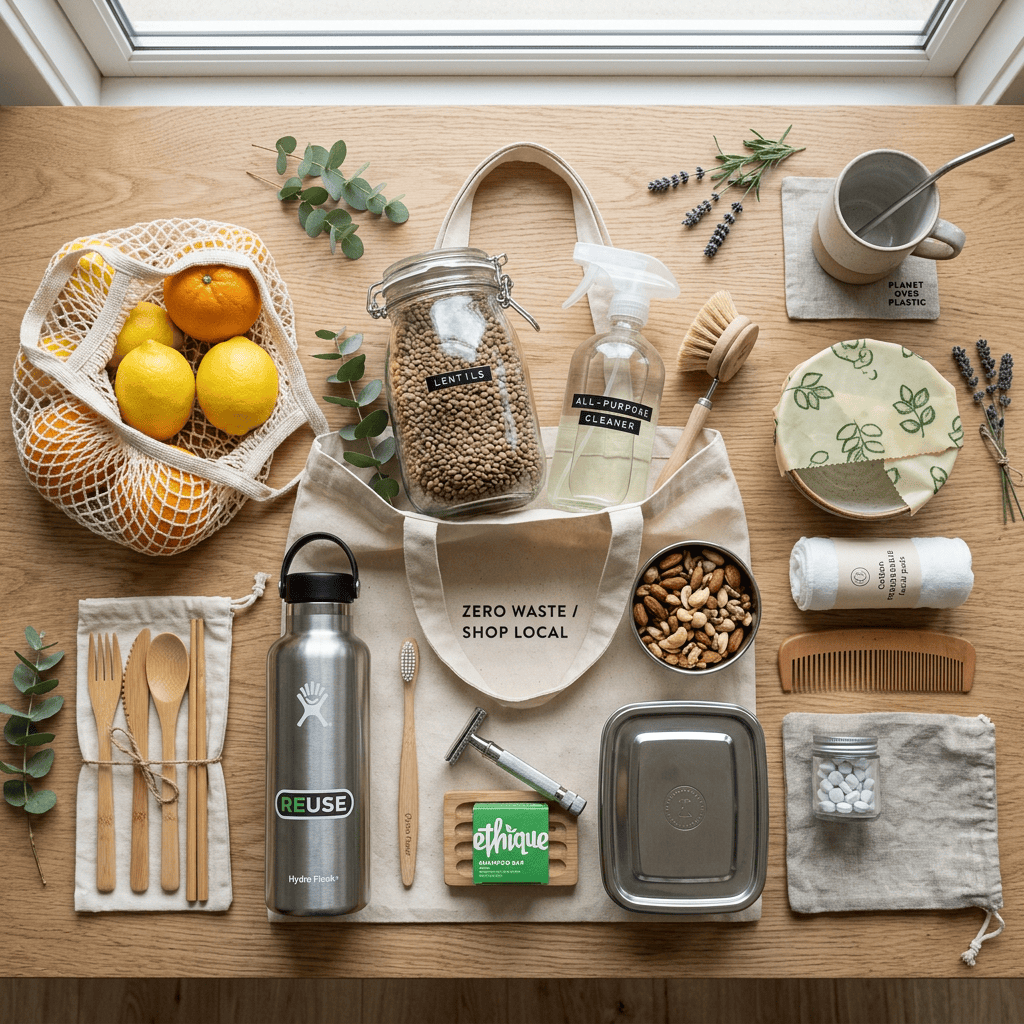
Zero waste items including reusable bag, stainless steel water bottle, wooden utensils, glass jar with lentils, natural cleaning spray, bamboo toothbrush, metal food container, shampoo bar, comb, and cotton rounds.

There’s a lot of noise around “zero waste” living that can feel overwhelming — bamboo everything, expensive swaps, an all-or-nothing pressure. What’s actually worked for me is much simpler: a handful of everyday products that quietly replaced their plastic-heavy counterparts, without needing a lifestyle overhaul.

1. Steel water bottle
The one swap that’s stuck the longest. No more buying plastic bottles when out, and it keeps water cool for hours.

2. Cloth pouches for groceries
Instead of taking a plastic bag for every small grocery run, a couple of cloth pouches folded into my bag handle most day-to-day shopping.

3. Bar shampoo
Skeptical at first, but a good bar shampoo lasts far longer than a bottle and skips the plastic packaging entirely. Bathroom shelf looks less cluttered too.

4. Reusable makeup remover pads
Replaced cotton pads completely — wash, reuse, repeat. Small change, but it adds up over months.

5. Steel lunch box
Swapped plastic containers for a steel one — keeps food fresher, and there’s no worry about plastic leaching into hot food.

None of these needed a “big” commitment — I added them one at a time, whenever the old version ran out or wore out. That’s usually the easiest way for a swap to actually stick, instead of trying to overhaul everything at once.

What Being a Woman Taught Me About Resilience

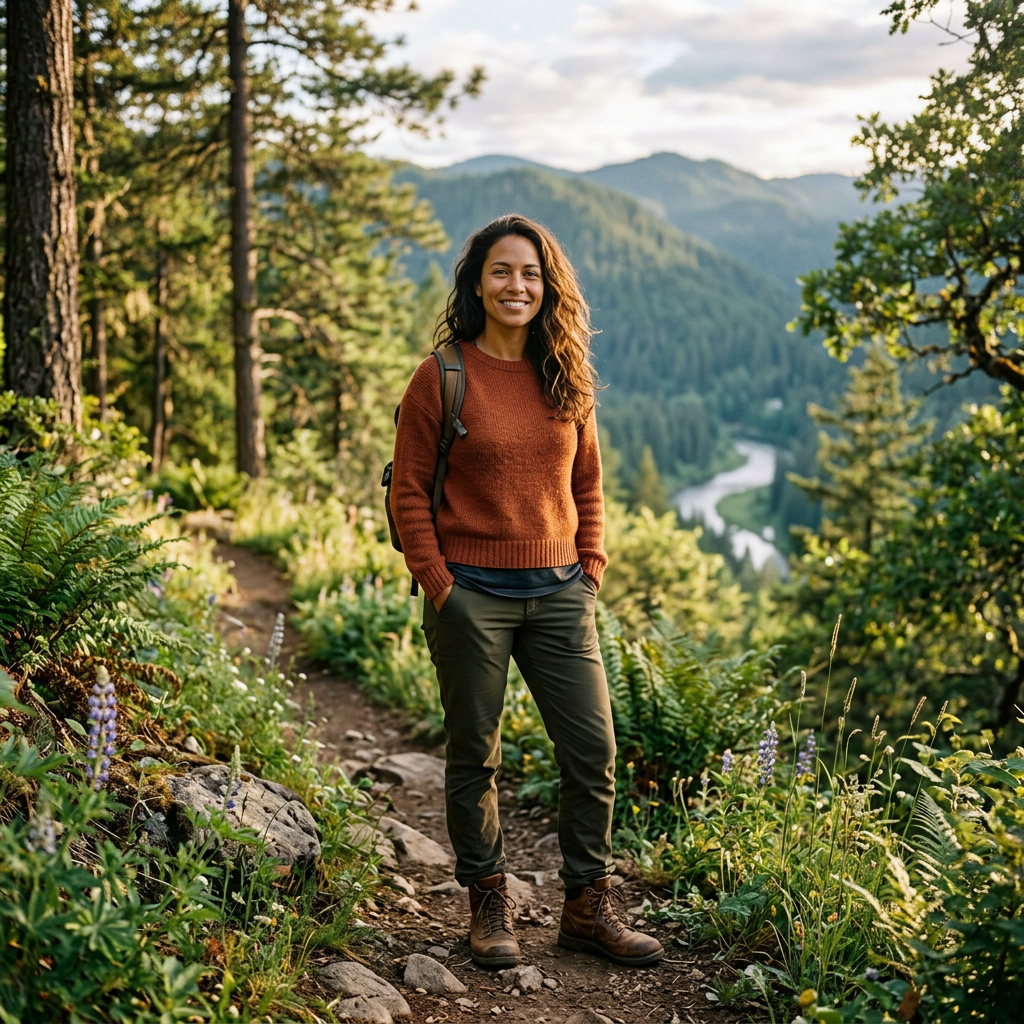
Woman standing on forest trail with backpack smiling

Resilience isn’t something that arrives all at once. For me, it’s been built quietly, through moments that didn’t feel significant at the time but added up to something stronger.

Starting over, more than once
Whether it was picking up an old blog after seven years, or starting a freelance career from scratch — starting over never gets less intimidating. What changes is your relationship with the fear. You learn to act despite it, not after it disappears.

Carrying responsibilities quietly
Being a woman often means holding things together — for family, for work, for yourself — without always being asked to, and without much recognition. Over time, that quiet weight teaches you a kind of strength that doesn’t need an audience to be real.

Learning that asking for help isn’t weakness
Resilience isn’t about doing everything alone. Some of the most resilient moments of my life have come from admitting I didn’t have it figured out, and reaching out anyway — to a friend, a stranger, or even just trying a new tool or platform for the first time.

Trusting the process, even without proof it’ll work
Publishing a blog with no audience. Sending a proposal with no guarantee. Starting a business with no safety net. Resilience often looks less like confidence, and more like doing the thing anyway.

If there’s one thing I’ve learned, it’s this: resilience isn’t the absence of doubt. It’s moving forward with the doubt still there, one small step at a time.