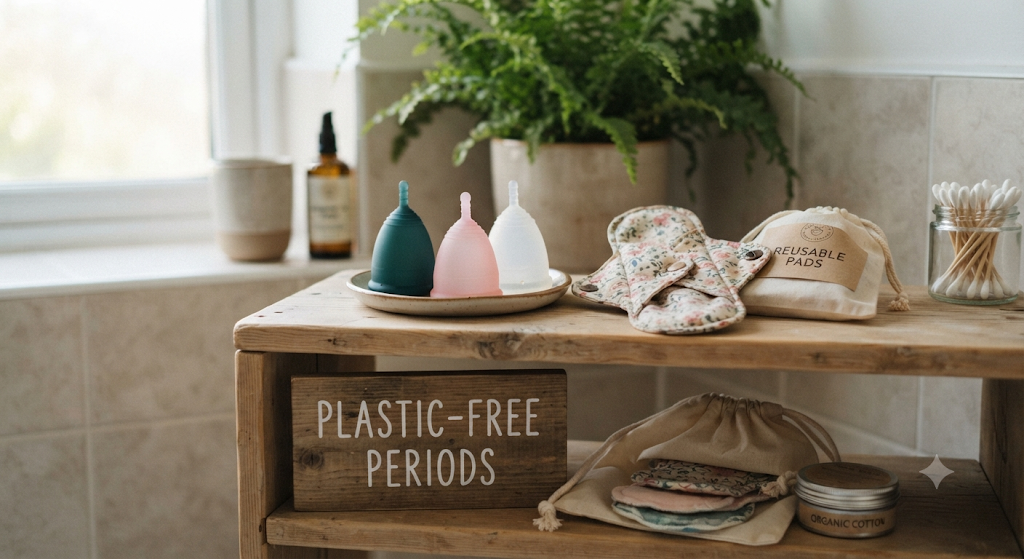
Reusable menstrual products get recommended constantly for their environmental benefits, but the practical side of actually switching — comfort, cost, hygiene, learning curve — gets far less honest discussion. Here’s a grounded look at what the switch actually involves.
The Waste Problem With Disposables
A single person using disposable pads or tampons generates a significant amount of non-biodegradable waste over their menstruating years — most of it made from plastic that will outlast the person who used it by centuries. This is the core environmental argument for reusables, and it’s a real one.
Menstrual Cups: The Learning Curve Is Real
Menstrual cups have the steepest initial learning curve of any reusable option — folding, insertion, and removal take a few cycles to get comfortable with. Most people who stick with it past the first two or three cycles report it becoming easy, but the early frustration is genuine and shouldn’t be dismissed.
Reusable Cloth Pads: The Gentler Switch
Cloth pads function almost identically to disposable pads, just washed and reused, making them a much easier first step into reusable products without requiring any new technique to learn. The tradeoff is needing proper washing facilities and a bit more laundry.
The Cost Math Over Time
Reusable products cost significantly more upfront — a good menstrual cup or a set of cloth pads can cost as much as several months of disposables. But since they last years, not months, the long-term cost is substantially lower, often paying for itself within a year or so of consistent use.
Hygiene Considerations
Reusable products require proper cleaning — boiling cups between cycles, thoroughly washing cloth pads — which takes more active effort than simply disposing of a used product. For people without reliable private washing access, this is a genuine practical barrier, not a minor inconvenience.
They’re Not All-or-Nothing
Many people who switch don’t go 100% reusable — using cups or cloth pads at home and disposables while traveling or in situations with limited hygiene facilities is a common, practical middle ground rather than an everything-or-nothing choice.
Bottom Line
Reusable menstrual products genuinely reduce waste and save money over time, but they come with real upfront cost, a learning curve, and hygiene logistics that aren’t right for every situation. They’re worth trying, but not something to feel obligated to switch to completely — a partial switch still meaningfully reduces waste compared to full reliance on disposables.


