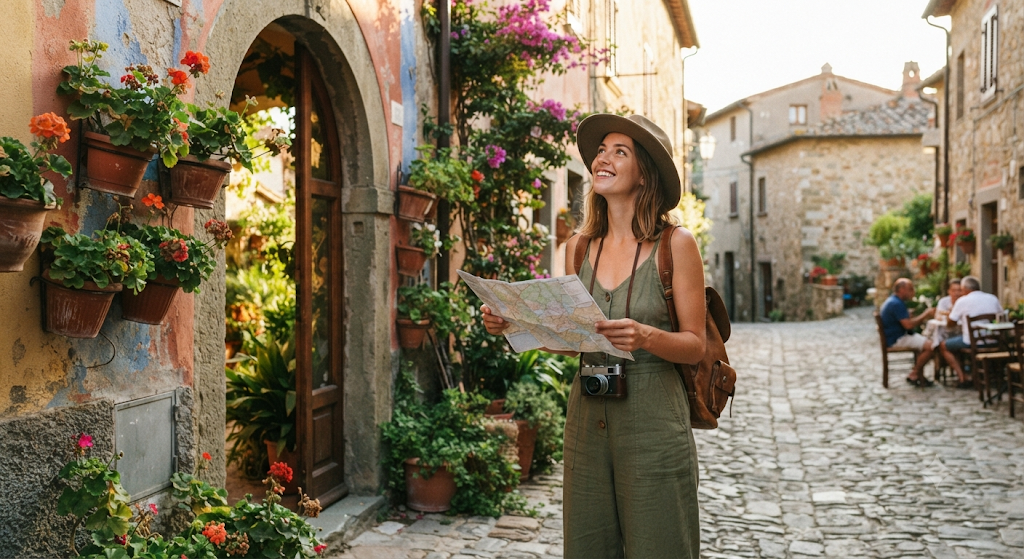
The Case for Taking a “No-Plan” Trip at Least Once

Why We Over-Plan

Planning feels like control — a way to make sure nothing goes wrong, nothing gets missed. But an itinerary built to prevent disappointment often also prevents discovery. The best meal, the best conversation, the best view often happen in the gaps a tight schedule doesn’t leave room for.

What a No-Plan Trip Actually Looks Like

It doesn’t mean zero preparation — book your first night’s stay and know roughly which region you’re headed to. Beyond that, let each day shape the next: ask locals what’s worth seeing, follow a street that looks interesting, stay an extra day somewhere that surprises you.

What You Gain

  • Real local recommendations instead of only algorithm-ranked ones
  • Flexibility to linger where you love it, skip what doesn’t excite you
  • Lower pressure — nothing is “wasted” if there was no fixed plan to deviate from
  • Sharper travel instincts that make future trips easier to plan, loosely

What to Expect (and Prepare For)

  • Some days will be less efficient than a planned trip
  • You may occasionally struggle to find accommodation on short notice in peak season
  • It asks for more comfort with uncertainty — which is also the point

How to Try It Without Full Chaos

  1. Pick a region with good transport connectivity as a safety net
  2. Carry a flexible return ticket
  3. Set a loose budget, not a loose itinerary
  4. Give yourself permission to change your mind mid-trip

Bottom Line

A no-plan trip trades certainty for discovery. Try it once, and you may find the version of the destination an itinerary would never have shown you.


Traveling With a Chronic Illness: What I’ve Learned

Reframe What “Good Travel” Looks Like

A trip built around rest days, shorter distances and flexible plans isn’t a lesser trip. It’s simply one designed around your actual body instead of an Instagram itinerary.

Before You Book

  • Research hospitals and pharmacies near your destination
  • Check if your medication is legal and available there
  • Confirm your travel insurance covers your condition
  • Choose accommodation with easy access — lifts, ground floor, proximity to help

Packing That Actually Protects You

  1. Carry medicines in original packaging with prescriptions
  2. Pack extra doses in case of delays
  3. Split medication between two bags in case one is lost
  4. Carry a simple medical summary card with your condition, medications and emergency contact

Pacing the Trip Itself

Plan one main activity a day instead of three. Build in buffer time between travel legs. Choose destinations with slower transitions over multi-city sprints when your body needs it.

Communicate Without Over-Explaining

You don’t owe anyone your full medical history. A simple “I need to go slow today” or “I have a condition that needs regular breaks” is enough for travel companions, guides or hotel staff.

The Emotional Part

Cancelling a plan or resting through half a trip can feel like failure. It isn’t. Chronic illness travel is still travel — just measured in what you experienced, not how much ground you covered.

Bottom Line

Traveling with a chronic illness asks for more preparation and self-compassion, not less courage. The world is still there to see — just at the pace your body can actually enjoy it.

The Rise of Farm Stays: Why City Women Are Booking Them

The Backlash to Perfectly Curated Trips

After a few years of hyper-Instagrammable resorts and infinity pools, a countertrend has emerged: farm stays that offer nothing more polished than fresh air, home-cooked meals, and actual physical work like harvesting vegetables or milking. For urban women whose daily life is screen-heavy and schedule-bound, the appeal is precisely the lack of curation.

What a Farm Stay Actually Looks Like

Most farm stays in India are run by families on working farms — coffee estates in Coorg, orchards in Himachal, paddy fields in Kerala — who host a small number of guests in simple rooms and include home-cooked meals as part of the experience. The draw isn’t luxury; it’s proximity to a slower, more physical rhythm of life that city routines don’t allow.

Why Women Specifically Are Driving the Trend

Many farm stays are also women-run, with host families where the woman of the house manages cooking, guest experience, and often the farm’s produce-based income stream. For urban women visiting, that creates a different kind of connection — less transactional tourist-host dynamic, more genuine exchange between women running very different lives.

A Break From Decision Fatigue

Part of the mental relief of a farm stay is the absence of choice paralysis — there’s no menu of forty activities to optimize, just the farm’s actual daily rhythm to join or not. For anyone whose regular life is full of constant micro-decisions, that structural simplicity is doing real psychological work, not just aesthetic work.

Bottom Line

Farm stays aren’t trying to compete with luxury resorts, and that’s exactly why they’re gaining ground — they’re offering something resorts structurally can’t: an actual break from being managed and catered to.

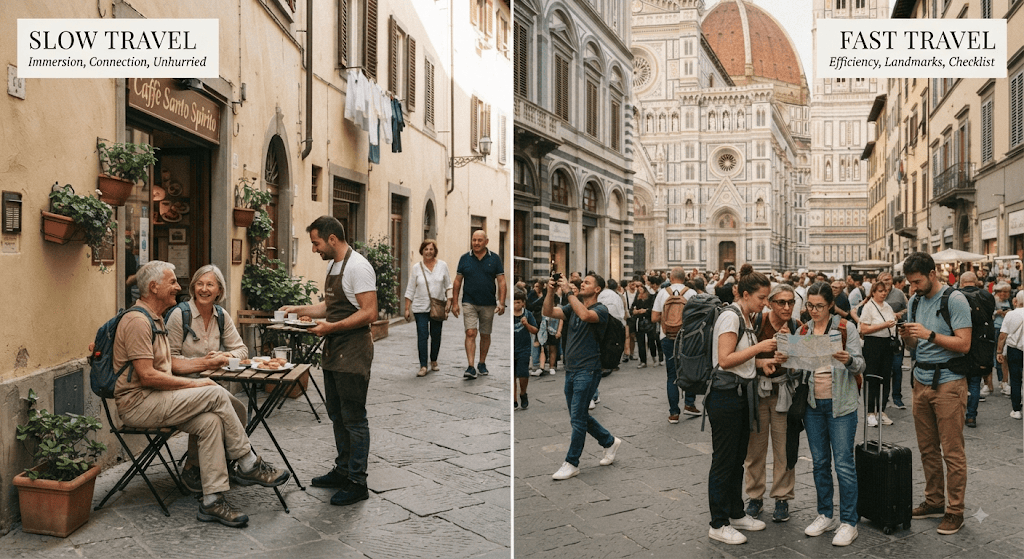
Slow Travel vs Fast Travel: Why Fewer Places Might Mean More

Somewhere along the way, travel started being measured by how many places you can visit, not how well you actually experienced any of them. Slow travel pushes back against that — fewer destinations, more time in each, and a very different kind of trip.

What Fast Travel Actually Gives You

Fast travel — five countries in ten days, a new city every 48 hours — delivers photos, checkmarks, and a broad surface-level sense of many places. It works well for people who genuinely want a highlight-reel overview, or who may not get the chance to return.

What Fast Travel Costs You

The tradeoff is depth. A city seen for one rushed day rarely allows for the kind of unplanned moments — a conversation with a shopkeeper, getting comfortably lost, revisiting a spot that mattered — that tend to be what people actually remember months later.

What Slow Travel Looks Like in Practice

Slow travel means picking fewer destinations and staying longer in each — days or weeks instead of hours. It allows time to settle into a place: understanding the rhythm of daily life there, not just its landmarks.

The Case for Repetition

Returning to the same café, market, or neighborhood multiple times over a longer stay builds a kind of familiarity that a first visit never can. Slow travel often means less novelty per day, but more genuine connection to the place by the end.

It’s Often Kinder to Your Budget and Body Too

Constant movement — new hotels, new transport, new logistics every day or two — is exhausting and expensive. Staying longer in fewer places usually means better accommodation deals, less transit cost, and considerably less travel fatigue.

Choosing What’s Right for the Trip

Fast travel isn’t wrong — sometimes a short window genuinely calls for covering more ground. But when time allows, slow travel tends to leave a much stronger, more personal impression of a place than a checklist of destinations ever does.

Bottom Line

A trip isn’t measured by how many pins you can drop on a map. Spending real time in fewer places, letting a destination unfold slowly instead of rushing through it, often leaves you with something a fast itinerary simply can’t — an actual sense of having been somewhere, not just passed through it.