Women Planting Mangroves: Coastal Shields Built by Hand

Why Mangroves Matter

Mangroves are salt-tolerant forests that grow where land meets sea. Their tangled roots slow waves, trap sediment and shelter fish and crabs. They also store carbon at high rates. India is reported to rank third globally in mangrove area, and areas sitting behind mangroves suffered less damage than exposed coasts when the 2004 tsunami struck.

Women Are Leading the Work

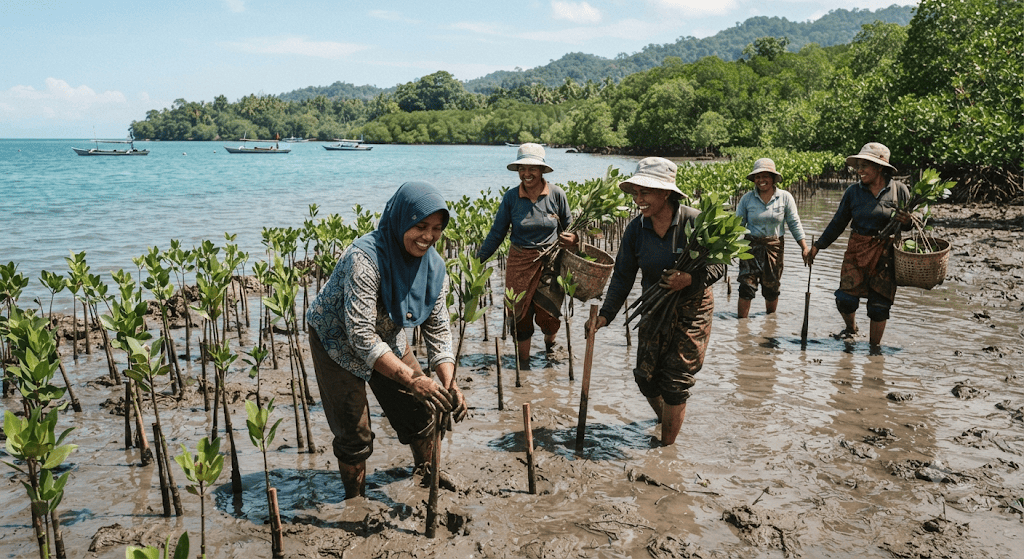
Across Andhra Pradesh, Odisha, Tamil Nadu, Maharashtra, West Bengal and Karnataka, women are managing mangrove nurseries, planting saplings and guarding forests. With many men away fishing for long periods, women have taken on the daily labour of restoration.

Stories From the Coast

Sundarbans, West Bengal. Women’s self-help groups raise saplings in nurseries and plant them along embankments. One NGO reports that 17 women’s groups there run mangrove nurseries, using an approach that links restoration to local income. The Sundarbans work later fed into a national mangrove plantation programme called MISHTI.

Puri, Odisha. Fisherwomen in Sana Jhadling tend mangrove saplings, motivated partly by memories of the devastating 1999 super cyclone.

Palghar, Maharashtra. A self-help group called Healthy Harvest restored degraded mangroves and also learned crab farming, earning about ₹85,000 a year collectively.

The Hard Part

Planting is hard, muddy work, often done knee-deep in clay. Restoration programmes are sometimes seasonal or short-lived, and weak enforcement and fragmented governance can undermine long-term success. Planting alone isn’t enough; trees need protection and follow-up for years.

How Travellers Can Help

  1. Choose guided mangrove walks or boat trips run by local cooperatives
  2. Stay quiet and keep boats at slow speed near nesting areas
  3. Never pick propagules or break roots
  4. Pay for local guides and buy from women-run stalls

Bottom Line

Mangrove restoration is slow, wet and unglamorous. The women doing it aren’t waiting for a rescue plan. They are building the coastline’s best defence themselves, one sapling at a time.
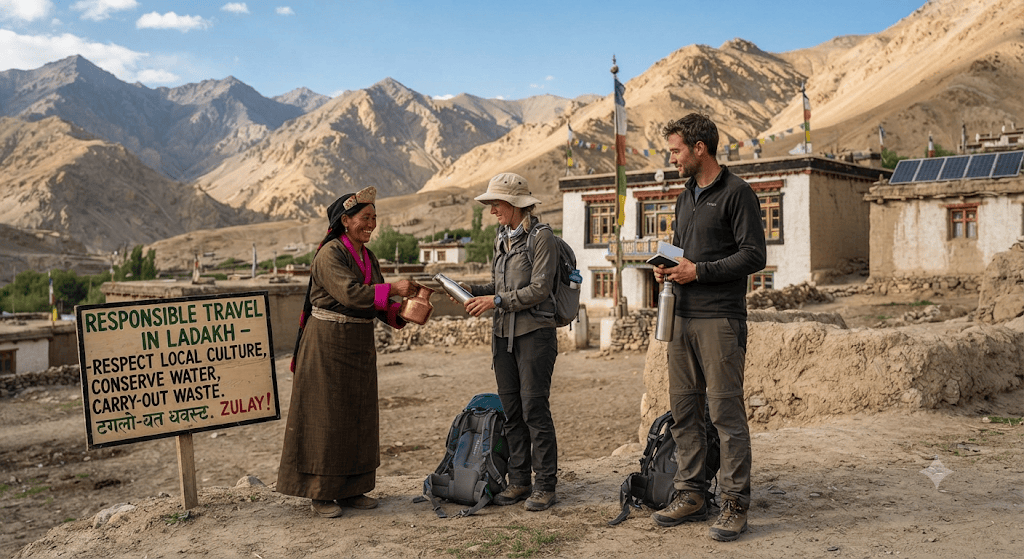
Responsible Travel in Ladakh: Water, Altitude and Local Culture

A Fragile Place With a Booming Visitor List

Ladakh sits in the Himalayan rain shadow and depends largely on glacier melt for water. Tourism has grown fast. One report notes that the 1980s saw only about two dozen hotels across Ladakh, while today there are several hundred, most of them in Leh. More bathrooms, more guesthouses and more visitors all draw on the same limited supply.

Water: The Biggest Issue

A study by the Ladakh Ecological Development Group found that an average Ladakhi uses about 21 litres of water a day, while a tourist may use as much as 75. Other estimates vary, but all point the same way: visitors use far more than residents.

What you can do:

  1. Take short, bucket-style baths instead of long showers
  2. Use local dry toilets where homestays offer them
  3. Carry a reusable bottle and refill it instead of buying plastic bottles
  4. Reuse leftover washing water for plants where you can

Altitude: Respect It

The Ladakh tourism department advises at least 48 hours of acclimatisation after arriving in Leh, plenty of fluids, light meals on day one, and avoiding sleeping pills or sedatives at altitude. Don’t rush to higher passes straight after landing, and descend if severe symptoms appear. If you plan to take altitude medication, speak to your doctor first.

Culture: You’re a Guest

Ladakh is home to a living Tibetan Buddhist culture. Ask before photographing people or monks, dress modestly at monasteries, walk clockwise around stupas and prayer wheels, and avoid touching religious objects.

Where You Stay Matters

Homestays keep money in local households and often use water more carefully than large hotels. They also give you home-cooked food and conversation that no hotel buffet can match.

Don’t Leave Plastic Behind

Plastic breaks down slowly at high altitude and can contaminate streams near popular spots. Carry your waste out with you.

Bottom Line

Ladakh doesn’t need fewer travellers so much as more thoughtful ones. Use less water, go slowly, stay local and leave the place as you found it.

The Rise of Women-Led Bird watching Tours in India

A Field That’s Been Mostly Male

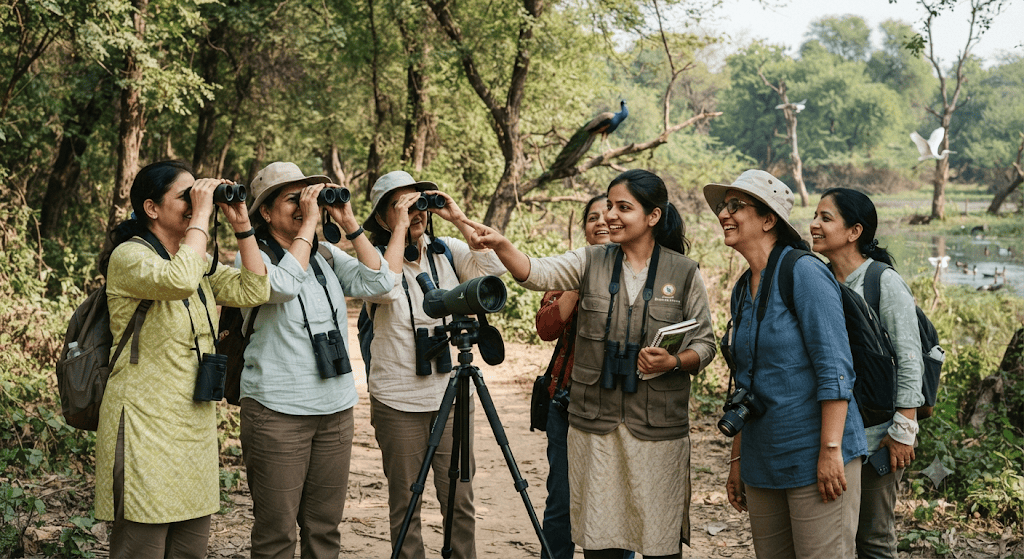
Wildlife guiding in India has historically skewed heavily male, and birdwatching has been no exception, even though India is one of the world’s most visited destinations for it. That’s beginning to shift — slowly, through training programs and community initiatives that are putting binoculars in the hands of women who’d never held one before.

From First-Time Birders to Leading Tours

In Tadoba, a workshop introduced a group of women — many holding binoculars for the first time — to birdwatching as a guiding skill. Within months, the same women were leading birding teams during an annual bird race and actively contributing to citizen science challenges through platforms like eBird. What started as training became a new professional identity.

A Growing, Visible Community

Bird Count India’s ongoing “Women in Birding” profile series has featured women birders from cities, villages, coastal regions, mountains, forests and islands across the country — naturalists, researchers, hobbyists and citizen scientists, each with a different route into the field. Annual events like Big Bird Day have also become spaces where women birders explicitly build community and swap field notes, not just species counts.

Why This Matters for Travel

A women-led or women-friendly birding tour often changes more than who’s holding the binoculars — it can mean different pacing, different safety considerations and local knowledge shaped by a different relationship to the landscape. For women travellers specifically, it can also mean a more comfortable group dynamic for early-morning or remote outings.

How to Find and Support These Tours

  1. Look for women naturalists and guides at wildlife reserves and sanctuaries
  2. Follow regional birding clubs — many now have women coordinators
  3. Join citizen science birding events, which often include guided women-led walks
  4. Ask tour operators directly whether they employ women naturalists

Bottom Line

Birdwatching rewards patience over physical strength, which may be exactly why more women are finding their place in it — first as hobbyists, then increasingly as the ones leading others into the field.

How to Choose a Responsible Wildlife Safari Operator in India

Why the Operator You Choose Matters

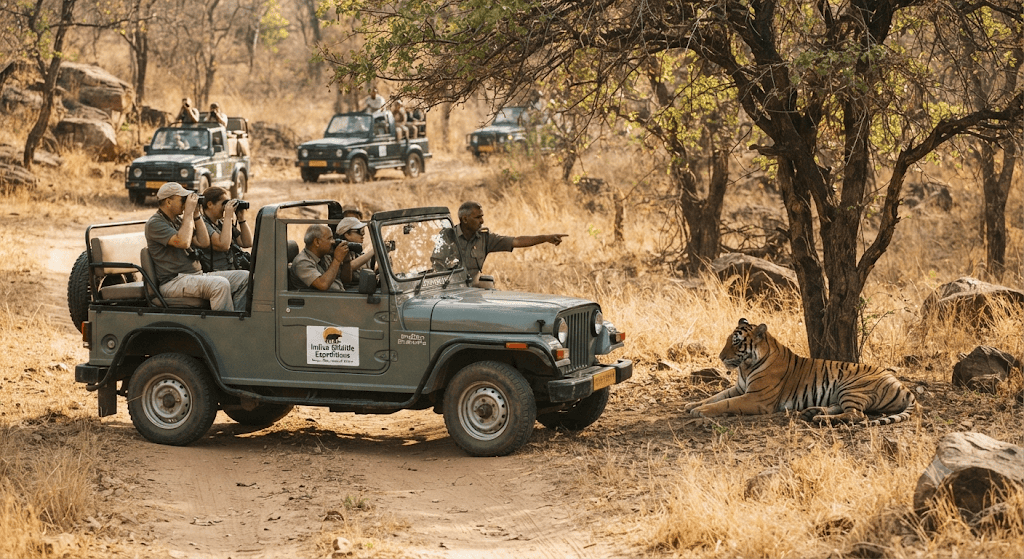
Tiger reserves and sanctuaries run on strict carrying-capacity rules — limits on how many vehicles and tourists can enter at a time. The National Tiger Conservation Authority’s own 2012 guidelines require tourist vehicles to stay a minimum distance apart to avoid crowding animals, and cap how much of a reserve’s area can be used for tourism at all. A good operator works within these limits. A bad one pressures forest guides to bend them for a better photo.

Recent Rules Are Getting Stricter, Not Looser

In November 2025, the Supreme Court tightened controls further — pushing tiger safaris toward buffer and non-forest land and banning night tourism in core zones. That direction matters for travellers too: an operator who still promises unrestricted night drives or guaranteed close-up sightings in core areas is not one working within current rules.

Signs of a Responsible Operator

  • Follows official carrying-capacity and vehicle-distance rules without complaint
  • Employs and trains local guides and drivers
  • Limits group size and vehicle speed inside the park
  • Briefs guests on not baiting animals, playing loud sounds or leaving the vehicle
  • Supports, or is transparent about, conservation or anti-poaching contributions
  • Doesn’t promise a guaranteed sighting — no ethical operator can promise wild animal behaviour

Questions to Ask Before Booking

  1. How many vehicles does your group send in per slot?
  2. What happens if we don’t spot the animal — do you follow the vehicle to force a sighting?
  3. Are your naturalists trained and are guides from the local community?
  4. What’s your policy on maintaining distance from animals?

Red Flags

  • Ads promising “100% tiger sighting”
  • Vehicles clustering around one animal
  • No mention of forest department permits
  • Guides encouraging loud calls or off-road driving to chase wildlife

Bottom Line

A responsible safari operator protects the very thing you paid to see. Choosing one carefully means fewer crowded jeeps around a stressed animal — and a better, more honest wildlife experience for you.

Women in Wildlife Photography: Patience, Risk, and the Perfect Frame

Wildlife photography has long carried an image of rugged, solitary men crouched in the bush for hours. That image is steadily being challenged by a growing number of women building genuine, respected careers in a field that demands patience, physical endurance, and a real tolerance for risk.

The Unglamorous Reality of the Work

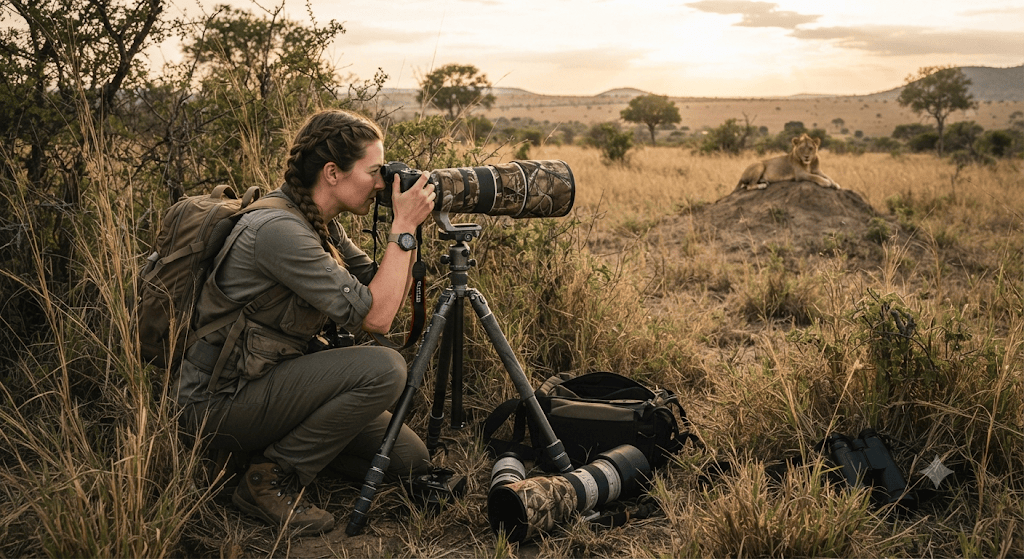
Wildlife photography involves far more waiting than shooting — hours or even days positioned near a waterhole or den site, in extreme heat or cold, often with no guarantee that the anticipated shot will ever materialize. The romantic image of the “perfect frame” hides an enormous amount of unglamorous, physically demanding patience.

Facing Skepticism in the Field

Women wildlife photographers have often described being underestimated by local guides, forest staff, or even fellow photographers early in their careers — an assumption that physically demanding fieldwork wasn’t a natural fit for them, an attitude that’s shifted considerably but hasn’t disappeared entirely.

Building Technical Expertise From Scratch

Wildlife photography requires specific technical mastery — understanding animal behavior to predict movement, working with specialized long lenses, managing unpredictable lighting in the field — skills built over years of dedicated practice, same as any photographer regardless of gender, though often without as many visible mentors or role models to learn from directly.

The Physical and Safety Risks Involved

Working in proximity to wild animals, navigating remote terrain, and spending extended periods in isolated locations carries genuine physical risk — risk that doesn’t discriminate by gender, but that women in the field have sometimes had to actively push back against being told they shouldn’t take on.

Bringing a Different Perspective to the Work

Some women wildlife photographers have spoken about approaching their subjects with a particular sensitivity to behavior and storytelling — less focused purely on the dramatic “action shot,” and more interested in quieter, relationship-driven moments within animal groups, adding a distinct voice to a field often dominated by a narrower visual style.

Mentorship and Visibility Growing Slowly

As more women’s work gains recognition through awards, publications, and social media visibility, it’s gradually becoming easier for newer photographers to see a viable path into the field — role models that simply didn’t exist as visibly a generation ago.

Bottom Line

Wildlife photography rewards patience, technical skill, and a willingness to sit with real discomfort and risk for the sake of a single frame — qualities that have nothing to do with gender, but that women in the field have had to prove repeatedly regardless. Their growing presence is slowly reshaping who gets to be seen as an authority in this space.

The Environmental Impact of Tourist Overcrowding in Hill Stations

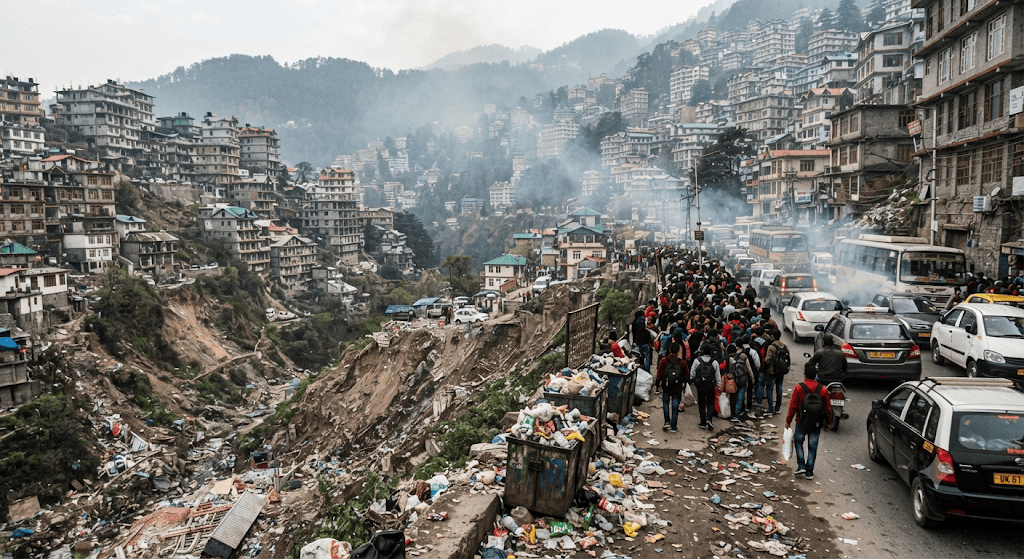
Every summer and long weekend, India’s popular hill stations see traffic jams stretching for kilometers, hotels overbooked well past reasonable capacity, and a strain on infrastructure never built for these numbers. The scenery that draws people there is quietly paying the price.

Water Systems Under Pressure

Many hill towns rely on limited natural water sources — springs, small reservoirs — that were never designed to support the seasonal population spikes tourism now brings. Water shortages during peak season have become a recurring issue in several well-known hill destinations, ironically driven by the very visitors drawn to their natural beauty.

Waste Management Falling Behind

Hill towns typically lack the large-scale waste processing infrastructure of bigger cities, and tourist season generates waste volumes far beyond what local systems can handle. This often results in visible littering, overflowing landfills at town edges, and waste finding its way into streams and forest areas.

Traffic and Air Quality

Long queues of idling vehicles on narrow hill roads, combined with unregulated parking on slopes never meant for heavy vehicle traffic, contribute to localized air pollution and slope stability concerns — a particularly serious issue in landslide-prone regions.

Construction Racing to Keep Up

Rising tourist demand has driven rapid, sometimes poorly regulated construction of new hotels and guesthouses, often on unstable slopes or encroaching on forest land — development that increases both environmental strain and genuine safety risk in these areas.

Impact on Local Wildlife and Vegetation

Increased foot traffic, off-trail wandering, and noise from a high volume of visitors disturbs local wildlife patterns and puts pressure on native vegetation, particularly in areas without clearly marked and enforced trail boundaries.

What More Sustainable Hill Station Travel Looks Like

  • Visit during shoulder seasons rather than peak weekends, spreading demand more evenly
  • Choose smaller, less-visited hill towns as alternatives to the most crowded, well-known destinations
  • Carry out your own waste, especially in areas without visible processing infrastructure
  • Support locally-run accommodations over large new constructions that add strain without local benefit
  • Stick to marked trails rather than off-path exploration that damages fragile vegetation

Bottom Line

The hill stations most affected by overcrowding are often loved precisely for qualities that overcrowding itself is steadily eroding. A more spread-out, mindful approach to visiting these places isn’t about avoiding them — it’s about making sure they’re still worth visiting years from now.

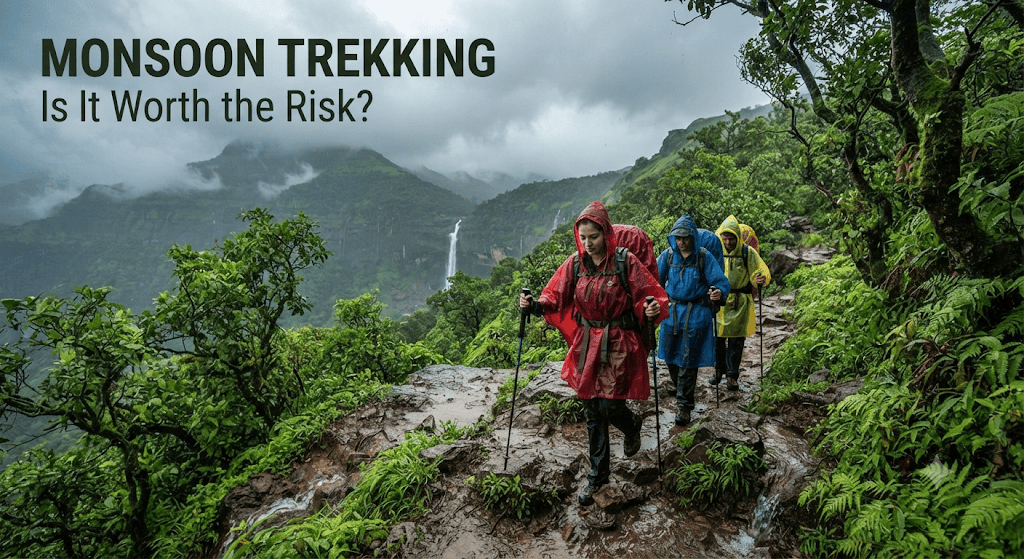
Monsoon Trekking: Is It Worth the Risk?

Monsoon turns familiar trails into something else entirely — waterfalls appear overnight, hillsides turn a deep green, and the whole landscape feels alive in a way summer treks rarely capture. It’s also, without question, riskier. Here’s an honest look at the trade-off.

Why Trekkers Are Drawn to Monsoon Treks

Monsoon transforms otherwise dry, dusty trails into lush, waterfall-lined landscapes that simply don’t exist the rest of the year. For trekkers chasing dramatic scenery and fewer crowds, this narrow seasonal window offers something genuinely unique.

The Real Risks Involved

  • Slippery, unstable terrain — mud and wet rock significantly increase the risk of slips and falls, especially on steep or rocky sections
  • Leeches and increased insect activity, particularly in forested, humid trail sections
  • Landslide and flash flood risk, especially in hill regions with loose soil or near river crossings
  • Reduced visibility from fog and heavy rain, making navigation harder on unmarked or less-trodden trails
  • Swollen rivers and streams that may be safely crossable in dry season but become dangerous during monsoon

Which Treks Handle Monsoon Better

Some regions — particularly in the Western Ghats and parts of the Sahyadri range — are specifically known and prepared for monsoon trekking, with well-established trails and local guides experienced in monsoon conditions. Higher Himalayan treks, by contrast, are generally far riskier and less advisable during peak monsoon months due to landslide-prone terrain.

How to Trek More Safely If You Choose To

  • Go with a local guide who knows current trail conditions, not just the route itself
  • Check recent weather and landslide advisories specific to the exact trail, not just the general region
  • Carry proper gear — grippy waterproof shoes, dry bags, and a raincoat rather than just an umbrella
  • Avoid river crossings during or right after heavy rainfall, even if the crossing seemed manageable before
  • Have a flexible itinerary that allows turning back if conditions worsen, rather than pushing through to stick to a fixed plan

Who Monsoon Trekking Isn’t Right For

First-time trekkers, anyone trekking solo without local knowledge, or routes without established monsoon-season precedent are generally better attempted in drier months. Monsoon trekking rewards experience and preparation far more than trekking in more forgiving seasons.

Bottom Line

Monsoon trekking can be genuinely spectacular, but it demands real respect for the added risk — proper gear, local knowledge, and a willingness to turn back. It’s not inherently reckless, but it’s also not something to attempt casually or without real preparation.

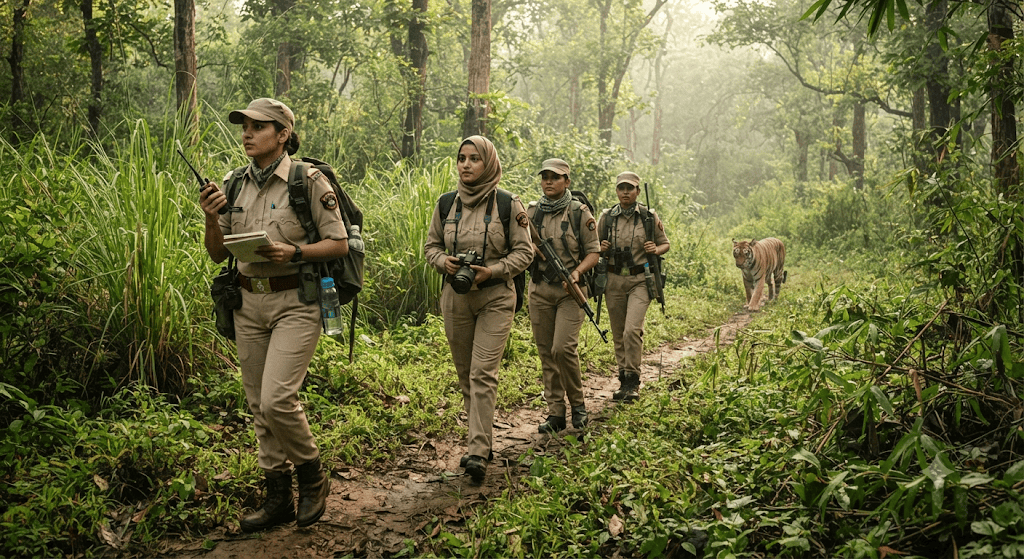
Women Rangers and Forest Guards Protecting India’s Wildlife

Forest protection has long been seen as a man’s domain in India — long patrols, physical risk, remote postings. But across the country’s reserves, thousands of women are now doing exactly this work, often in some of India’s most challenging terrain.

Gir National Park: The Lionesses of Gujarat

<cite index=”1-1″>Gujarat’s Gir Forest appointed its first batch of 51 women forest guards in 2007</cite>. These women patrol vast stretches of forest protecting the world’s only wild population of Asiatic lions, regularly handling wildlife rescues — from injured lion cubs to venomous snakes — as part of routine duty rather than exceptional heroics.

Kaziranga’s “Van Durgas,” Assam

<cite index=”3-1″>At Kaziranga National Park, female forest guards known locally as “Van Durgas” come from rural communities and work to protect wildlife and habitat across the park’s roughly 430 square kilometers</cite>. <cite index=”4-1″>The park now includes around 40 female rangers across roles like Range Officers, Forest Guards, and Foresters</cite>, alongside a dedicated women’s unit within the Special Rhino Protection Force guarding the endangered greater one-horned rhinoceros from poaching.

Dudhwa Tiger Reserve, Uttar Pradesh

<cite index=”6-1″>Dudhwa Tiger Reserve has recruited young men and women as forest watchers</cite>, with officials describing it as a pioneering effort to bring women into forest protection roles that had rarely included them before.

Gurukula Botanical Sanctuary, Western Ghats

<cite index=”7-1″>In Kerala’s Western Ghats, an all-female team of 27 women serves as guardians of the region’s rare and threatened plant species</cite>, working to protect biodiversity in one of the world’s most ecologically significant and endangered mountain ranges.

Why This Shift Matters

Beyond conservation outcomes, women forest guards often bring specific advantages — better rapport with village women during community conflict resolution, and a visible signal to younger women in these regions that this kind of work is possible for them too. Several of the women in these programs have spoken about how their entry inspired others locally to apply.

The Work Isn’t Symbolic

These aren’t ceremonial postings. Women forest guards conduct real patrols, handle wildlife emergencies, and in some cases carry weapons as part of anti-poaching units — work that comes with genuine physical risk and long stretches away from family, often in remote, difficult terrain.

Bottom Line

India’s forests are being protected, in real and growing numbers, by women who chose this work deliberately — not as an exception, but as a profession. Their presence is reshaping who gets to be seen as a protector of India’s wildlife, one patrol at a time.

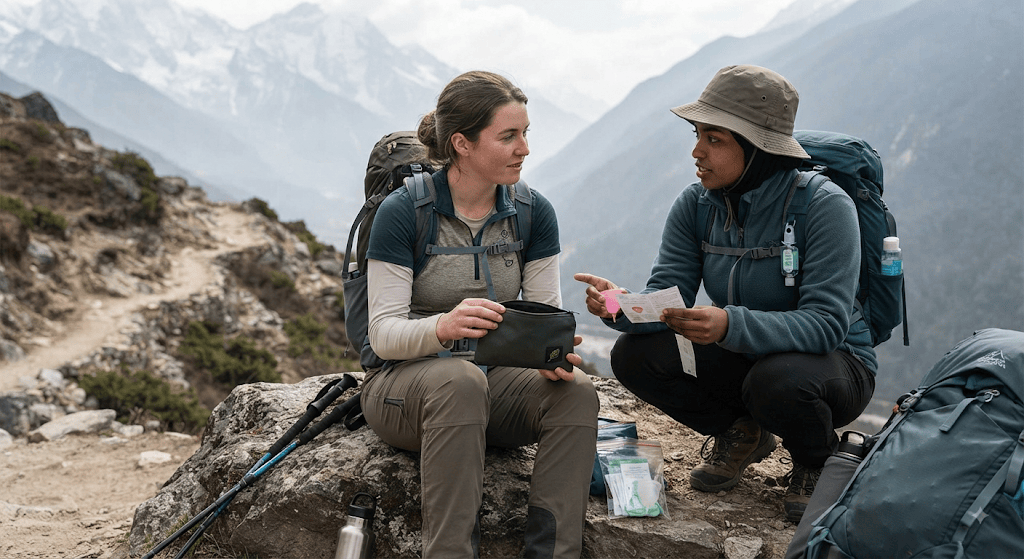
Menstrual Health on the Trail: What No One Tells You Before a Trek

Most trekking guides cover fitness, gear, and altitude in detail — but rarely address something half of all trekkers eventually deal with: managing a period on the trail. Here’s the practical information that’s usually left unsaid.

Trekking During Your Period Is Completely Possible

There’s a persistent myth that menstruating and high-altitude trekking don’t mix well. In reality, most people can trek comfortably during their period with the right preparation — it’s rarely a reason to cancel or delay a planned trek.

Choose the Right Products for the Terrain

Multi-day treks with limited access to disposal facilities make menstrual cups or period underwear far more practical than pads or tampons, which require more frequent changing and generate more waste to carry out. Trying a new product at home well before the trek — not for the first time on the trail — avoids unpleasant surprises.

Pack Out, Don’t Leave Behind

Any used menstrual products need to be carried out in a sealed bag, exactly like other non-biodegradable waste — leaving them on the trail (even buried) is both an environmental and hygiene issue in fragile mountain ecosystems.

Managing Hygiene With Limited Water

Carrying wet wipes, a small bottle of water for rinsing, and hand sanitizer covers most hygiene needs when a proper toilet or shower isn’t available for a day or two. Planning a private moment during breaks, rather than waiting for a “perfect” spot, usually works better than expecting ideal conditions.

Cramps and Altitude

Cramps can occasionally feel more intense at altitude due to increased blood flow and exertion. Carrying a basic pain reliever, staying hydrated, and pacing more gently on heavier flow days helps manage this without derailing the whole trek.

Talk to Your Trek Leader If Needed

A good trek leader has dealt with this before and can help plan slightly longer breaks or adjust pace if needed — bringing it up isn’t awkward, it’s practical trip planning, same as mentioning any other physical consideration.

Bottom Line

A period is not a valid reason to skip a trek you’ve been looking forward to. With the right products, a little extra planning, and a practical mindset about waste and hygiene, it’s entirely manageable — it just rarely gets talked about openly enough for first-timers to know that going in.

How to Choose Eco-Friendly Homestays While Booking Online

Booking platforms are full of listings tagged “eco-friendly” or “sustainable” — but the label alone doesn’t mean much without digging a little deeper. Here’s how to actually evaluate a homestay before booking, instead of taking the tag at face value.

Look Past the Tag, Into the Description

A genuinely sustainable homestay usually describes specific practices — solar power, rainwater harvesting, composting, local sourcing — rather than just the word “eco-friendly” sitting alone in the listing title. Vague labeling with no specifics is often a sign the tag is more marketing than practice.

Check for Local Ownership and Employment

Homestays run by local families, employing local staff, tend to have a smaller footprint and a more direct positive impact than larger properties built and staffed from outside the region. Listings that mention this directly are usually more transparent about their model.

Read Reviews for Specifics, Not Just Ratings

A high star rating alone doesn’t confirm sustainability. Reviews that mention things like “loved the solar-heated water” or “they compost all kitchen waste” are far more reliable indicators than a generic five-star rating with no detail.

Ask Before You Book

Most hosts are happy to answer direct questions about water sourcing, waste management, or energy use if asked. A quick message before booking — “how do you manage waste and water here?” — often reveals more than the listing itself.

Watch for Over-Construction

A homestay advertised as eco-friendly but built with heavy concrete construction, large manicured lawns, or excessive amenities is often working against the very label it’s using. Simpler, more traditional construction methods usually align better with genuine sustainability.

Prioritize Small Over Large

Smaller, family-run homestays generally have a lighter environmental footprint than larger resort-style “eco” properties, simply due to scale — fewer rooms, less infrastructure, less resource consumption per guest.

Bottom Line

“Eco-friendly” is an easy word to add to a listing and a harder one to actually practice. A little extra reading — and a direct question or two before booking — goes a long way toward finding a stay that’s genuinely living up to the label, not just wearing it.