The Rise of Farm Stays: Why City Women Are Booking Them

The Backlash to Perfectly Curated Trips

After a few years of hyper-Instagrammable resorts and infinity pools, a countertrend has emerged: farm stays that offer nothing more polished than fresh air, home-cooked meals, and actual physical work like harvesting vegetables or milking. For urban women whose daily life is screen-heavy and schedule-bound, the appeal is precisely the lack of curation.

What a Farm Stay Actually Looks Like

Most farm stays in India are run by families on working farms — coffee estates in Coorg, orchards in Himachal, paddy fields in Kerala — who host a small number of guests in simple rooms and include home-cooked meals as part of the experience. The draw isn’t luxury; it’s proximity to a slower, more physical rhythm of life that city routines don’t allow.

Why Women Specifically Are Driving the Trend

Many farm stays are also women-run, with host families where the woman of the house manages cooking, guest experience, and often the farm’s produce-based income stream. For urban women visiting, that creates a different kind of connection — less transactional tourist-host dynamic, more genuine exchange between women running very different lives.

A Break From Decision Fatigue

Part of the mental relief of a farm stay is the absence of choice paralysis — there’s no menu of forty activities to optimize, just the farm’s actual daily rhythm to join or not. For anyone whose regular life is full of constant micro-decisions, that structural simplicity is doing real psychological work, not just aesthetic work.

Bottom Line

Farm stays aren’t trying to compete with luxury resorts, and that’s exactly why they’re gaining ground — they’re offering something resorts structurally can’t: an actual break from being managed and catered to.


How to Plan a Multi-Generational Family Trip Without Chaos

Accept That One Itinerary Won’t Fit Everyone

Grandparents want rest and familiar comforts, parents are managing kids and logistics, and younger family members want to actually explore. Trying to build a single schedule that satisfies all three is where most multi-generational trips start to strain. The fix isn’t compromise on every activity — it’s building in optional branches within the same trip.

Choose a Base, Not a Circuit

A single well-located base with day trips radiating out works far better than a moving itinerary with multiple hotel changes. It cuts down on the packing-unpacking cycle that’s exhausting for kids and genuinely hard on older joints, while still giving everyone new things to see each day.

Talk Budget Before You Talk Destination

Money is the fastest way a family trip turns tense, especially across generations with different financial comfort zones. Deciding upfront how costs will be split — evenly, by income, or with one generation treating a portion — avoids the awkward math happening in real time at checkout.

Build In Deliberate Together-Time and Apart-Time

Not every meal or activity needs the whole group. Scheduling a few must-do shared moments — one big dinner, one shared excursion — while leaving other blocks open for smaller groups to split off keeps the trip feeling like a choice rather than an obligation.

Plan for the Medical “What Ifs” Early

With older and younger travelers in the same group, having a shared understanding of medications, allergies, and the nearest reliable hospital at each stop isn’t paranoia — it’s the kind of prep that lets everyone actually relax once the trip starts.

Bottom Line

A multi-generational trip works when it’s designed around flexibility, not around forcing everyone into the same pace. Plan for difference, and the trip becomes a lot less chaotic than it looks on paper.

The Hidden Cost of “Instagrammable” Tourist Spots

A Feed Full of the Same Ten Places

Social media has a habit of funneling tourists toward the same narrow set of viewpoints, cafes, and trails — the ones that photograph well. What looks like organic discovery is often just an algorithm repeating the same dozen locations until they’re overwhelmed by visitors chasing an identical shot.

What Overcrowding Actually Does on the Ground

Popular hill stations and viewpoints across India have reported visible degradation tied directly to tourist volume — trail erosion from foot traffic that was never designed for that scale, litter accumulation, water stress in towns whose infrastructure serves a fraction of the population that shows up in peak season, and disruption to wildlife that once had those spaces to itself.

The Local Cost Nobody Photographs

Beyond the environment, overcrowding changes the character of a place for the people who live there year-round — rising costs, traffic in towns not built for it, and a shift toward businesses that cater purely to quick photo-stop tourism rather than to residents. The “hidden gem” era of a location is often also its most sustainable one.

How to Actually Travel Differently

Choosing a lesser-known viewpoint over the famous one, visiting in the off-season, and following local guidance about which trails or areas are under ecological stress does more good than any single “sustainable travel” hashtag. Sometimes the most responsible photo is the one you decide not to chase.

Bottom Line

A photogenic destination isn’t automatically a healthy one to visit at scale. The most Instagrammable spot in India might also be the one that most needs tourists to look elsewhere for a while.

Traveling During Your Pregnancy: What Actually Works

The Second Trimester Is Usually the Sweet Spot

Most of the nausea and extreme fatigue of the first trimester has typically eased by the second, and the size and discomfort of the third haven’t set in yet. This is why most doctors and experienced travelers point to weeks 14–27 as the most comfortable window for trips, though every pregnancy is different enough that this is a general pattern, not a guarantee.

Get the Green Light First, Not as an Afterthought

A quick check-in with your doctor before booking — not just before departure — helps you plan around any pregnancy-specific risk factors, flag destinations with limited medical access, and get clarity on any airline documentation you might need closer to your due date.

Comfort Gear Is Not Optional Luxury

A compression sock pair, a travel pillow that actually supports your lower back, and snacks that settle an unpredictable stomach aren’t indulgences on a pregnancy trip — they’re the difference between a manageable journey and a miserable one. Packing light matters more than usual, since you’ll have less patience for wrestling heavy bags.

Build In More Stops Than You Think You Need

Long stretches without movement increase discomfort and circulation issues. Choosing itineraries with natural breaks — a stopover flight instead of one long haul, a road trip with planned rest points — makes a real difference in how your body handles the trip.

Know Where the Nearest Hospital Is, Always

This isn’t about expecting something to go wrong — it’s about removing one more thing to figure out under stress if it does. Knowing the nearest reliable medical facility at every stop is a five-minute research task that buys real peace of mind.

Bottom Line

Traveling while pregnant isn’t off-limits — it just asks for more intentional planning than your usual trips did. Get the medical go-ahead, pack for comfort, and build slack into the schedule.

Traveling With Aging Parents: A Daughter’s Guide

The Pace Has to Change First

The biggest adjustment isn’t the destination, it’s the rhythm. Fewer stops per day, built-in rest windows, and no back-to-back travel days. Trying to fit a solo-trip pace onto a trip with parents usually ends in exhaustion for everyone, including you.

Pick Places With Easy Logistics

Destinations with step-free access, nearby medical facilities, and short transfer times between stops reduce stress far more than a scenic-but-remote location will add to the experience. It’s worth choosing comfort over checklist-worthy sights, especially on a first trip together.

Have the Health Conversation Before You Book

A quiet, practical conversation about mobility limits, medication schedules, and comfort levels — before booking anything — saves you from having it mid-trip under pressure. It’s an uncomfortable conversation to initiate, but it’s far easier done at home than in an unfamiliar city.

Let Them Lead Some of the Decisions

Aging parents are often used to being planned around rather than planned with. Involving them in choosing at least a few stops — a restaurant, a specific sight, a pace for the day — turns the trip into something shared rather than something managed.

Pack for Two Different Travelers

Your carry-on essentials and theirs will look different. A basic travel medical kit, familiar snacks, and a printed (not just digital) itinerary go a long way in reducing anxiety for a parent who may not be as comfortable navigating apps and QR codes on the move.

Bottom Line

Traveling with aging parents isn’t a scaled-down version of your usual trip — it’s a different kind of trip entirely, built around comfort and connection rather than distance covered.

How Climate Change Is Reshaping Himalayan Trekking Routes

The Glaciers Are Moving Faster Than the Maps

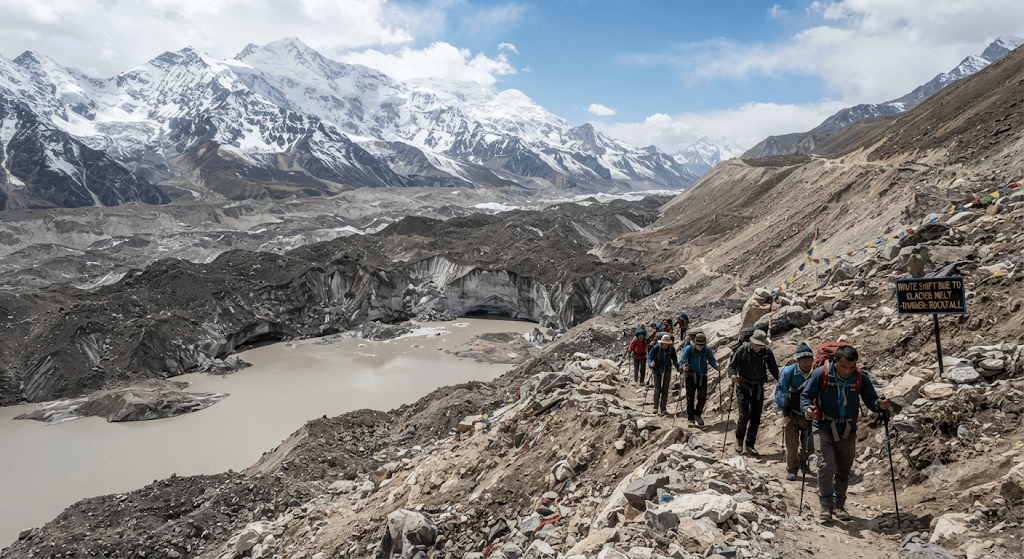
The Gangotri Glacier, source of the Ganga, has retreated more than 1.5 kilometers over the past century, with the pace accelerating in recent decades. Trekkers returning to routes they walked five years ago are describing landscapes that no longer match their memory — snowfields replaced by exposed rock and loose scree.

Sikkim’s Wake-Up Call

In October 2023, a section of frozen moraine above South Lhonak Lake in North Sikkim collapsed, triggering a glacial lake outburst flood. The lake had grown roughly eightfold since 1976 as it filled with meltwater — a slow build that scientists had been monitoring for years before the break. Since then, the permitted trekking endpoint for the popular Goechala trek has been moved back from the original pass to an earlier viewpoint as a safety measure.

Water Sources You Can No Longer Rely On

Streams and springs that trekkers once used as reliable refill points along established trails are now either running dry earlier in the season or flooding unpredictably during the monsoon. Guides across the region report having to rebuild their mental maps of where water actually is, season by season.

What This Means If You’re Planning a Trek

Routes considered fixed for decades are now being reassessed every single season by local operators. High-altitude camps are being relocated, permitted endpoints are shifting, and “the trail I did last year” is no longer a safe assumption. Booking with operators who actively track these changes — rather than running the same fixed itinerary every year — matters more now than it used to.

Bottom Line

Himalayan trekking isn’t disappearing, but the version of it built on fixed, unchanging trails is. The mountains are rewriting their own maps, and trekkers need to travel with that reality in mind.

Women Who Turned Their Hobby Into a Travel Business

It Usually Starts With One Trip

Almost every woman-led travel business in India traces back to the same origin story: a solo trip, a backpacking detour, or a family holiday that turned into an obsession. What began as a hobby — planning itineraries for friends, documenting hidden trails, or running a small travel Instagram page — slowly turned into paying work. The hobby-to-business pipeline is especially visible among Indian women travel creators and curators, several of whom have been publicly recognized for building travel brands out of what started as personal passion projects.

Why Travel Businesses Are a Natural Pivot

Unlike many entrepreneurial paths, travel businesses built from a hobby don’t require a sudden reinvention. The credibility is already there — years of trip planning, local contacts, packing hacks, and a following that trusts your recommendations. That trust converts directly into bookings, sponsored trips, and curated tour packages.

The Real Work Behind the Wanderlust

What doesn’t show up on the Instagram grid is the operational side — vendor negotiations, safety protocols for group trips, cancellation policies, and the unglamorous admin of running any small business. Many women in this space talk about the shift from “traveling for fun” to “traveling as logistics,” where the joy has to be actively protected once it becomes work.

Turning Passion Into a Sustainable Model

The women who make it last usually specialize — solo women’s trips, offbeat treks, slow-travel itineraries, or culturally immersive experiences — rather than trying to compete with big travel agencies on price. Niche builds loyalty, and loyalty is what keeps a hobby-turned-business alive past the first excited year.

Bottom Line

A hobby becomes a business the moment someone else is willing to pay for your judgment. For India’s women travel entrepreneurs, that judgment was built one trip at a time — long before it ever became a job.

Why More Indian Women Are Choosing to Travel After 40

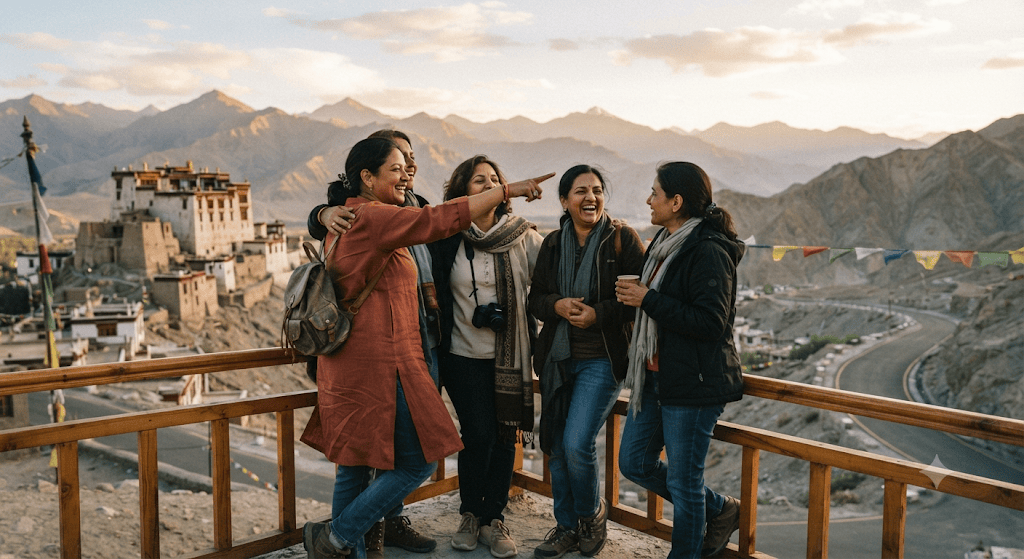
For a long time, the image of solo or adventurous travel skewed heavily toward the young — backpackers in their 20s, gap-year trips, pre-marriage freedom. A quieter but steadily growing trend tells a different story: more Indian women in their 40s, 50s, and beyond are booking trips, often independently, many for the first time in their lives.

Life Stage Finally Allows It

For many women, the years spent raising children or managing a household leave little room for personal travel plans. As children grow more independent, some women find themselves with both the time and the emotional space to prioritize a trip that was postponed for decades.

Financial Independence Plays a Real Role

A growing number of women in this age group have their own income, savings, or financial say in the household — a shift from earlier generations where travel decisions and budgets were more likely controlled by a spouse or family structure. This independence directly enables travel choices made on their own terms.

A Deliberate Reclaiming of Personal Time

Several women who start traveling later in life describe it less as a bucket-list activity and more as a deliberate reclaiming of a version of themselves that existed before marriage, children, and career responsibilities took over most of their time and identity.

Travel Communities Built for This Demographic

Recognizing this shift, several travel groups and tour operators have started designing itineraries and communities specifically for older women travelers — addressing both physical comfort needs and the specific social dynamics of a group where everyone is navigating similar life stages.

Confidence Built From Life Experience

Many women in this age group describe approaching travel with a level of confidence and calm decision-making that comes from decades of managing households, careers, or both — skills that translate surprisingly directly into handling the logistics and occasional unpredictability of travel.

Pushing Back Against Social Expectations

Choosing to travel — especially solo — later in life sometimes still meets resistance from extended family or social circles who view it as an unusual priority at that life stage. Many women navigating this describe it as a conscious, sometimes difficult decision to prioritize their own experience over external expectations.

Bottom Line

Travel after 40 isn’t a consolation prize for missed opportunities earlier in life — for many Indian women, it’s a genuinely deliberate, hard-won chapter that only became possible once time, finances, and confidence aligned. It’s reshaping what “who travels” actually looks like in India.

Sustainable Souvenirs: What to Buy (and Avoid) While Traveling

Souvenir shopping feels like a harmless, even supportive part of travel — but not every souvenir actually benefits the place it comes from, and some genuinely work against it. A little awareness turns souvenir shopping into something that actually gives back.

What to Look For

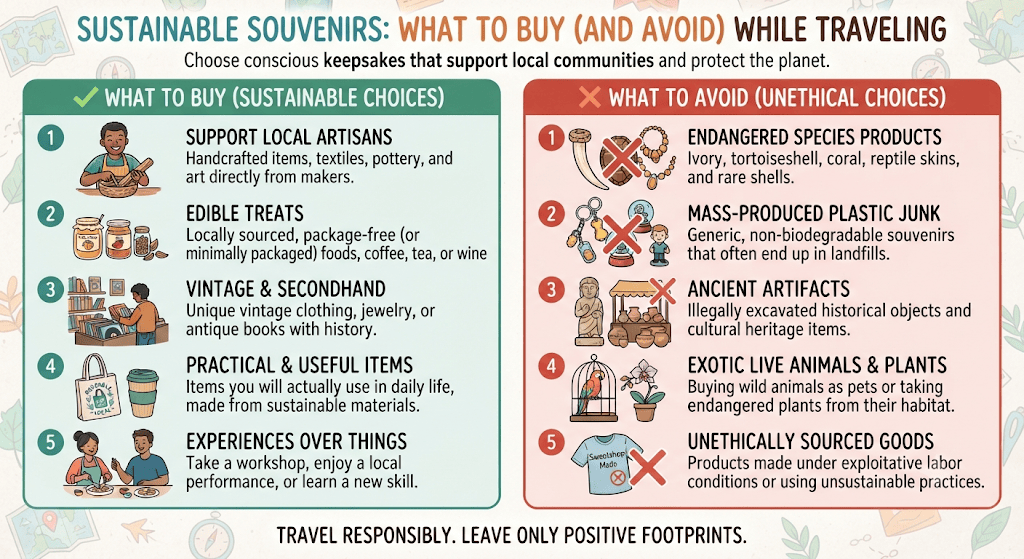
  • Handmade, locally produced items — textiles, pottery, woodwork — made by artisans in the region you’re visiting, rather than imported items simply sold there
  • Products from cooperatives or artisan collectives, which often ensure fairer pay reaches the actual makers rather than being absorbed by middlemen
  • Items made from sustainably sourced materials, particularly relevant for wood, shell, or plant-based products
  • Food items and spices sourced and packaged locally, which support regional agriculture directly

What to Avoid

  • Wildlife products — anything made from coral, ivory, animal skins, shells, or feathers, which often drives illegal poaching or environmental damage regardless of how it’s marketed
  • Mass-produced “local” items that are actually manufactured elsewhere and shipped in, offering no real benefit to the local economy despite the packaging
  • Ancient or archaeological artifacts, genuine or convincingly fake, which are frequently illegal to export and contribute to looting when authentic
  • Single-use or excessive packaging, which undercuts the sustainability of an otherwise reasonable purchase

Ask Before You Buy

A simple question to the seller — “who makes this, and where?” — often reveals a lot. Sellers proud of local, artisan-made goods are usually happy to share the story behind them; vague or evasive answers are often a signal the item isn’t what it’s marketed as.

Consider the Souvenir’s Actual Life After the Trip

A souvenir that ends up unused in a drawer within a year has the same environmental footprint as any other unnecessary purchase, regardless of how ethically it was sourced. Choosing something genuinely useful or meaningful — rather than buying for the sake of having bought something — reduces this kind of eventual waste.

Supporting the Economy Beyond Souvenirs

Buying meals, tours, and accommodations from local, small-scale businesses often has a bigger positive economic impact than souvenir shopping alone — souvenirs are one part of a broader pattern of how travel spending reaches (or bypasses) the local community.

Bottom Line

A souvenir can genuinely support a destination’s artisans and economy, or it can quietly contribute to exploitation, environmental harm, or a local economy that sees none of the benefit. A little curiosity about where an item actually comes from turns an ordinary purchase into a more meaningful one.

Packing for a Trip in Under 30 Minutes: A Practical System

Packing has a way of expanding to fill however much time you give it — an hour of deliberation over outfit combinations, second-guessing what to bring, refolding things that were already fine. With a repeatable system, most trips can be packed in well under 30 minutes.

Keep a Standing “Base Kit” Ready

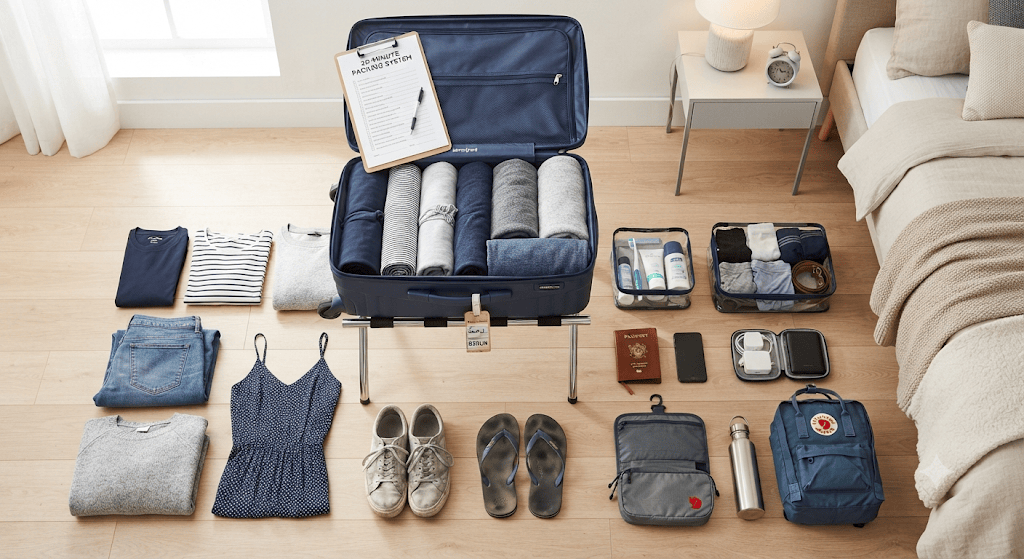
Toiletries, chargers, adapters, and basic first-aid items are needed on nearly every trip, yet get re-packed from scratch each time. Keeping a dedicated, always-ready pouch with these essentials means one major packing category is already done before you even start.

Use the “3-Day Rule” for Clothing

Rather than packing a different outfit for every single day, plan around a small set of mix-and-matchable pieces that can be worn in different combinations across roughly three days, then repeated with minor variation — this alone cuts packing decisions dramatically for longer trips.

Pick a Color Scheme Before Choosing Items

Selecting clothes from within one or two coordinating color families means almost anything you grab can be paired with anything else, removing the need to individually plan each outfit combination in advance.

Lay Everything Out Before Packing the Bag

A quick flat layout of everything you’re bringing — clothes, essentials, extras — lets you spot immediately what’s missing or excessive, which is far faster than packing and repacking directly into the bag while second-guessing choices.

Roll, Don’t Fold

Rolling clothing instead of folding saves both space and time, and tends to reduce wrinkling as a side benefit — a small technique that speeds up the actual packing motion once everything is laid out and ready.

Use a Fixed Packing Order

Packing in the same sequence every time — bottom-heavy items first, then clothing, then anything fragile or frequently accessed on top — removes the decision fatigue of figuring out bag organization from scratch on every trip.

Keep a Reusable Packing Checklist

A saved checklist (digital or printed) covering your standard trip essentials means packing becomes a quick scan-and-confirm process rather than trying to mentally reconstruct everything you might need each time.

Accept That Minor Forgetting Is Fine

Most forgotten items are replaceable at the destination without much hassle. Letting go of the need to pack “perfectly” removes a significant chunk of the deliberation time that slows packing down in the first place.

Bottom Line

Fast packing isn’t about rushing — it’s about removing repeated decisions through a standing system: a ready base kit, a simple color scheme, and a fixed process. Once the system is set up once, most trips genuinely can be packed in well under half an hour.