A Problem Hiding in Plain Sight
Disposable sanitary pads don’t biodegrade for decades, and in villages without formal waste management, they’re routinely burned or buried near homes. For years, the environmental cost of periods was rarely discussed alongside the more visible issue of period poverty — but the two problems share a solution.
Cloth Pads Are Having a Comeback
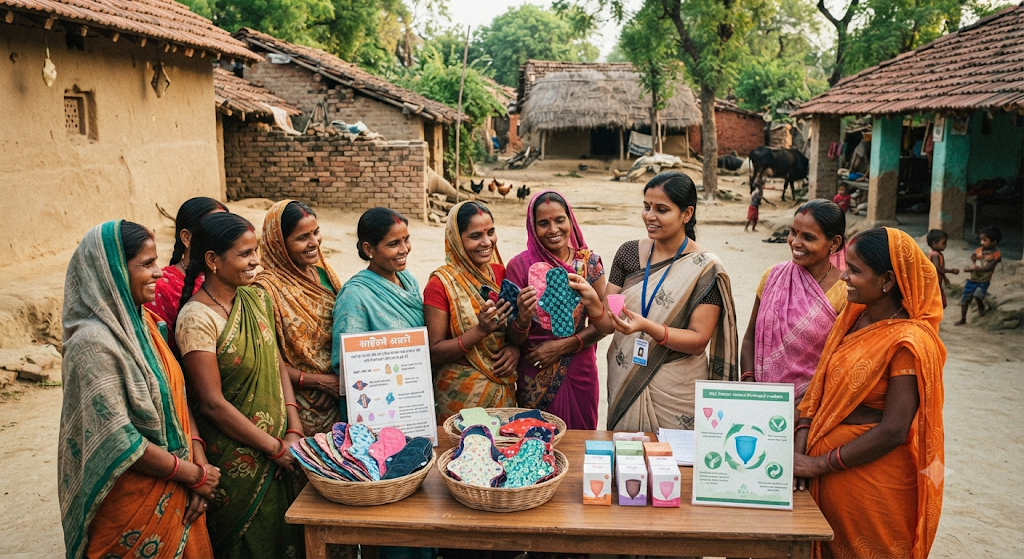
Reusable cloth pads, once dismissed as outdated, are being redesigned by women-led self-help groups and social enterprises with better absorbency, washable liners, and dignity-focused packaging. Several rural manufacturing units now train local women to stitch and sell these pads within their own communities, creating both income and access in one move.
Menstrual Cups Enter the Conversation
Menstrual cups are a newer addition to rural health workshops, though adoption is slower — it requires comfort with the body that many first-time users need guided support to build. NGOs running these workshops often pair the product demo with basic menstrual health education, since the two barriers (cost and stigma) rarely get addressed separately.
Why the Environmental Angle Matters Here
Framing reusable products purely as “eco-friendly” can miss the point in a village context — the bigger win is often affordability and reduced dependence on shops that may not stock pads reliably. The environmental benefit is real, but it works best as a bonus argument, not the opening one.
Bottom Line
The eco-friendly period movement in rural India isn’t a trend borrowed from urban sustainability circles — it’s a practical answer to cost, access, and waste, built by women for women.