The Scale of What Coastal Communities Are Facing
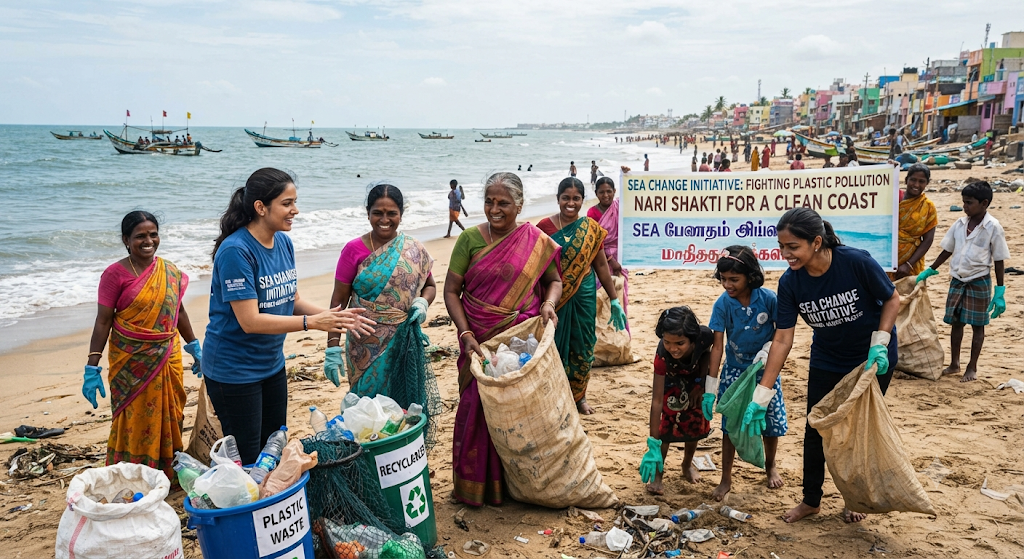
In parts of coastal Karnataka, local fishing boats reportedly bring in catches where plastic waste makes up nearly half of what’s pulled from the water — a daily reality for around 700,000 people living in those communities. Coastal litter in Kerala has been measured at roughly three times the global average, layering an environmental crisis directly on top of existing economic hardship.
Turning Waste Collection Into Formal Employment
Baeru, founded by Divya Hegde, trains women in coastal Karnataka to run structured waste collection and segregation systems rather than leaving the work informal and unpaid. The initiative has helped divert large volumes of waste from contaminating the coast and the Western Ghats while creating predictable income — with social security — for over 150 women who were previously working without either protection.
Kerala’s Self-Help Group Model
In Kerala, where coastal litter runs unusually high and female workforce participation runs unusually low, projects like rePurpose’s Hara Kal have built almost entirely women-led (over 98 percent) first-mile plastic collection networks in partnership with local self-help groups. The model treats plastic interception and women’s income generation as the same project, not two separate goals.
Kudumbashree: A Template Built Two Decades Ago
Kerala’s Kudumbashree network, a state-run women’s self-help group system established in 1998, has become the backbone many newer waste-management initiatives build on — organizing women into enterprises that now also produce plastic alternatives and manage municipal waste operations under formal government partnership.
Bottom Line
The most durable answers to coastal plastic pollution in India aren’t just cleanup drives — they’re systems that pay women fairly to do work that was already happening informally, and give that work the infrastructure to actually scale.