Solo Dining While Traveling: Getting Comfortable With Your Own Company

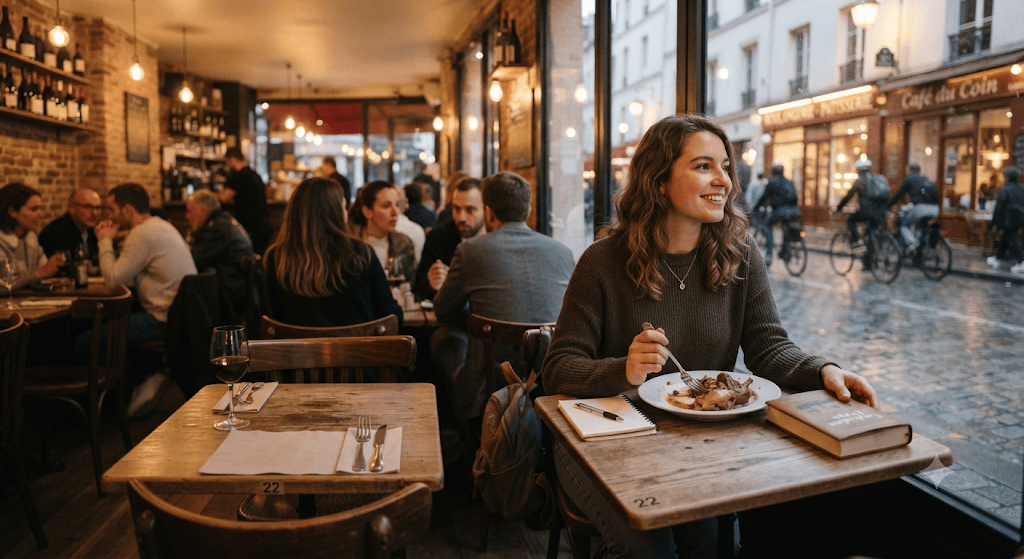
Solo travelers often say the same thing: navigating a new city alone feels fine, but sitting down alone at a restaurant table still triggers a wave of self-consciousness unlike almost anything else about traveling solo. Here’s how to work through that, and eventually enjoy it.

Why It Feels Different From Other Solo Moments

Walking around a city alone feels purposeful — you’re clearly doing something. Sitting at a table alone, with nothing to visibly “do,” can feel exposed in a way that triggers an irrational worry that everyone around you is noticing and judging. In reality, almost no one is paying attention at all.

Start With Lower-Pressure Settings

Cafés, casual street-food spots, or counter seating at a small eatery are far less intimidating first steps than a formal sit-down restaurant. Building comfort in lower-stakes settings first makes the transition to a proper solo restaurant meal feel much less daunting.

Bring Something, But Don’t Hide Behind It

A book, journal, or phone can ease the initial self-consciousness, but constantly staring at it defeats part of the purpose of solo dining — actually noticing the place you’re in. A middle ground works well: something to glance at occasionally, without using it as a permanent shield.

Choose Seating That Feels Comfortable

Many restaurants offer counter seating, window tables, or people-watching spots that feel more natural for solo diners than a large table clearly meant for groups. Requesting this specifically, rather than defaulting to wherever you’re seated, makes a real difference.

Order With Confidence, Not Apology

There’s no need to explain or apologize for dining alone — a confident, simple order communicates that this is a normal, deliberate choice, not something requiring justification to the staff or anyone else in the room.

Use the Time Intentionally

Solo meals are a rare, uninterrupted window to actually notice a place — the way people talk, the specific flavors, the atmosphere — attention that’s often lost in group settings where conversation dominates. Framing it as an experience rather than something to get through changes how it feels.

It Gets Easier Fast

Almost every solo traveler describes the same arc — intense self-consciousness the first time or two, followed by growing comfort, and eventually genuine enjoyment of solo meals as one of the more reflective parts of traveling alone.

Bottom Line

Solo dining feels like the hardest part of traveling alone mostly because it’s unfamiliar, not because anyone is actually watching. A few deliberate first attempts in lower-pressure settings usually turns this into one of the more rewarding parts of solo travel, not the most dreaded.
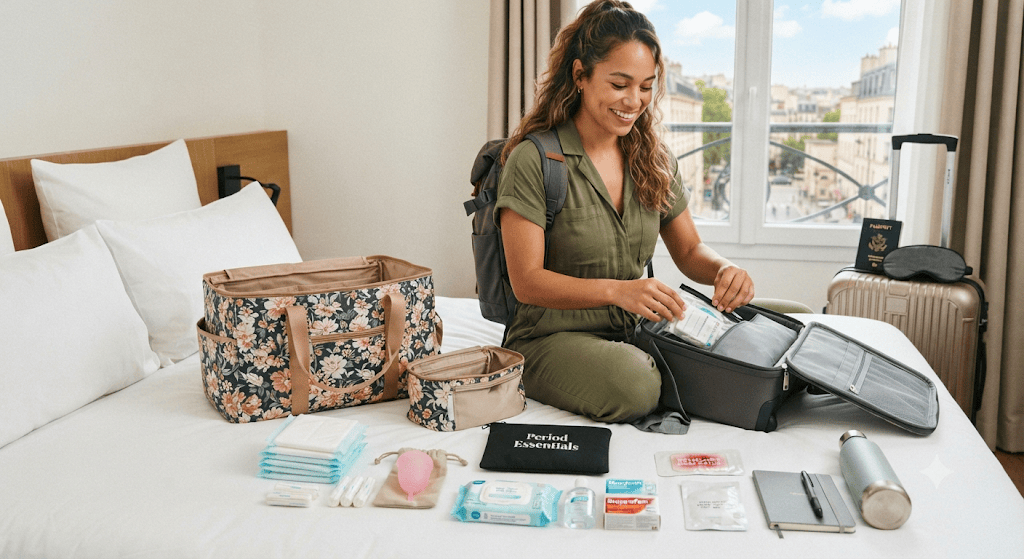
Traveling on Your Period: Products, Prep, and Peace of Mind

A trip landing right on your period can feel like an added complication on top of everything else travel already requires. With a bit of preparation, though, it’s entirely manageable — and doesn’t need to change how much you enjoy the trip.

Choosing the Right Product for the Trip

  • Menstrual cups work well for longer trips with limited access to frequent changing facilities, since they can be worn for extended periods safely
  • Period underwear is a low-effort backup or standalone option, especially useful on travel days involving long transit
  • Tampons or pads remain simplest for shorter trips or destinations where familiarity and convenience matter more than sustainability

Trying any new product well before the trip — not for the first time while traveling — avoids unnecessary stress from an unfamiliar routine.

Packing Smart

Carrying more supplies than you think you’ll need, plus a few extra just in case of delays or unexpectedly heavy flow days, avoids the stress of hunting for specific products in an unfamiliar place, especially abroad where preferred brands may not be available.

Managing Cramps While in Transit

Packing pain relief medication in your carry-on (not checked luggage), along with a small heating patch for long flights or train journeys, helps manage discomfort without needing to search for a pharmacy immediately upon arrival.

Hygiene During Long Travel Days

Wet wipes, a small pouch for used products, and hand sanitizer make managing hygiene easier during long flights, train rides, or bus journeys where clean facilities may not always be readily available.

Planning Activities Around Your Cycle, If Helpful

For trips with flexible itineraries, scheduling more intense activities (like a long trek or a full day of sightseeing) around lighter flow days, where possible, can make the overall trip feel more comfortable — though it’s entirely optional, not a requirement.

A Quick Pre-Trip Checklist

  • Pack more supplies than the trip length suggests you’ll need
  • Carry pain relief in your immediate hand luggage
  • Research pharmacy or product availability at your destination in advance
  • Pack a small, discreet hygiene pouch for transit days

Bottom Line

A period during travel isn’t a reason to alter plans or feel anxious about the trip — a little product preparation and a small hygiene kit handle most of what actually comes up. It’s a manageable, ordinary part of travel, not a genuine obstacle to it.

The Rise of Women in India’s Adventure Sports Industry

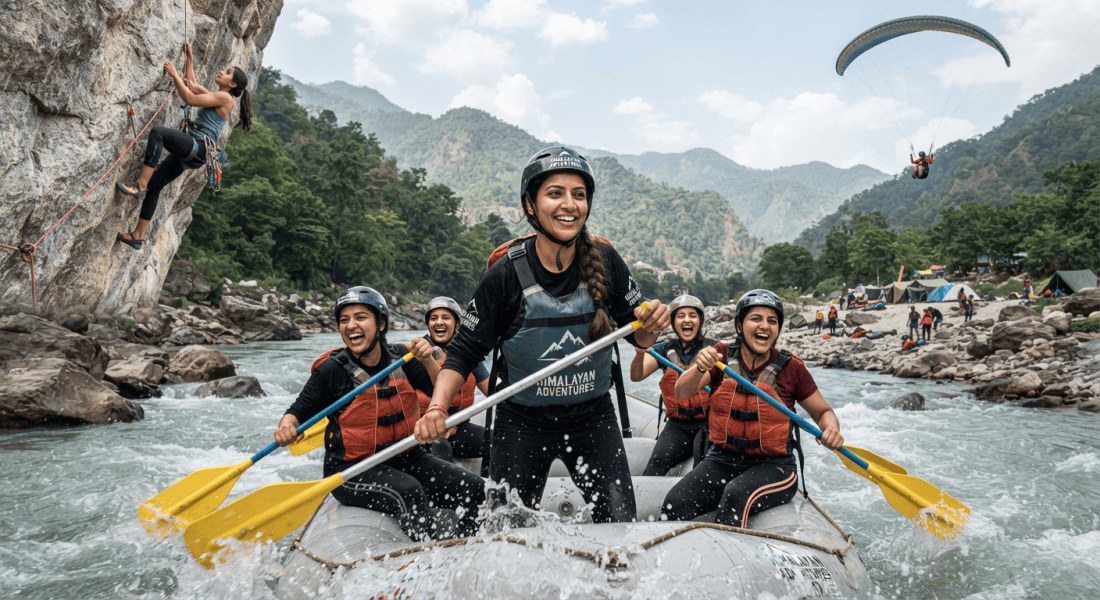
Adventure sports in India — rafting, paragliding, rock climbing, scuba diving — have long carried a male-dominated image, both among participants and among the guides and instructors running these operations. That image is steadily shifting, on both fronts.


More Women Entering as Athletes


Participation numbers in adventure sports among Indian women have grown noticeably over the past decade, driven partly by greater visibility of women athletes in the space, and partly by a broader cultural shift toward normalizing physically intense, traditionally “masculine” activities for women.


Women Building Careers as Instructors and Guides


Beyond participation, a growing number of women are becoming certified instructors and guides themselves — river rafting guides, climbing instructors, paragliding pilots — roles that were almost entirely male a generation ago, and that put women in positions of direct authority and expertise within these activities.


Running the Business Side, Too


Some adventure sports operations across trekking, rafting, and climbing circuits are now founded or co-founded by women, shifting representation not just among frontline athletes and guides but at the ownership and decision-making level of the industry itself.


What’s Driving the Shift


Increased visibility through social media has played a real role — seeing other women confidently participate in and lead adventure activities has measurably lowered the psychological barrier for newcomers considering trying it themselves. Dedicated women-focused adventure groups and training programs have also made entry points more accessible for beginners who might otherwise have hesitated.


The Barriers That Remain


Physical infrastructure — changing facilities, safety gear sized for a broader range of body types, instructor training that accounts for different needs — still lags in many operations built around a male-default assumption. Social attitudes in some regions also remain a real barrier, particularly for women pursuing adventure sports as a full-time career rather than an occasional activity.


Why Representation at Every Level Matters


A woman instructor or guide doesn’t just teach a skill — she visibly demonstrates that leadership and expertise in this space isn’t gender-restricted, which tends to have a ripple effect on how many other women consider trying, and eventually pursuing, adventure sports themselves.


Bottom Line


Adventure sports in India are becoming less of a male default and more genuinely open, both as an activity and as a career path for women. The shift isn’t complete, but it’s real, visible, and increasingly self-reinforcing as more women enter and lead in the space.

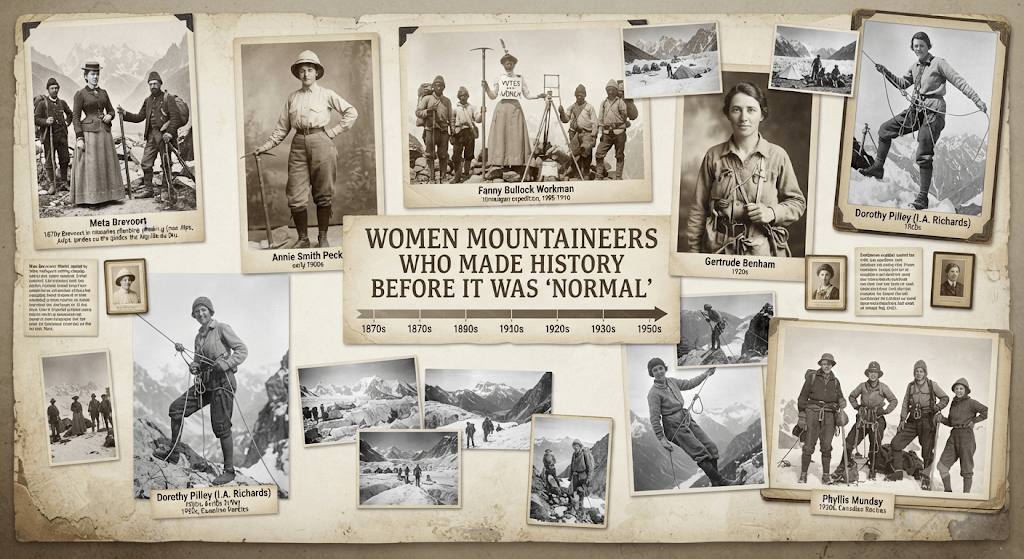
Women Mountaineers Who Made History Before It Was “Normal”

Adventure sports and mountaineering are increasingly common pursuits for Indian women today, but that normalcy was built by a small number of climbers who took on the world’s highest peaks when the field was overwhelmingly male, and the odds — logistical, social, and physical — were stacked against them.

Bachendri Pal: The First to Summit Everest

Bachendri Pal became the first Indian woman to reach the summit of Mount Everest in 1984. She began mountaineering at just 12 years old, scaling a peak over 13,000 feet high during a school picnic, and was the first girl in her village to become a graduate — before going on to a career that reshaped what was considered possible for women in Indian mountaineering. She later launched a fitness initiative for women over 50, aiming to prove that adventure has no age or gender limit.

Chandraprabha Aitwal: A Quiet Pioneer

Chandraprabha Aitwal, born in 1941 in Dharchula, Uttarakhand, is recognized as one of the pioneers of Indian women’s mountaineering, having climbed peaks including Nanda Devi, Kangchenjunga, and Trishuli. She received the Tenzing Norgay National Adventure Award for Lifetime Achievement in 2009 — recognition for decades of climbing at a time when few women in India were doing so at all.

Premlata Agrawal: Starting Late, Going Further

Premlata Agrawal became the first Indian woman to complete the Seven Summits — the highest peaks on each continent. What makes her story distinct is timing: she didn’t start mountaineering until age 36, after entering a hill-climbing competition in Jamshedpur, and went on to summit Everest in 2011 at age 48, becoming the oldest Indian woman to do so at the time.

Anshu Jamsenpa: Redefining Speed and Repetition

Anshu Jamsenpa holds the record for being the first woman to summit Everest twice in a single season, along with the fastest double ascents by a woman — an achievement that pushed the boundaries not just of whether women could summit, but how they could redefine what elite performance at altitude looked like.

Why These Stories Matter Beyond the Summit

Between 1965 and 2018, Indian women climbers made 81 attempts on Everest across 74 individual climbers — a number that grew steadily in large part because these early pioneers proved it was possible, then went on to train and mentor the generations that followed them.

Bottom Line

Every Indian woman climbing today is walking a trail — sometimes literally — first cleared by women who had no precedent to point to, no visible path showing it could be done. Their achievements weren’t just personal records; they were the foundation that made mountaineering a realistic pursuit for the women who came after them.

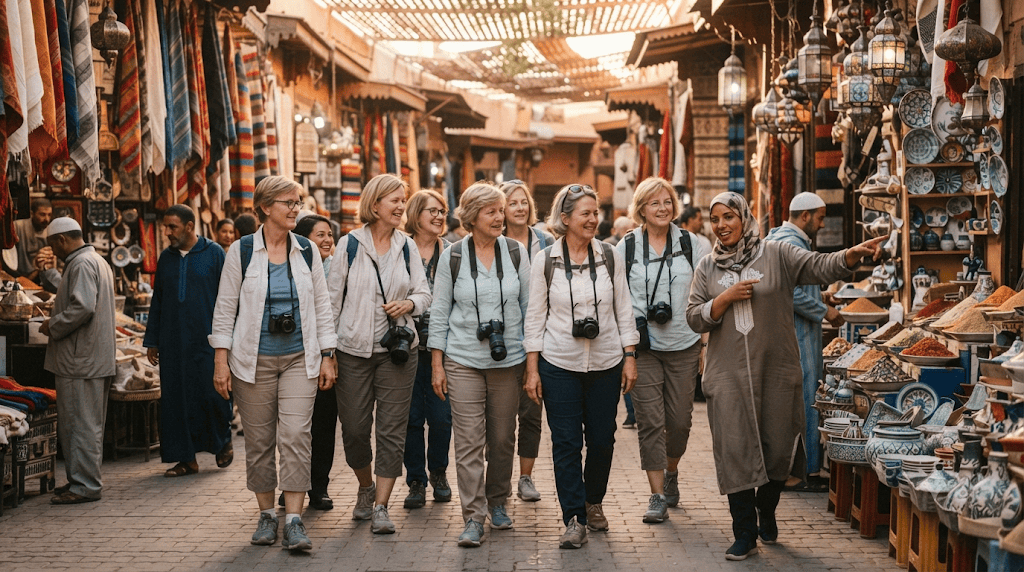
Women-Only Travel Groups: Are They Actually Safer?

Women-only travel groups have grown significantly in recent years, often marketed primarily around one promise: safety. But does traveling exclusively with other women actually reduce risk, or does the reassurance outpace the reality? Here’s a closer look.

What These Groups Typically Offer

Most women-only travel groups combine shared accommodation, pre-vetted itineraries, and — often the biggest draw — the reassurance of not navigating an unfamiliar destination entirely alone. Many also include a female trip leader with local knowledge of the destination.

Where the Safety Argument Genuinely Holds

Numbers do offer some real protection — a group is generally a less appealing target for harassment or theft than a lone traveler, and shared accommodation reduces the vulnerability of staying somewhere unfamiliar and unverified alone. A trip leader who knows the destination well also removes a lot of the guesswork that creates risk for solo, first-time visitors.

Where the Promise Gets Overstated

Group travel doesn’t eliminate risk — it changes its shape. Groups can still be pickpocketed, still encounter unsafe situations in transit, and group dynamics themselves can sometimes create their own friction or discomfort that has nothing to do with external safety at all.

It’s Not a Substitute for Basic Precautions

Some travelers relax basic safety habits once in a group setting, assuming numbers alone provide protection — skipping the same location-sharing or research they’d otherwise do solo. The safety benefit of a group is additive, not a replacement for individual awareness.

The Real Value May Be Different Than Advertised

For many participants, the standout benefit of women-only trips isn’t safety in the strictest sense — it’s the comfort of shared understanding, not needing to explain certain concerns, and often a stronger sense of connection with fellow travelers than mixed-group trips tend to produce.

What to Actually Check Before Booking One

  • The organizer’s track record and reviews from past participants, not just marketing claims
  • What’s actually included in terms of guide presence, accommodation vetting, and emergency support
  • Group size, since very large groups can dilute both the safety benefit and the personal connection that’s often the real draw

Bottom Line

Women-only travel groups do offer genuine practical benefits, but “safer” isn’t an automatic guarantee just because the group is exclusively female — it depends heavily on how well-organized and experienced the specific group actually is. They’re a solid option for many first-time or hesitant travelers, but not a replacement for ordinary travel safety awareness.

The Women Who Run India’s Self-Help Groups (And Why They Matter)

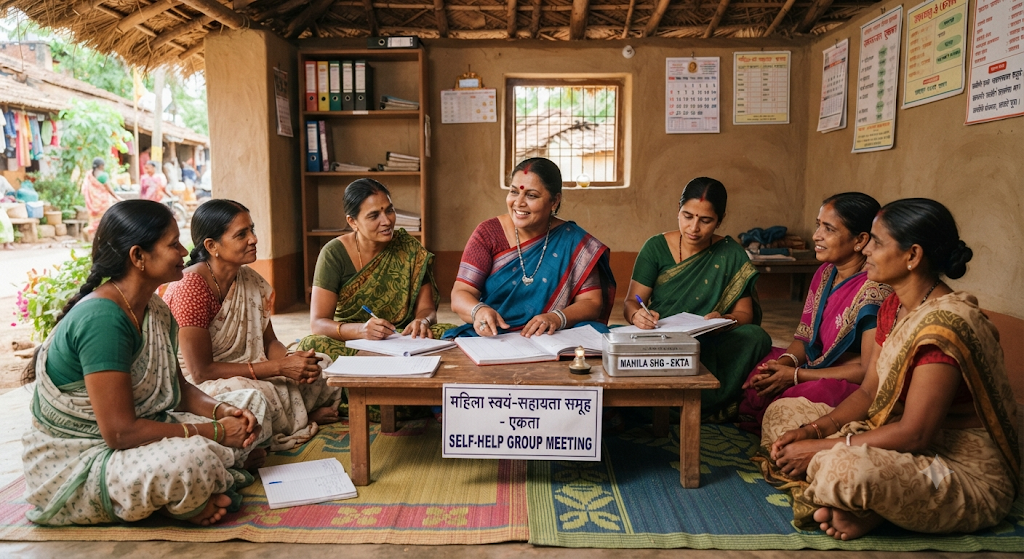
Long before “financial inclusion” became a policy buzzword, women across India were already building it themselves — through Self-Help Groups (SHGs), small collectives that pool savings, offer credit, and give members a level of financial independence many never had access to before.

What a Self-Help Group Actually Is

An SHG is typically a small group of 10-20 women who regularly pool small savings into a shared fund, from which members can borrow for personal or business needs — often without the collateral requirements or paperwork barriers that keep many women out of formal banking systems.

Why Banks Weren’t Working for These Women

Many women, especially in rural areas, historically had no independent credit history, no assets in their own name, and no formal employment record — all things traditional banks require. SHGs sidestepped this entirely by building trust and accountability within the group itself, rather than requiring external collateral.

Beyond Just Savings and Loans

Many SHGs have expanded well past simple savings circles into small collective businesses — food processing units, tailoring cooperatives, handicraft production — giving members not just credit access but an actual income stream, run and controlled by the group itself.

The Confidence Shift

For many women, especially those who had never handled money independently before, participating in an SHG’s financial decisions — voting on loans, managing shared funds, negotiating with buyers — builds a kind of confidence and decision-making experience that extends well beyond the group’s finances.

Government and Institutional Backing

Various national and state-level programs have worked to formalize and scale the SHG model, linking groups to bank credit at better terms and providing training — recognition that this grassroots model, largely built and run by women themselves, was already working better than many top-down alternatives.

The Ripple Effect on Families and Villages

Money earned or saved through SHGs often goes directly toward things like children’s school fees, healthcare, or home improvements — decisions frequently made by the women themselves, in households where financial decisions had previously been made almost entirely by men.

Bottom Line

Self-help groups are one of the clearest examples of a women-led model succeeding not because of external funding alone, but because of trust, accountability, and shared decision-making built entirely within the group. It’s a quiet but genuinely significant force behind rural women’s growing financial independence across India.

How to Plan a Girls’ Trip That Works for Every Budget in the Group

Group trips rarely fall apart over the destination — they fall apart over money. Someone wants a nicer stay, someone else is watching every rupee, and nobody wants to be the one who brings it up first. Here’s how to plan around that honestly.

Talk Budget Before Talking Destination

Choosing a destination first and discussing budget later almost guarantees mismatch — a dream location might be unaffordable for one or two people who then either overspend or drop out. Getting a rough number from everyone upfront should shape the destination choice, not follow it.

Use a Range, Not a Fixed Number

Asking “what’s your budget?” often gets vague or overly generous answers out of politeness. Asking for a comfortable range instead — “what’s the most and least you’d want to spend?” — tends to surface more honest numbers.

Separate “Must-Do” From “Nice-to-Have” Expenses

Splitting the trip into non-negotiables (accommodation, transport) and optional extras (spa day, a fancy dinner, shopping) lets everyone opt into the shared essentials while choosing individually on the optional spending, rather than forcing a single shared standard on everything.

Choose Accommodation With Flexible Options

Picking a stay with multiple room types — some shared dorms or triple rooms alongside private options — lets people self-select their comfort level and cost without an awkward conversation about who’s paying for what kind of room.

Avoid the “We’ll Split Everything Evenly” Trap

Splitting every cost evenly sounds fair but often isn’t — someone who skips the expensive dinner still ends up paying an equal share. Tracking who actually spent what, and settling based on real usage, avoids resentment that builds quietly over a trip.

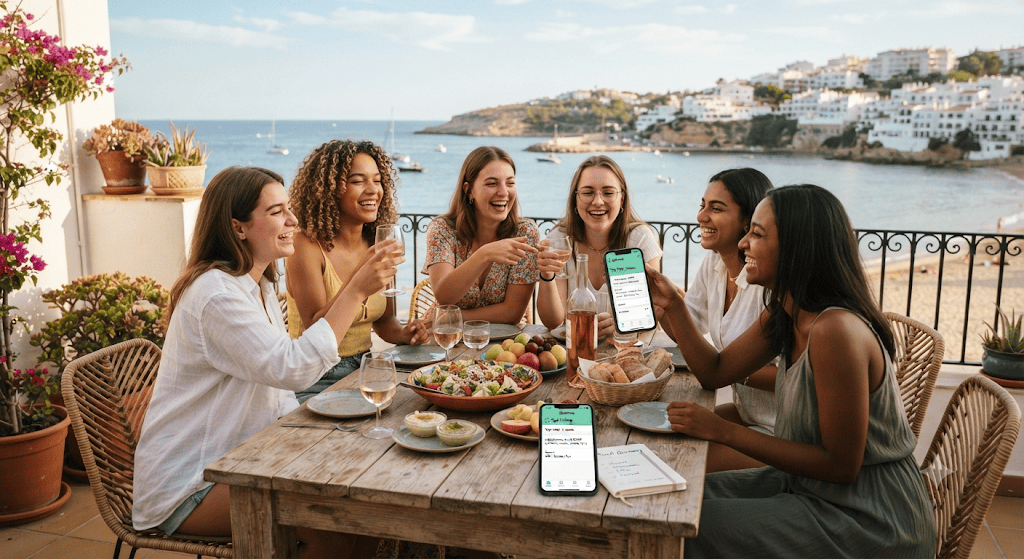
Use a Shared Expense App

A simple shared-expense tracking app removes the awkwardness of manually calculating who owes what, and keeps the money conversation transparent and low-drama throughout the trip rather than as one big confrontation at the end.

Give Space for Someone to Opt Out of Certain Plans

Not every activity needs full group participation. Letting people skip an expensive add-on without guilt-tripping keeps the trip enjoyable for everyone, rather than pressuring the group into a single, uniformly priced experience.

Bottom Line

A girls’ trip that respects different budgets isn’t less fun — it’s usually more relaxed, because nobody’s quietly stressed about money the whole time. A little upfront honesty about spending goes further toward a good trip than any destination choice ever could.

Period Poverty in India: What’s Actually Being Done About It

If you’ve ever had to ask a stranger for a pad, skip school because you didn’t have access to menstrual products, or use a rag, sand, ash, or newspaper during your period — you already know what period poverty feels like. For millions of women and girls across India, this isn’t a hypothetical. It’s a monthly reality.

Period poverty isn’t just about not being able to afford a pack of sanitary pads. It’s a tangle of three things: lack of access to safe menstrual products, lack of access to clean water and private toilets to manage periods hygienically, and — maybe the most stubborn of all — the silence and shame that stops girls from asking for help in the first place.

The Scale of the Problem

Government surveys have repeatedly shown that a large share of menstruating women in India still don’t use hygienic methods of protection, especially in rural areas. The gap isn’t uniform either — it varies sharply by state, by income, and by whether a girl is still in school. Many girls drop out of school entirely once they start menstruating, not because they want to, but because their school has no functioning toilet, no privacy, and no way to manage a leak with dignity.

This isn’t a “women’s issue” tucked away in a corner. It affects education outcomes, workforce participation, and public health — which is exactly why it deserves more attention than it gets.

What’s Actually Being Done

The good news is that period poverty in India isn’t being ignored anymore. Here’s where real movement is happening:

1. GST removal on sanitary products. In 2018, after sustained public pressure and activism, India removed the 12% GST that had been levied on sanitary napkins. It was a small line item that made a real difference in affordability at scale.

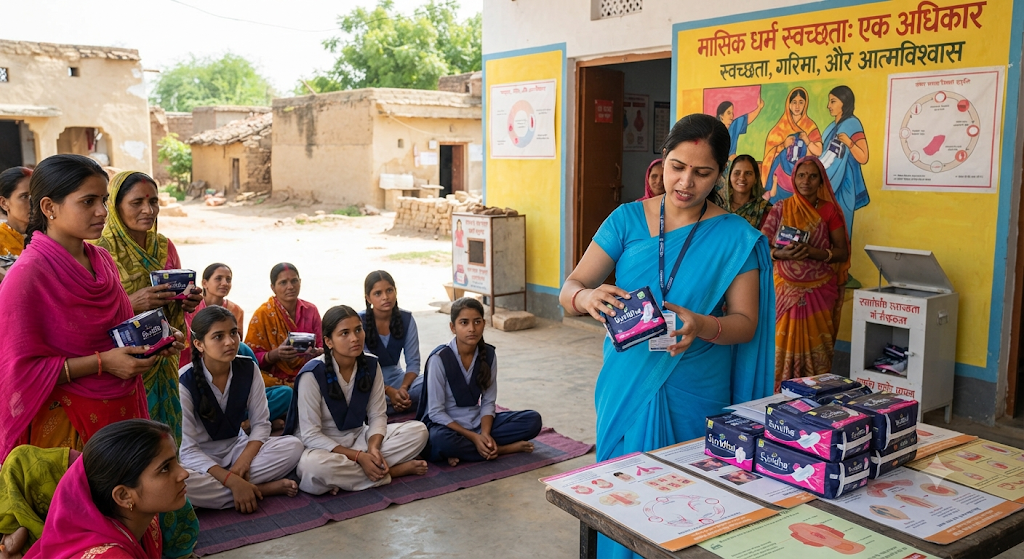
2. Government distribution schemes. Programs at both the central and state level have worked to supply subsidized or free sanitary pads through schools and primary health centres, particularly targeting rural and adolescent girls. Coverage is uneven, but the intent — and the infrastructure — now exists in places it didn’t before.

3. Menstrual health in the school curriculum. Several states have started integrating menstrual hygiene education into school health programs, training teachers and health workers to talk about periods without euphemism or embarrassment, and installing incinerators and sanitary vending machines in government schools.

4. NGOs closing the last-mile gap. Organizations working at the grassroots level — going village to village, training local women as menstrual health educators, manufacturing low-cost sanitary pads through community-run micro-enterprises — have often reached places that policy alone hasn’t. Some of the most effective models pair product distribution with education, because handing someone a pad without addressing the stigma around periods only solves half the problem.

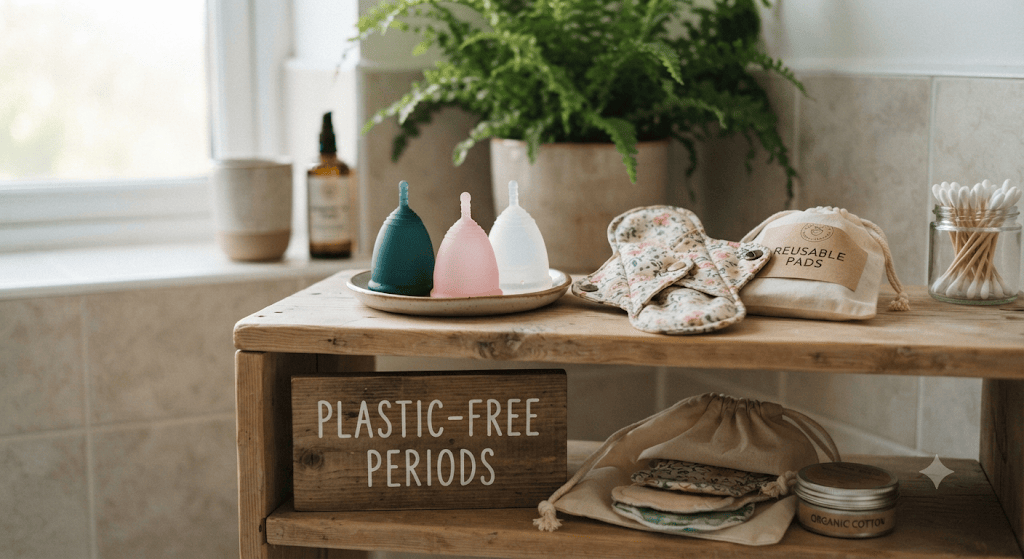
5. Sustainable and reusable alternatives. Menstrual cups, cloth pads, and period underwear are getting more visibility, both as a cost-saving option for low-income households and as a lower-waste alternative to disposable pads, which are a genuinely enormous environmental burden — most contain plastic and take centuries to break down.

Where the Gaps Still Are

For all this progress, period poverty hasn’t been solved — not close. Distribution schemes don’t always reach the most remote areas. Products supplied by some programs are inconsistent in quality. And the biggest gap of all is cultural: even where products are available, shame and silence still keep many girls from using them confidently, or from talking to a parent, teacher, or doctor when something feels wrong.

Access without education is a half-measure. A girl who has a pad but has never been told what a period actually is, why it happens, or that it’s nothing to be ashamed of, is still navigating this mostly alone.

What You Can Actually Do

You don’t need to run an NGO to make a dent in this. A few starting points:

  • Support grassroots organizations directly working on menstrual health in your city or state — many are chronically under-resourced and rely on small, recurring donations more than one-time large ones.
  • Normalize the conversation at home. If you have younger sisters, cousins, or nieces, be the person who talks about periods like it’s just biology — because it is.
  • Donate products, not just money, during pad drives, especially before monsoon season and before the school year starts, when supply often runs low.
  • Choose sustainable products where you can, and talk about them openly — cups and reusable pads are still seen as niche in a lot of households, and visibility helps.

Period poverty sits at the intersection of everything this blog cares about — women’s dignity, environmental impact, and access to basic health infrastructure. It’s a solvable problem. It just needs more people treating it like the public health issue it actually is, instead of a private embarrassment to whisper about.

Women Rangers and Forest Guards Protecting India’s Wildlife

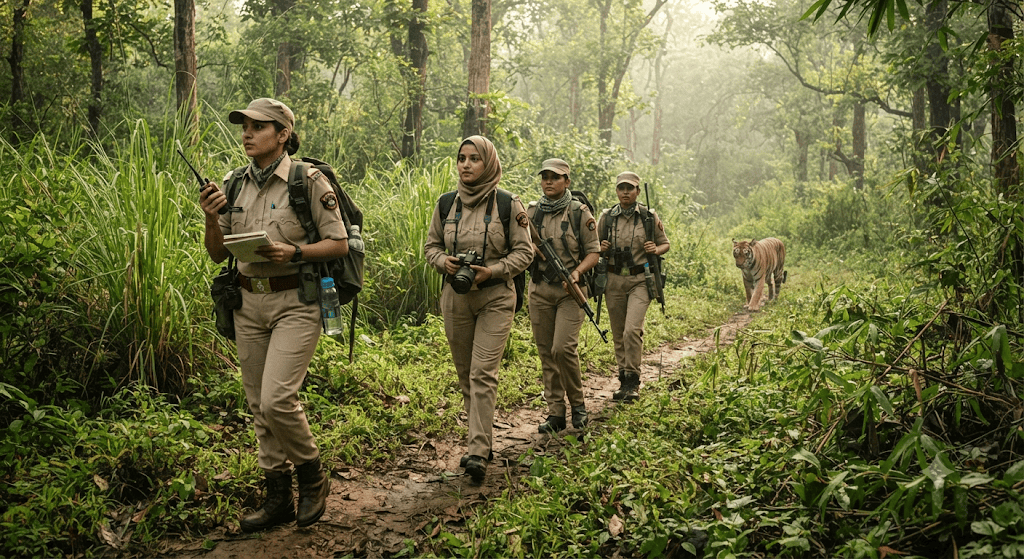
Forest protection has long been seen as a man’s domain in India — long patrols, physical risk, remote postings. But across the country’s reserves, thousands of women are now doing exactly this work, often in some of India’s most challenging terrain.

Gir National Park: The Lionesses of Gujarat

<cite index=”1-1″>Gujarat’s Gir Forest appointed its first batch of 51 women forest guards in 2007</cite>. These women patrol vast stretches of forest protecting the world’s only wild population of Asiatic lions, regularly handling wildlife rescues — from injured lion cubs to venomous snakes — as part of routine duty rather than exceptional heroics.

Kaziranga’s “Van Durgas,” Assam

<cite index=”3-1″>At Kaziranga National Park, female forest guards known locally as “Van Durgas” come from rural communities and work to protect wildlife and habitat across the park’s roughly 430 square kilometers</cite>. <cite index=”4-1″>The park now includes around 40 female rangers across roles like Range Officers, Forest Guards, and Foresters</cite>, alongside a dedicated women’s unit within the Special Rhino Protection Force guarding the endangered greater one-horned rhinoceros from poaching.

Dudhwa Tiger Reserve, Uttar Pradesh

<cite index=”6-1″>Dudhwa Tiger Reserve has recruited young men and women as forest watchers</cite>, with officials describing it as a pioneering effort to bring women into forest protection roles that had rarely included them before.

Gurukula Botanical Sanctuary, Western Ghats

<cite index=”7-1″>In Kerala’s Western Ghats, an all-female team of 27 women serves as guardians of the region’s rare and threatened plant species</cite>, working to protect biodiversity in one of the world’s most ecologically significant and endangered mountain ranges.

Why This Shift Matters

Beyond conservation outcomes, women forest guards often bring specific advantages — better rapport with village women during community conflict resolution, and a visible signal to younger women in these regions that this kind of work is possible for them too. Several of the women in these programs have spoken about how their entry inspired others locally to apply.

The Work Isn’t Symbolic

These aren’t ceremonial postings. Women forest guards conduct real patrols, handle wildlife emergencies, and in some cases carry weapons as part of anti-poaching units — work that comes with genuine physical risk and long stretches away from family, often in remote, difficult terrain.

Bottom Line

India’s forests are being protected, in real and growing numbers, by women who chose this work deliberately — not as an exception, but as a profession. Their presence is reshaping who gets to be seen as a protector of India’s wildlife, one patrol at a time.

Plastic-Free Periods: Are Reusable Products Actually Worth It?

Reusable menstrual products get recommended constantly for their environmental benefits, but the practical side of actually switching — comfort, cost, hygiene, learning curve — gets far less honest discussion. Here’s a grounded look at what the switch actually involves.

The Waste Problem With Disposables

A single person using disposable pads or tampons generates a significant amount of non-biodegradable waste over their menstruating years — most of it made from plastic that will outlast the person who used it by centuries. This is the core environmental argument for reusables, and it’s a real one.

Menstrual Cups: The Learning Curve Is Real

Menstrual cups have the steepest initial learning curve of any reusable option — folding, insertion, and removal take a few cycles to get comfortable with. Most people who stick with it past the first two or three cycles report it becoming easy, but the early frustration is genuine and shouldn’t be dismissed.

Reusable Cloth Pads: The Gentler Switch

Cloth pads function almost identically to disposable pads, just washed and reused, making them a much easier first step into reusable products without requiring any new technique to learn. The tradeoff is needing proper washing facilities and a bit more laundry.

The Cost Math Over Time

Reusable products cost significantly more upfront — a good menstrual cup or a set of cloth pads can cost as much as several months of disposables. But since they last years, not months, the long-term cost is substantially lower, often paying for itself within a year or so of consistent use.

Hygiene Considerations

Reusable products require proper cleaning — boiling cups between cycles, thoroughly washing cloth pads — which takes more active effort than simply disposing of a used product. For people without reliable private washing access, this is a genuine practical barrier, not a minor inconvenience.

They’re Not All-or-Nothing

Many people who switch don’t go 100% reusable — using cups or cloth pads at home and disposables while traveling or in situations with limited hygiene facilities is a common, practical middle ground rather than an everything-or-nothing choice.

Bottom Line

Reusable menstrual products genuinely reduce waste and save money over time, but they come with real upfront cost, a learning curve, and hygiene logistics that aren’t right for every situation. They’re worth trying, but not something to feel obligated to switch to completely — a partial switch still meaningfully reduces waste compared to full reliance on disposables.