The Rise of Women-Led Bird watching Tours in India

A Field That’s Been Mostly Male

Wildlife guiding in India has historically skewed heavily male, and birdwatching has been no exception, even though India is one of the world’s most visited destinations for it. That’s beginning to shift — slowly, through training programs and community initiatives that are putting binoculars in the hands of women who’d never held one before.

From First-Time Birders to Leading Tours

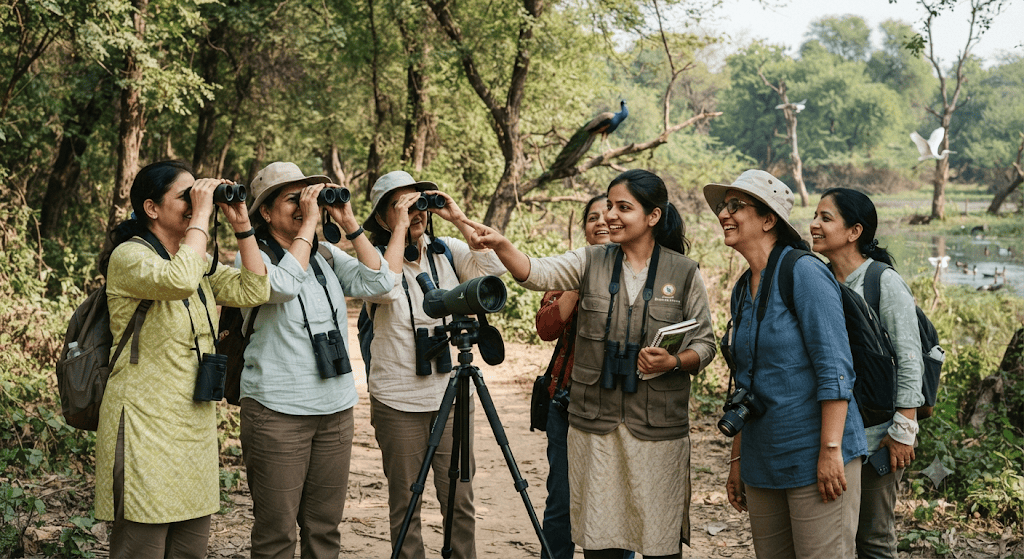
In Tadoba, a workshop introduced a group of women — many holding binoculars for the first time — to birdwatching as a guiding skill. Within months, the same women were leading birding teams during an annual bird race and actively contributing to citizen science challenges through platforms like eBird. What started as training became a new professional identity.

A Growing, Visible Community

Bird Count India’s ongoing “Women in Birding” profile series has featured women birders from cities, villages, coastal regions, mountains, forests and islands across the country — naturalists, researchers, hobbyists and citizen scientists, each with a different route into the field. Annual events like Big Bird Day have also become spaces where women birders explicitly build community and swap field notes, not just species counts.

Why This Matters for Travel

A women-led or women-friendly birding tour often changes more than who’s holding the binoculars — it can mean different pacing, different safety considerations and local knowledge shaped by a different relationship to the landscape. For women travellers specifically, it can also mean a more comfortable group dynamic for early-morning or remote outings.

How to Find and Support These Tours

  1. Look for women naturalists and guides at wildlife reserves and sanctuaries
  2. Follow regional birding clubs — many now have women coordinators
  3. Join citizen science birding events, which often include guided women-led walks
  4. Ask tour operators directly whether they employ women naturalists

Bottom Line

Birdwatching rewards patience over physical strength, which may be exactly why more women are finding their place in it — first as hobbyists, then increasingly as the ones leading others into the field.
Is Volunteer Tourism Actually Helping? A Closer Look

The Appeal Is Obvious

Spend a few days or weeks helping build a school, teach English or support children, and go home having “given back.” It’s an attractive idea — travel with purpose instead of just a passport stamp.

Where the Cracks Show

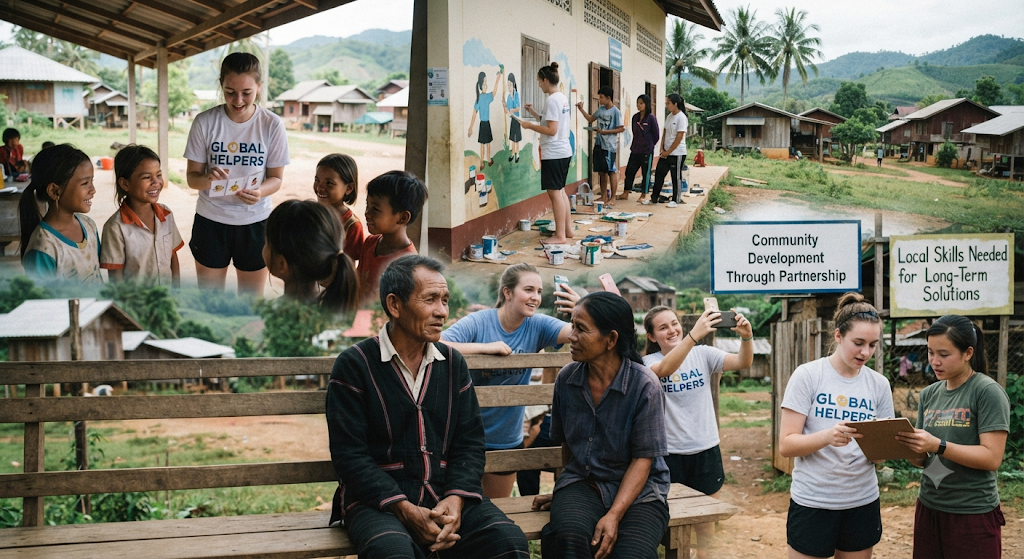
Most short-term volunteers aren’t trained for the work they’re assigned. Reports of unskilled volunteers redoing construction work overnight — because local workers quietly fixed it after the volunteers left — have become a recurring theme in critiques of the industry. In some cases, unskilled volunteer labour has even displaced paid local jobs.

Orphanage Volunteering: The Sharpest Criticism

Orphanage tourism draws the most concern. Child welfare organisations, including UNICEF and Save the Children, have jointly studied the impact of short-term volunteering on children’s care and found enough harm — including emotional distress from repeated attachment and abandonment cycles with rotating volunteers — to recommend eliminating short-term orphanage volunteering altogether. Some investigations have even found children placed in orphanages specifically to attract volunteer donations, despite having living family.

It’s Not All Bad — But the Framing Matters

Longer-term, skills-matched volunteering — where a volunteer’s actual expertise (medical, technical, educational) is used to support a request the local community itself made — tends to have a very different impact profile than a week-long, feel-good placement. The difference usually comes down to who identified the need, and who’s actually being served by the good feeling.

Questions to Ask Before You Sign Up

  1. Did the local community ask for this specific kind of help?
  2. Am I qualified to actually do this work?
  3. Does the organisation share what happens to fees after volunteers leave?
  4. Could a paid local worker do this instead — and should they?
  5. Is there any facility housing children specifically to host volunteer visits?

Bottom Line

Good intentions don’t automatically translate into good outcomes. If a trip’s main product is a feeling for the traveller rather than a need actually filled for the community, it’s worth a harder look before booking.

The Rise of Women-Led Pottery and Craft Cooperatives

From Family Trade to Cooperative Business

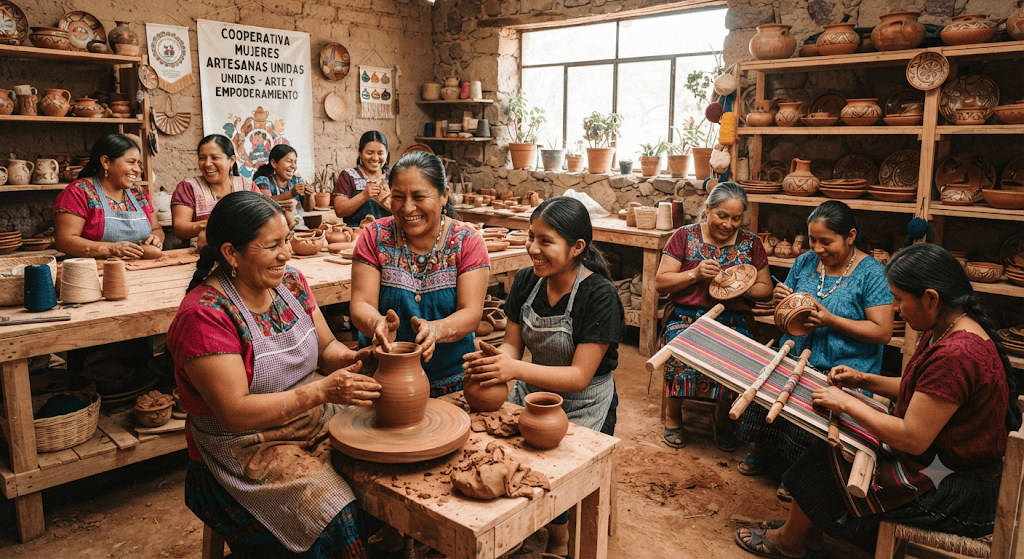
In Tamil Nadu’s Tirunelveli district, a potter earning a modest annual income from her family’s traditional pottery business started a self-help group to revive and modernise the craft. With support and small loans for raw material and labour, the group trained local women in pottery-making, eventually exporting their handcrafted pots to buyers as far as the United States.

Manipur’s Black Clay Potters

In the hills of Manipur, women artisans from the Thankhul Naga community hand-build black clay pottery entirely without a potter’s wheel — a technique passed down for generations. The craft is central to daily life in the region, but until recently, limited market access meant it generated little income. Partnerships connecting these artisans directly to international buyers have started changing that.

Why the Cooperative Model Works

Self-help groups let women artisans pool resources, share training and access markets that would be out of reach individually. Cooperatives negotiate better prices collectively, provide financial literacy and business training, and in some cases partner with fair trade organisations to ensure artisans are paid fairly for work that used to be badly undervalued.

Beyond Pottery

The same model is reviving other crafts across India — mat weaving in Tamil Nadu, Kantha embroidery in West Bengal, Chamba Rumal embroidery in Himachal Pradesh — each preserving a regional tradition while giving women a route to independent income and, often, digital tools like WhatsApp to run their businesses.

How to Support These Cooperatives

  1. Buy directly from cooperative-run stores or their verified online pages
  2. Look for craft council or SHG certification rather than mass-produced “ethnic style” copies
  3. Ask sellers where and by whom a piece was made
  4. Value the process — handmade pottery takes time that machine production doesn’t

Bottom Line

These cooperatives are doing more than keeping old crafts alive — they’re rebuilding local economies around them, with women holding the wheel, quite literally.

How Indian Cities Are (Slowly) Becoming More Cycle-Friendly for Women

The Gender Gap Is Real

Studies on cycling in Indian cities have flagged a clear pattern: women cyclists face unwarranted gestures and hostile behaviour from male motorists, which pushes many to avoid cycling altogether or change their routes to stick to busier, better-lit streets. Urban infrastructure, researchers note, has largely been designed around able-bodied, middle-class men — not around the women and girls who might benefit most from cheap, independent transport.

What’s Slowly Changing

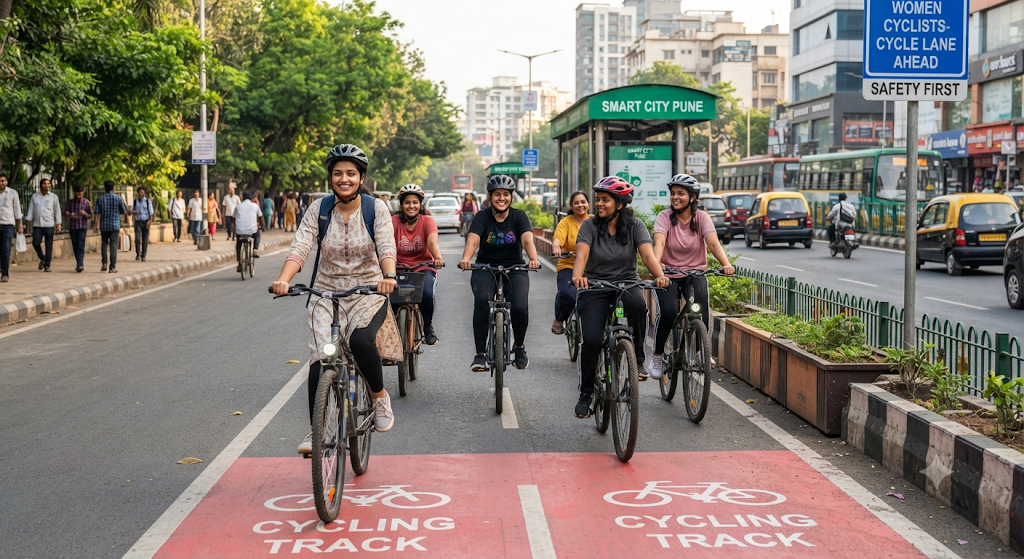
Under the Smart Cities Mission, the India Cycles4Change Challenge pushed dozens of Indian cities to pilot cycling infrastructure, with gender-inclusive design increasingly part of the brief. A 2020 roundtable convened by Bengaluru’s transport authority with WRI India specifically flagged issues that matter to women cyclists: better street lighting for evening riders, safe cycle parking and a connected network of cycle tracks. Some cities have also piloted cycle-repair clinics so women aren’t stranded by a flat tyre with no one to help.

Cycling Hasn’t Disappeared — It’s Been Pushed to the Margins

Recent research across Maharashtra cities found that cycling volumes remain high at peak hours even where infrastructure is incomplete — cyclists haven’t gone away, they’ve simply become less visible on streets not designed with them in mind. A broader 2026 multi-city study covering Delhi and Chennai found that policy, implementation and gender gaps continue to hold back safer cycling for women specifically.

What Actually Helps

  1. Protected, well-lit cycling lanes rather than painted lines on traffic-heavy roads
  2. Cycle parking near markets, schools and transit stations
  3. Enforcement against harassment, not just infrastructure
  4. Involving women cyclists directly in planning, not just consulting them after the fact

Bottom Line

Cities that want more women cycling need to design for them from the start — lighting, safety and respect, not just paint on the road. Until then, the gender gap on India’s streets will keep outpacing the gains in infrastructure.

Traveling With a Chronic Illness: What I’ve Learned

Reframe What “Good Travel” Looks Like

A trip built around rest days, shorter distances and flexible plans isn’t a lesser trip. It’s simply one designed around your actual body instead of an Instagram itinerary.

Before You Book

  • Research hospitals and pharmacies near your destination
  • Check if your medication is legal and available there
  • Confirm your travel insurance covers your condition
  • Choose accommodation with easy access — lifts, ground floor, proximity to help

Packing That Actually Protects You

  1. Carry medicines in original packaging with prescriptions
  2. Pack extra doses in case of delays
  3. Split medication between two bags in case one is lost
  4. Carry a simple medical summary card with your condition, medications and emergency contact

Pacing the Trip Itself

Plan one main activity a day instead of three. Build in buffer time between travel legs. Choose destinations with slower transitions over multi-city sprints when your body needs it.

Communicate Without Over-Explaining

You don’t owe anyone your full medical history. A simple “I need to go slow today” or “I have a condition that needs regular breaks” is enough for travel companions, guides or hotel staff.

The Emotional Part

Cancelling a plan or resting through half a trip can feel like failure. It isn’t. Chronic illness travel is still travel — just measured in what you experienced, not how much ground you covered.

Bottom Line

Traveling with a chronic illness asks for more preparation and self-compassion, not less courage. The world is still there to see — just at the pace your body can actually enjoy it.

The Women Divers Reviving India’s Coral Reefs

Why India’s Reefs Need Help


India’s coral reefs are concentrated in four regions: the Gulf of Mannar, the Gulf of Kutch, the Andaman and Nicobar Islands, and the atolls of Lakshadweep. In the Gulf of Mannar, decades of coral mining and, more recently, repeated bleaching events have pushed reef cover into decline. Scientists attribute the damage largely to warming seas rather than tourism alone, but every additional stress — including careless diving — narrows the reef’s margin to recover.


A Homemaker Who Learned to Dive at 49


One of the more striking stories from this space is that of a Chennai-based homemaker who learned scuba diving in her late forties. Her underwater paintings and diving work around the Gulf of Mannar’s coral reefs eventually grew into an awareness movement, using art to draw attention to coral bleaching and inspire youth ambassadors for reef conservation.


The Unglamorous Restoration Work


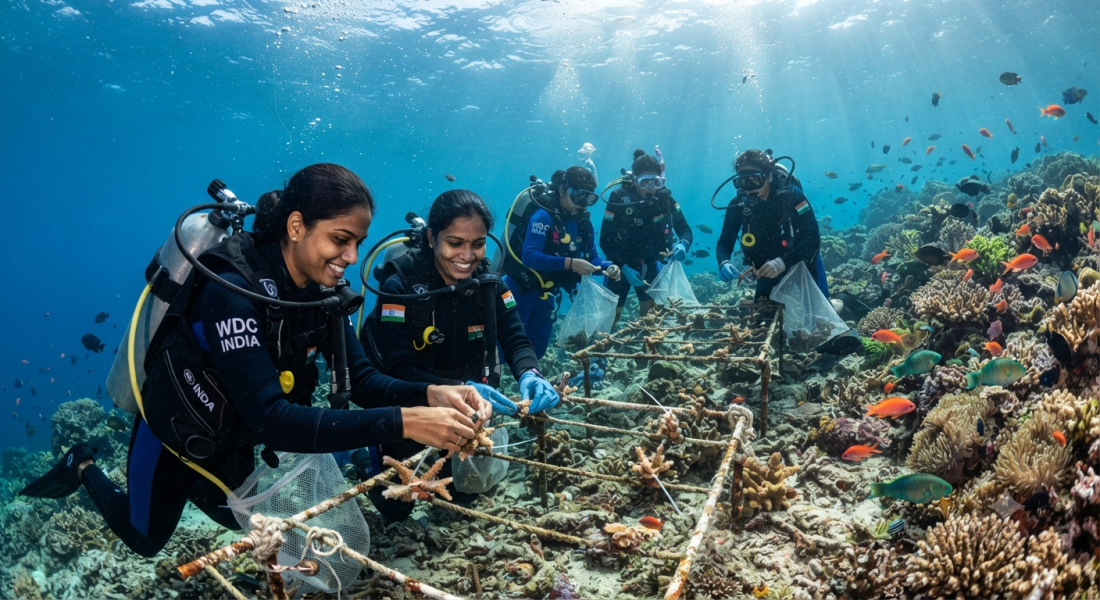
Reviving a reef isn’t a single dramatic act — it’s slow, repetitive underwater labour: clearing marine debris like abandoned fishing nets and ropes that smother live coral, transplanting coral fragments onto artificial structures, and monitoring recovery over months and years. Reef surveys around the Gulf of Mannar have found debris affecting a meaningful stretch of reef area, much of it fishing gear that has to be carefully removed by trained divers without damaging the coral beneath it.

Why This Work Suits — and Needs — More Women


Marine conservation and diving have historically skewed male, but reef restoration rewards patience, precision and steady hands over brute strength — qualities that make it a natural fit for more women to enter the field. Programs training women divers elsewhere in Asia have shown that all-female teams can run entire restoration operations, from underwater fieldwork to community outreach.

How to Support This Work as a Traveller


1. Dive only with operators who follow no-touch, no-collection rules.

2. Choose trips that include a marine conservation briefing.

3. Support NGOs and community groups doing reef debris cleanups.

4. Avoid buying coral or shell souvenirs.


Bottom Line


The women reviving India’s reefs aren’t chasing headlines — they’re doing the patient, underwater work of undoing decades of damage, fragment by fragment. The least the rest of us can do is dive, and travel, in a way that doesn’t undo their work.

How to Choose a Responsible Wildlife Safari Operator in India

Why the Operator You Choose Matters

Tiger reserves and sanctuaries run on strict carrying-capacity rules — limits on how many vehicles and tourists can enter at a time. The National Tiger Conservation Authority’s own 2012 guidelines require tourist vehicles to stay a minimum distance apart to avoid crowding animals, and cap how much of a reserve’s area can be used for tourism at all. A good operator works within these limits. A bad one pressures forest guides to bend them for a better photo.

Recent Rules Are Getting Stricter, Not Looser

In November 2025, the Supreme Court tightened controls further — pushing tiger safaris toward buffer and non-forest land and banning night tourism in core zones. That direction matters for travellers too: an operator who still promises unrestricted night drives or guaranteed close-up sightings in core areas is not one working within current rules.

Signs of a Responsible Operator

  • Follows official carrying-capacity and vehicle-distance rules without complaint
  • Employs and trains local guides and drivers
  • Limits group size and vehicle speed inside the park
  • Briefs guests on not baiting animals, playing loud sounds or leaving the vehicle
  • Supports, or is transparent about, conservation or anti-poaching contributions
  • Doesn’t promise a guaranteed sighting — no ethical operator can promise wild animal behaviour

Questions to Ask Before Booking

  1. How many vehicles does your group send in per slot?
  2. What happens if we don’t spot the animal — do you follow the vehicle to force a sighting?
  3. Are your naturalists trained and are guides from the local community?
  4. What’s your policy on maintaining distance from animals?

Red Flags

  • Ads promising “100% tiger sighting”
  • Vehicles clustering around one animal
  • No mention of forest department permits
  • Guides encouraging loud calls or off-road driving to chase wildlife

Bottom Line

A responsible safari operator protects the very thing you paid to see. Choosing one carefully means fewer crowded jeeps around a stressed animal — and a better, more honest wildlife experience for you.

Women Who Turned Their Hobby Into a Travel Business

It Usually Starts With “Can You Plan Ours Too?”

Most of these businesses don’t begin with a business plan. They begin with a friend group saying, “You always plan the best trips — can you organise ours?” A woman who loves photography walks becomes a heritage-walk guide. A home cook who travels for regional recipes starts running food trails. A regular trekker starts leading small, women-only batches.

Why Hobby-Led Travel Businesses Work

  • Genuine expertise. You already know the route, the best time to visit and the tea stall worth stopping at.
  • Built-in trust. Early customers are friends and friends-of-friends, which matters a lot in travel.
  • Low starting cost. Many begin with a WhatsApp group and an Instagram page, not an office.

The Unglamorous Parts

Turning a hobby into a business means dealing with what hobbies never ask of you: permits and local registrations, insurance, refund policies, vendor payments and last-minute cancellations. Women who make it work usually get the basics sorted early — a clear cancellation policy, a written itinerary and a small emergency fund for things that go wrong.

Starting Small Without Burning Out

  1. Run one or two trips a season before quitting anything.
  2. Partner with local guides and homestays instead of doing everything yourself.
  3. Keep groups small — it protects both safety and the quality of the experience.
  4. Collect honest feedback after every trip and actually use it.

Bottom Line

Your hobby already taught you the hardest part — knowing a place well enough to make others fall for it. The rest is systems, and systems can be learned one trip at a time.

The Rise of Farm Stays: Why City Women Are Booking Them

The Backlash to Perfectly Curated Trips

After a few years of hyper-Instagrammable resorts and infinity pools, a countertrend has emerged: farm stays that offer nothing more polished than fresh air, home-cooked meals, and actual physical work like harvesting vegetables or milking. For urban women whose daily life is screen-heavy and schedule-bound, the appeal is precisely the lack of curation.

What a Farm Stay Actually Looks Like

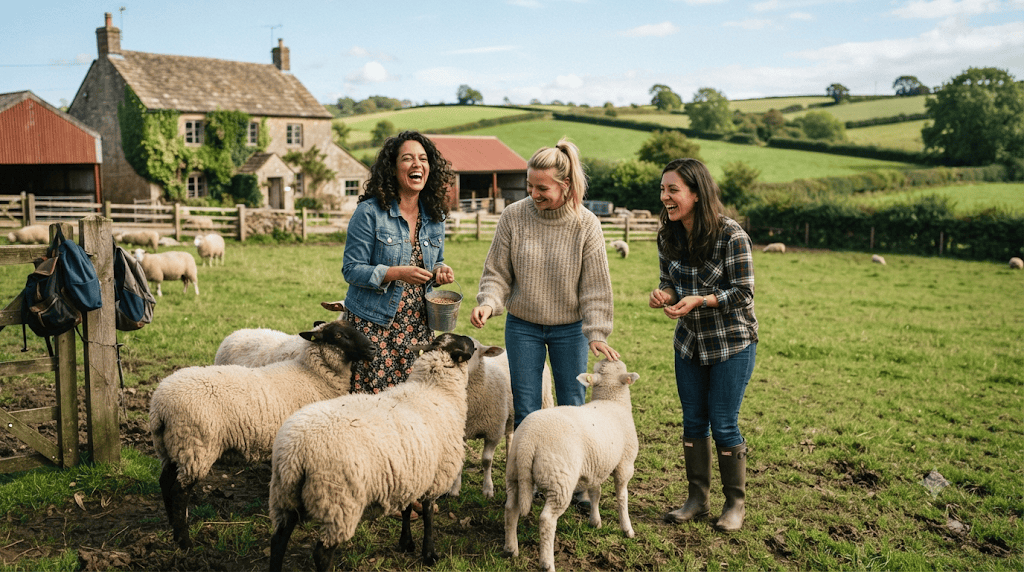
Most farm stays in India are run by families on working farms — coffee estates in Coorg, orchards in Himachal, paddy fields in Kerala — who host a small number of guests in simple rooms and include home-cooked meals as part of the experience. The draw isn’t luxury; it’s proximity to a slower, more physical rhythm of life that city routines don’t allow.

Why Women Specifically Are Driving the Trend

Many farm stays are also women-run, with host families where the woman of the house manages cooking, guest experience, and often the farm’s produce-based income stream. For urban women visiting, that creates a different kind of connection — less transactional tourist-host dynamic, more genuine exchange between women running very different lives.

A Break From Decision Fatigue

Part of the mental relief of a farm stay is the absence of choice paralysis — there’s no menu of forty activities to optimize, just the farm’s actual daily rhythm to join or not. For anyone whose regular life is full of constant micro-decisions, that structural simplicity is doing real psychological work, not just aesthetic work.

Bottom Line

Farm stays aren’t trying to compete with luxury resorts, and that’s exactly why they’re gaining ground — they’re offering something resorts structurally can’t: an actual break from being managed and catered to.

How to Plan a Multi-Generational Family Trip Without Chaos

Accept That One Itinerary Won’t Fit Everyone

Grandparents want rest and familiar comforts, parents are managing kids and logistics, and younger family members want to actually explore. Trying to build a single schedule that satisfies all three is where most multi-generational trips start to strain. The fix isn’t compromise on every activity — it’s building in optional branches within the same trip.

Choose a Base, Not a Circuit

A single well-located base with day trips radiating out works far better than a moving itinerary with multiple hotel changes. It cuts down on the packing-unpacking cycle that’s exhausting for kids and genuinely hard on older joints, while still giving everyone new things to see each day.

Talk Budget Before You Talk Destination

Money is the fastest way a family trip turns tense, especially across generations with different financial comfort zones. Deciding upfront how costs will be split — evenly, by income, or with one generation treating a portion — avoids the awkward math happening in real time at checkout.

Build In Deliberate Together-Time and Apart-Time

Not every meal or activity needs the whole group. Scheduling a few must-do shared moments — one big dinner, one shared excursion — while leaving other blocks open for smaller groups to split off keeps the trip feeling like a choice rather than an obligation.

Plan for the Medical “What Ifs” Early

With older and younger travelers in the same group, having a shared understanding of medications, allergies, and the nearest reliable hospital at each stop isn’t paranoia — it’s the kind of prep that lets everyone actually relax once the trip starts.

Bottom Line

A multi-generational trip works when it’s designed around flexibility, not around forcing everyone into the same pace. Plan for difference, and the trip becomes a lot less chaotic than it looks on paper.