Rainwater Harvesting at Home: A Simple Guide for Renters and Owners

Rainwater harvesting sounds like a major home renovation project reserved for house owners with a big budget. In reality, there are options across a wide range of scale and investment — including simple setups that work even for renters in apartments.


Why It’s Worth Doing


Beyond reducing dependence on municipal or groundwater supply, rainwater harvesting helps recharge local groundwater tables and reduces stormwater runoff that would otherwise overwhelm drainage systems, especially in cities where over-extraction has caused water tables to drop significantly over the years.


For Renters: Small-Scale Options


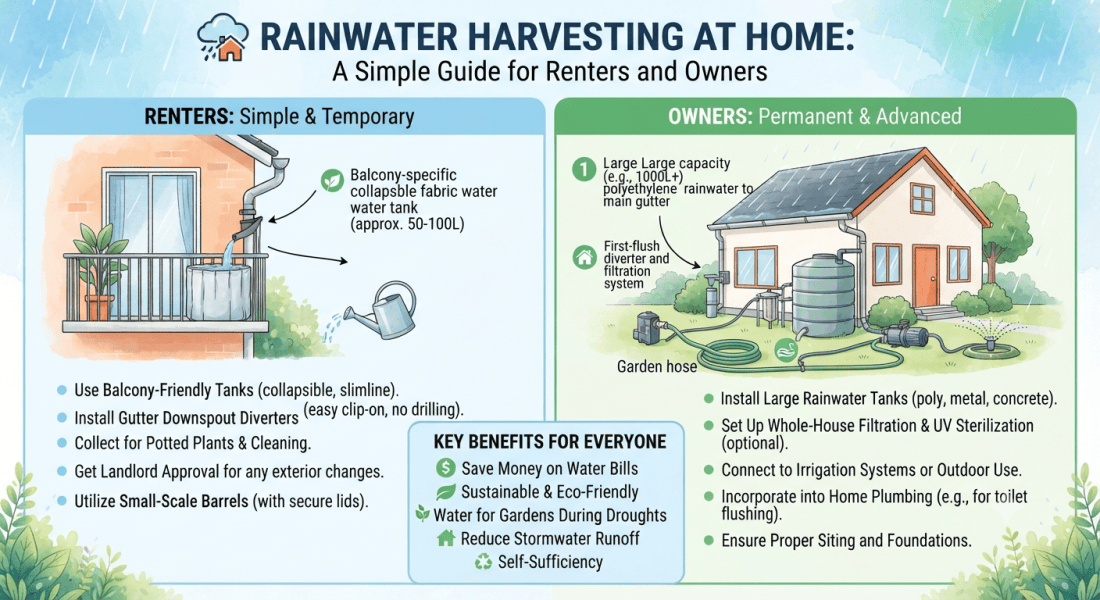
Balcony collection barrels — a simple barrel or large container positioned to catch runoff from a balcony roof or overhang can supply water for plants, cleaning, or non-drinking household use
Diverting downspout water temporarily into a container during heavy rain, where structurally possible without permanent modification
Using harvested water for gardening specifically, which avoids the more complex filtration needed for potable use


For Homeowners: A More Complete System


Rooftop catchment — channeling roof runoff through gutters into a storage tank, ideally with a first-flush diverter to remove initial dirty runoff before storage
A basic filtration setup — mesh filters to remove debris, followed by sand or charcoal filtration for water intended for non-drinking uses like gardening or cleaning
A recharge pit or well, if space allows, to direct excess collected water back into the ground rather than letting it run off into street drainage


What Rainwater Should (and Shouldn’t) Be Used For


Without proper purification, harvested rainwater is best used for gardening, washing, or topping up non-potable needs — not drinking water, unless a more thorough filtration and treatment system is specifically installed and maintained for that purpose.


Basic Maintenance Matters


Even a simple barrel setup needs periodic cleaning to prevent mosquito breeding and algae buildup, and any filtration components need regular checking — a rainwater system that’s neglected can create more problems than it solves.


Government Incentives Worth Checking


Several Indian cities have introduced rainwater harvesting mandates or incentives for new constructions, and some municipal bodies offer subsidies or guidance for retrofitting existing homes — worth checking local regulations, since incentives and requirements vary significantly by city.


Bottom Line


Rainwater harvesting isn’t an all-or-nothing project — a renter with one balcony barrel and a homeowner with a full rooftop catchment system are both meaningfully contributing to the same larger goal. Starting small is a legitimate entry point, not a lesser version of “doing it properly.”
The Rise of Women in India’s Adventure Sports Industry

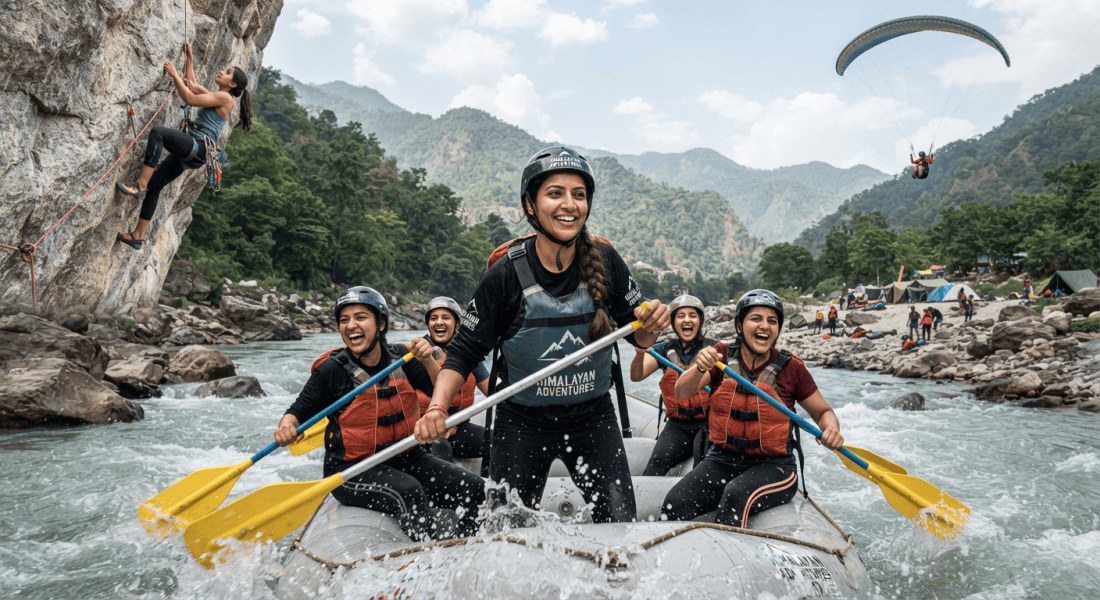
Adventure sports in India — rafting, paragliding, rock climbing, scuba diving — have long carried a male-dominated image, both among participants and among the guides and instructors running these operations. That image is steadily shifting, on both fronts.


More Women Entering as Athletes


Participation numbers in adventure sports among Indian women have grown noticeably over the past decade, driven partly by greater visibility of women athletes in the space, and partly by a broader cultural shift toward normalizing physically intense, traditionally “masculine” activities for women.


Women Building Careers as Instructors and Guides


Beyond participation, a growing number of women are becoming certified instructors and guides themselves — river rafting guides, climbing instructors, paragliding pilots — roles that were almost entirely male a generation ago, and that put women in positions of direct authority and expertise within these activities.


Running the Business Side, Too


Some adventure sports operations across trekking, rafting, and climbing circuits are now founded or co-founded by women, shifting representation not just among frontline athletes and guides but at the ownership and decision-making level of the industry itself.


What’s Driving the Shift


Increased visibility through social media has played a real role — seeing other women confidently participate in and lead adventure activities has measurably lowered the psychological barrier for newcomers considering trying it themselves. Dedicated women-focused adventure groups and training programs have also made entry points more accessible for beginners who might otherwise have hesitated.


The Barriers That Remain


Physical infrastructure — changing facilities, safety gear sized for a broader range of body types, instructor training that accounts for different needs — still lags in many operations built around a male-default assumption. Social attitudes in some regions also remain a real barrier, particularly for women pursuing adventure sports as a full-time career rather than an occasional activity.


Why Representation at Every Level Matters


A woman instructor or guide doesn’t just teach a skill — she visibly demonstrates that leadership and expertise in this space isn’t gender-restricted, which tends to have a ripple effect on how many other women consider trying, and eventually pursuing, adventure sports themselves.


Bottom Line


Adventure sports in India are becoming less of a male default and more genuinely open, both as an activity and as a career path for women. The shift isn’t complete, but it’s real, visible, and increasingly self-reinforcing as more women enter and lead in the space.

How to Pack a First-Aid Kit for Any Trip (Solo or Group)

Most travelers land on one of two extremes with first-aid — an overstuffed kit that never gets opened, or nothing at all beyond a few loose painkillers in a bag pocket. A well-thought-out, right-sized kit sits comfortably in between, and doesn’t take up much space.
The Non-Negotiables
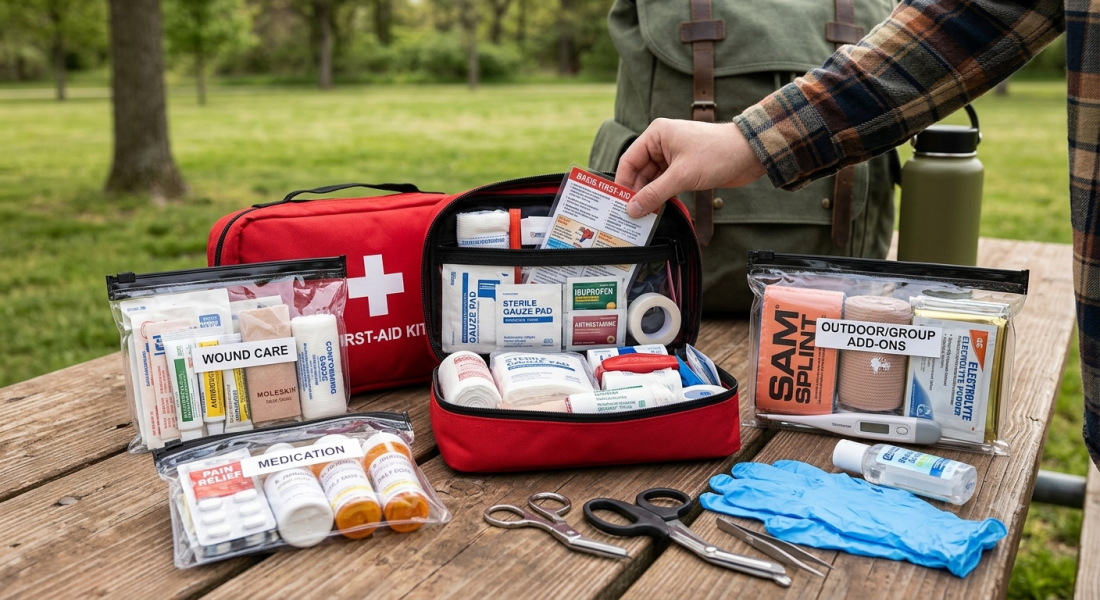
Adhesive bandages in a few sizes, for minor cuts and blisters
Antiseptic wipes or solution to clean wounds before bandaging
Basic pain relief and fever medication, in a quantity that matches your trip length
Oral rehydration salts, especially important for longer trips or hotter destinations
Any personal prescription medication, packed with extra buffer days in case of delays
Genuinely Useful, Often Forgotten
Motion sickness tablets, especially for winding hill routes or boat travel
Antihistamines, useful for unexpected allergic reactions to food, insect bites, or new environments
A digital thermometer, small and lightweight, but useful for judging whether a fever needs medical attention
Blister plasters, specifically designed for foot blisters on long walking days
A small tube of antiseptic cream, for minor scrapes that don’t need a full bandage
For Trekking or Outdoor-Heavy Trips
A crepe bandage for minor sprains
Tweezers, useful for splinters, thorns, or tick removal
Rehydration and electrolyte sachets, given the higher exertion and dehydration risk
A whistle, more of a safety item than medical, but worth including in the same pouch for outdoor trips
What to Skip
Heavy, bulky items like large trauma kits or excessive quantities of any single medication rarely get used and just add unnecessary weight — a first-aid kit should cover likely, minor scenarios, not attempt to replace an actual hospital.
Packing It Smart
A small, clearly labeled pouch — not loose items scattered across your bag — makes the kit actually usable in a moment of need. Keeping it in an easily accessible part of your bag, rather than buried at the bottom, matters more than most people initially plan for.
For Group Trips
One well-stocked shared kit is usually more efficient than everyone carrying a smaller, incomplete version — but it helps to double-check that anyone with specific allergies or prescriptions also carries their own personal essentials separately, not solely relying on the shared kit.
Bottom Line
A good travel first-aid kit isn’t about preparing for everything — it’s about covering the handful of minor, likely scenarios that actually come up on most trips. A small, well-organized pouch usually does more real good than an oversized kit that never leaves the bottom of the bag.

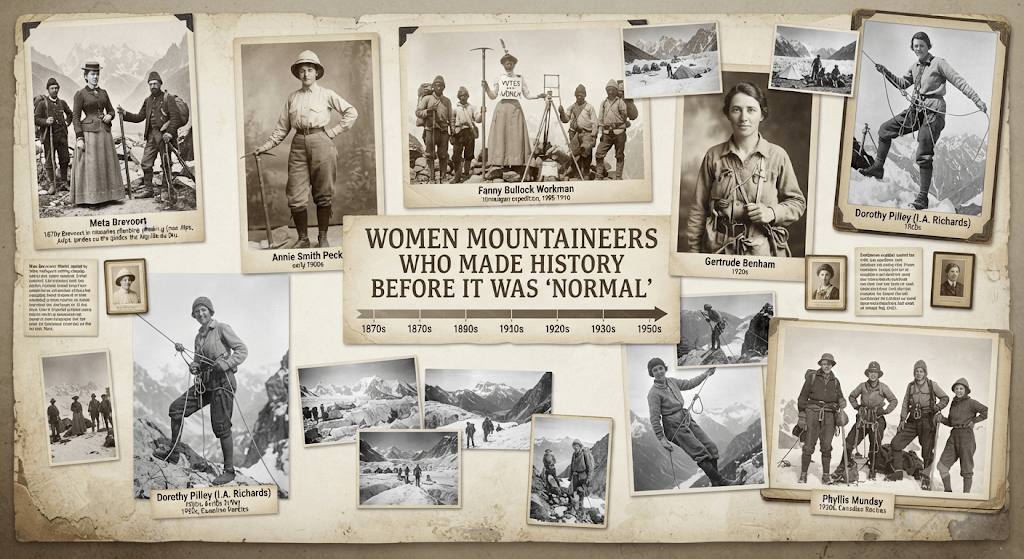
Women Mountaineers Who Made History Before It Was “Normal”

Adventure sports and mountaineering are increasingly common pursuits for Indian women today, but that normalcy was built by a small number of climbers who took on the world’s highest peaks when the field was overwhelmingly male, and the odds — logistical, social, and physical — were stacked against them.

Bachendri Pal: The First to Summit Everest

Bachendri Pal became the first Indian woman to reach the summit of Mount Everest in 1984. She began mountaineering at just 12 years old, scaling a peak over 13,000 feet high during a school picnic, and was the first girl in her village to become a graduate — before going on to a career that reshaped what was considered possible for women in Indian mountaineering. She later launched a fitness initiative for women over 50, aiming to prove that adventure has no age or gender limit.

Chandraprabha Aitwal: A Quiet Pioneer

Chandraprabha Aitwal, born in 1941 in Dharchula, Uttarakhand, is recognized as one of the pioneers of Indian women’s mountaineering, having climbed peaks including Nanda Devi, Kangchenjunga, and Trishuli. She received the Tenzing Norgay National Adventure Award for Lifetime Achievement in 2009 — recognition for decades of climbing at a time when few women in India were doing so at all.

Premlata Agrawal: Starting Late, Going Further

Premlata Agrawal became the first Indian woman to complete the Seven Summits — the highest peaks on each continent. What makes her story distinct is timing: she didn’t start mountaineering until age 36, after entering a hill-climbing competition in Jamshedpur, and went on to summit Everest in 2011 at age 48, becoming the oldest Indian woman to do so at the time.

Anshu Jamsenpa: Redefining Speed and Repetition

Anshu Jamsenpa holds the record for being the first woman to summit Everest twice in a single season, along with the fastest double ascents by a woman — an achievement that pushed the boundaries not just of whether women could summit, but how they could redefine what elite performance at altitude looked like.

Why These Stories Matter Beyond the Summit

Between 1965 and 2018, Indian women climbers made 81 attempts on Everest across 74 individual climbers — a number that grew steadily in large part because these early pioneers proved it was possible, then went on to train and mentor the generations that followed them.

Bottom Line

Every Indian woman climbing today is walking a trail — sometimes literally — first cleared by women who had no precedent to point to, no visible path showing it could be done. Their achievements weren’t just personal records; they were the foundation that made mountaineering a realistic pursuit for the women who came after them.

The Environmental Impact of Tourist Overcrowding in Hill Stations

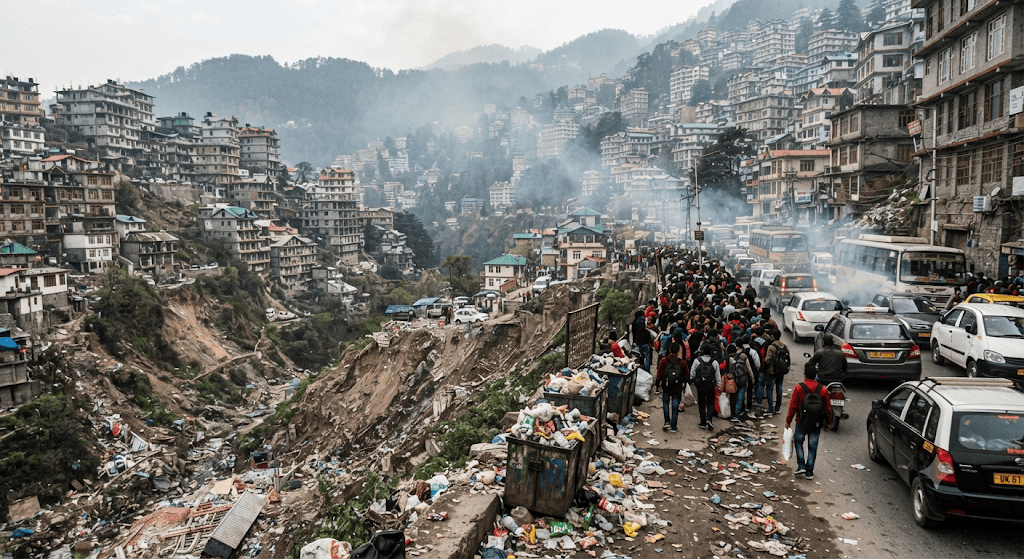
Every summer and long weekend, India’s popular hill stations see traffic jams stretching for kilometers, hotels overbooked well past reasonable capacity, and a strain on infrastructure never built for these numbers. The scenery that draws people there is quietly paying the price.

Water Systems Under Pressure

Many hill towns rely on limited natural water sources — springs, small reservoirs — that were never designed to support the seasonal population spikes tourism now brings. Water shortages during peak season have become a recurring issue in several well-known hill destinations, ironically driven by the very visitors drawn to their natural beauty.

Waste Management Falling Behind

Hill towns typically lack the large-scale waste processing infrastructure of bigger cities, and tourist season generates waste volumes far beyond what local systems can handle. This often results in visible littering, overflowing landfills at town edges, and waste finding its way into streams and forest areas.

Traffic and Air Quality

Long queues of idling vehicles on narrow hill roads, combined with unregulated parking on slopes never meant for heavy vehicle traffic, contribute to localized air pollution and slope stability concerns — a particularly serious issue in landslide-prone regions.

Construction Racing to Keep Up

Rising tourist demand has driven rapid, sometimes poorly regulated construction of new hotels and guesthouses, often on unstable slopes or encroaching on forest land — development that increases both environmental strain and genuine safety risk in these areas.

Impact on Local Wildlife and Vegetation

Increased foot traffic, off-trail wandering, and noise from a high volume of visitors disturbs local wildlife patterns and puts pressure on native vegetation, particularly in areas without clearly marked and enforced trail boundaries.

What More Sustainable Hill Station Travel Looks Like

  • Visit during shoulder seasons rather than peak weekends, spreading demand more evenly
  • Choose smaller, less-visited hill towns as alternatives to the most crowded, well-known destinations
  • Carry out your own waste, especially in areas without visible processing infrastructure
  • Support locally-run accommodations over large new constructions that add strain without local benefit
  • Stick to marked trails rather than off-path exploration that damages fragile vegetation

Bottom Line

The hill stations most affected by overcrowding are often loved precisely for qualities that overcrowding itself is steadily eroding. A more spread-out, mindful approach to visiting these places isn’t about avoiding them — it’s about making sure they’re still worth visiting years from now.

Women-Only Travel Groups: Are They Actually Safer?

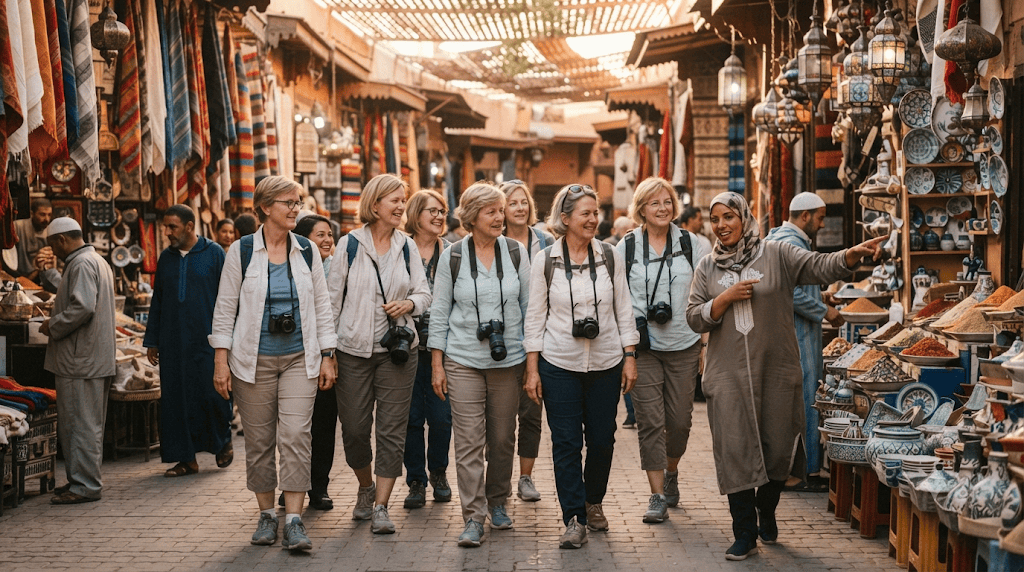
Women-only travel groups have grown significantly in recent years, often marketed primarily around one promise: safety. But does traveling exclusively with other women actually reduce risk, or does the reassurance outpace the reality? Here’s a closer look.

What These Groups Typically Offer

Most women-only travel groups combine shared accommodation, pre-vetted itineraries, and — often the biggest draw — the reassurance of not navigating an unfamiliar destination entirely alone. Many also include a female trip leader with local knowledge of the destination.

Where the Safety Argument Genuinely Holds

Numbers do offer some real protection — a group is generally a less appealing target for harassment or theft than a lone traveler, and shared accommodation reduces the vulnerability of staying somewhere unfamiliar and unverified alone. A trip leader who knows the destination well also removes a lot of the guesswork that creates risk for solo, first-time visitors.

Where the Promise Gets Overstated

Group travel doesn’t eliminate risk — it changes its shape. Groups can still be pickpocketed, still encounter unsafe situations in transit, and group dynamics themselves can sometimes create their own friction or discomfort that has nothing to do with external safety at all.

It’s Not a Substitute for Basic Precautions

Some travelers relax basic safety habits once in a group setting, assuming numbers alone provide protection — skipping the same location-sharing or research they’d otherwise do solo. The safety benefit of a group is additive, not a replacement for individual awareness.

The Real Value May Be Different Than Advertised

For many participants, the standout benefit of women-only trips isn’t safety in the strictest sense — it’s the comfort of shared understanding, not needing to explain certain concerns, and often a stronger sense of connection with fellow travelers than mixed-group trips tend to produce.

What to Actually Check Before Booking One

  • The organizer’s track record and reviews from past participants, not just marketing claims
  • What’s actually included in terms of guide presence, accommodation vetting, and emergency support
  • Group size, since very large groups can dilute both the safety benefit and the personal connection that’s often the real draw

Bottom Line

Women-only travel groups do offer genuine practical benefits, but “safer” isn’t an automatic guarantee just because the group is exclusively female — it depends heavily on how well-organized and experienced the specific group actually is. They’re a solid option for many first-time or hesitant travelers, but not a replacement for ordinary travel safety awareness.

Thrifting and Upcycling: A Beginner’s Guide to Second-Hand Fashion

Thrifting has a learning curve that puts a lot of first-timers off after one overwhelming visit. But once you know what to look for, second-hand shopping becomes less of a gamble and more of a genuinely useful skill — for your wardrobe and for the environment.

Why Thrifting Is Worth Learning

Buying second-hand extends the life of garments that would otherwise be discarded, reducing the demand that drives fast fashion’s resource-heavy production cycle. It’s also often significantly cheaper than buying new, especially for well-made pieces that have simply gone out of a previous owner’s rotation.

Where to Start Looking

Local thrift and second-hand stores, online resale marketplaces, and even neighborhood clothing exchange groups are all reasonable starting points. Online platforms are often easier for beginners since you can search by size and category, rather than digging through a physical rack blind.

What to Check Before Buying

  • Fabric quality — natural fibers tend to hold up better over time than cheap synthetics, even second-hand
  • Seams and stitching — check for loose threads or stress points that suggest the garment won’t last much longer
  • Fit potential — a slightly oversized piece is often more alterable than one that’s too tight
  • Stains and odors — some are treatable, others aren’t; a quick honest check saves disappointment later

Don’t Expect to Find Everything at Once

Thrifting isn’t like shopping with a specific item in mind — inventory is unpredictable. Going in with a loose idea (“a denim jacket, something in blue”) rather than an exact requirement makes the process far less frustrating for beginners.

Basic Upcycling Ideas to Try

  • Cropping or hemming an oversized piece to fit better
  • Dyeing faded garments to refresh the color
  • Patchwork repairs on small tears, turned into a visible design choice rather than hidden
  • Repurposing fabric from unwearable garments into bags, cushion covers, or other household items

Building the Habit Gradually

Thrifting rewards patience more than urgency — treating it as an occasional, low-pressure activity rather than a one-time shopping trip with a strict list tends to produce better finds and a more enjoyable experience overall.

Bottom Line

Thrifting and upcycling aren’t about giving up on personal style — they’re about building it more sustainably, one intentional find at a time. The learning curve flattens quickly once you know what to check for and stop expecting every trip to be a perfect match.

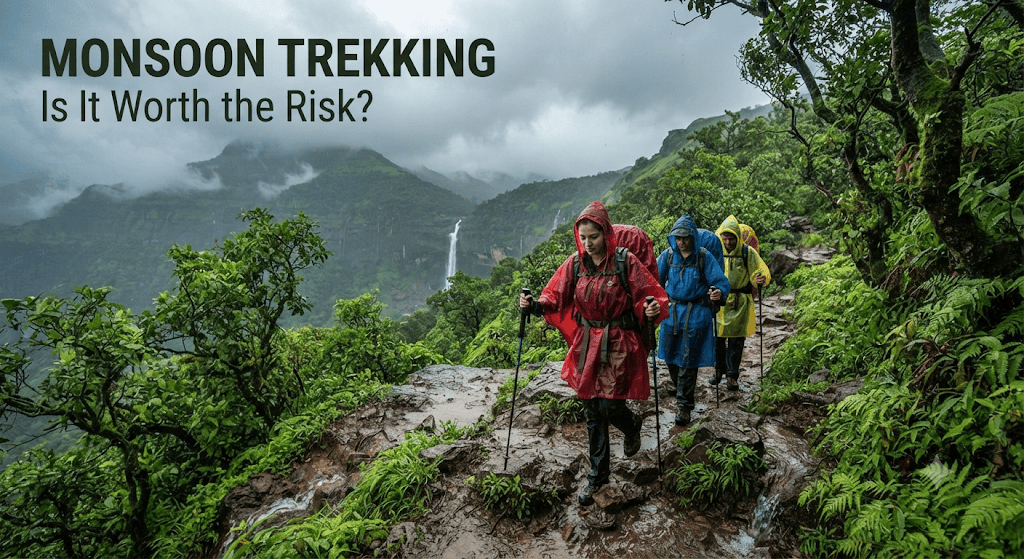
Monsoon Trekking: Is It Worth the Risk?

Monsoon turns familiar trails into something else entirely — waterfalls appear overnight, hillsides turn a deep green, and the whole landscape feels alive in a way summer treks rarely capture. It’s also, without question, riskier. Here’s an honest look at the trade-off.

Why Trekkers Are Drawn to Monsoon Treks

Monsoon transforms otherwise dry, dusty trails into lush, waterfall-lined landscapes that simply don’t exist the rest of the year. For trekkers chasing dramatic scenery and fewer crowds, this narrow seasonal window offers something genuinely unique.

The Real Risks Involved

  • Slippery, unstable terrain — mud and wet rock significantly increase the risk of slips and falls, especially on steep or rocky sections
  • Leeches and increased insect activity, particularly in forested, humid trail sections
  • Landslide and flash flood risk, especially in hill regions with loose soil or near river crossings
  • Reduced visibility from fog and heavy rain, making navigation harder on unmarked or less-trodden trails
  • Swollen rivers and streams that may be safely crossable in dry season but become dangerous during monsoon

Which Treks Handle Monsoon Better

Some regions — particularly in the Western Ghats and parts of the Sahyadri range — are specifically known and prepared for monsoon trekking, with well-established trails and local guides experienced in monsoon conditions. Higher Himalayan treks, by contrast, are generally far riskier and less advisable during peak monsoon months due to landslide-prone terrain.

How to Trek More Safely If You Choose To

  • Go with a local guide who knows current trail conditions, not just the route itself
  • Check recent weather and landslide advisories specific to the exact trail, not just the general region
  • Carry proper gear — grippy waterproof shoes, dry bags, and a raincoat rather than just an umbrella
  • Avoid river crossings during or right after heavy rainfall, even if the crossing seemed manageable before
  • Have a flexible itinerary that allows turning back if conditions worsen, rather than pushing through to stick to a fixed plan

Who Monsoon Trekking Isn’t Right For

First-time trekkers, anyone trekking solo without local knowledge, or routes without established monsoon-season precedent are generally better attempted in drier months. Monsoon trekking rewards experience and preparation far more than trekking in more forgiving seasons.

Bottom Line

Monsoon trekking can be genuinely spectacular, but it demands real respect for the added risk — proper gear, local knowledge, and a willingness to turn back. It’s not inherently reckless, but it’s also not something to attempt casually or without real preparation.

The Women Who Run India’s Self-Help Groups (And Why They Matter)

Long before “financial inclusion” became a policy buzzword, women across India were already building it themselves — through Self-Help Groups (SHGs), small collectives that pool savings, offer credit, and give members a level of financial independence many never had access to before.

What a Self-Help Group Actually Is

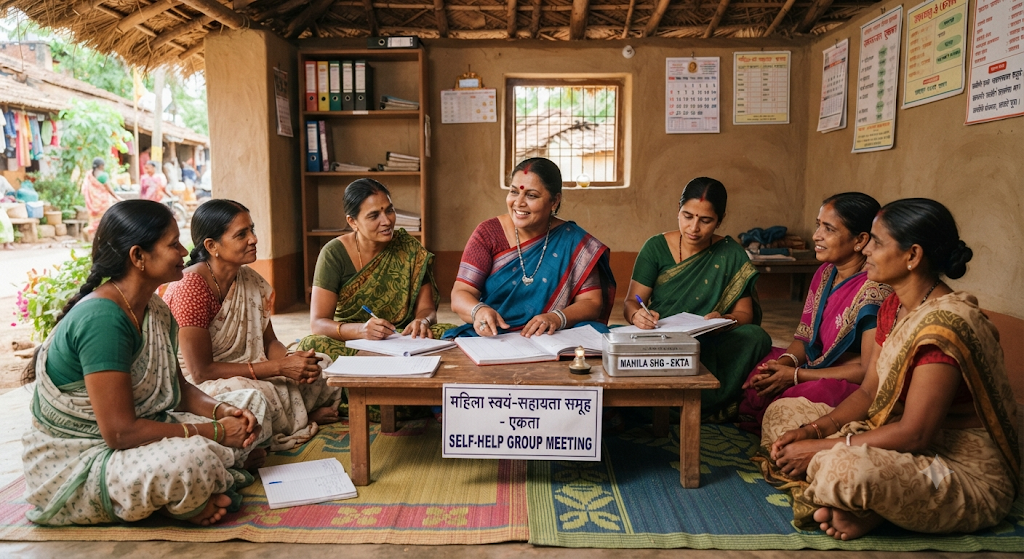
An SHG is typically a small group of 10-20 women who regularly pool small savings into a shared fund, from which members can borrow for personal or business needs — often without the collateral requirements or paperwork barriers that keep many women out of formal banking systems.

Why Banks Weren’t Working for These Women

Many women, especially in rural areas, historically had no independent credit history, no assets in their own name, and no formal employment record — all things traditional banks require. SHGs sidestepped this entirely by building trust and accountability within the group itself, rather than requiring external collateral.

Beyond Just Savings and Loans

Many SHGs have expanded well past simple savings circles into small collective businesses — food processing units, tailoring cooperatives, handicraft production — giving members not just credit access but an actual income stream, run and controlled by the group itself.

The Confidence Shift

For many women, especially those who had never handled money independently before, participating in an SHG’s financial decisions — voting on loans, managing shared funds, negotiating with buyers — builds a kind of confidence and decision-making experience that extends well beyond the group’s finances.

Government and Institutional Backing

Various national and state-level programs have worked to formalize and scale the SHG model, linking groups to bank credit at better terms and providing training — recognition that this grassroots model, largely built and run by women themselves, was already working better than many top-down alternatives.

The Ripple Effect on Families and Villages

Money earned or saved through SHGs often goes directly toward things like children’s school fees, healthcare, or home improvements — decisions frequently made by the women themselves, in households where financial decisions had previously been made almost entirely by men.

Bottom Line

Self-help groups are one of the clearest examples of a women-led model succeeding not because of external funding alone, but because of trust, accountability, and shared decision-making built entirely within the group. It’s a quiet but genuinely significant force behind rural women’s growing financial independence across India.

How to Plan a Girls’ Trip That Works for Every Budget in the Group

Group trips rarely fall apart over the destination — they fall apart over money. Someone wants a nicer stay, someone else is watching every rupee, and nobody wants to be the one who brings it up first. Here’s how to plan around that honestly.

Talk Budget Before Talking Destination

Choosing a destination first and discussing budget later almost guarantees mismatch — a dream location might be unaffordable for one or two people who then either overspend or drop out. Getting a rough number from everyone upfront should shape the destination choice, not follow it.

Use a Range, Not a Fixed Number

Asking “what’s your budget?” often gets vague or overly generous answers out of politeness. Asking for a comfortable range instead — “what’s the most and least you’d want to spend?” — tends to surface more honest numbers.

Separate “Must-Do” From “Nice-to-Have” Expenses

Splitting the trip into non-negotiables (accommodation, transport) and optional extras (spa day, a fancy dinner, shopping) lets everyone opt into the shared essentials while choosing individually on the optional spending, rather than forcing a single shared standard on everything.

Choose Accommodation With Flexible Options

Picking a stay with multiple room types — some shared dorms or triple rooms alongside private options — lets people self-select their comfort level and cost without an awkward conversation about who’s paying for what kind of room.

Avoid the “We’ll Split Everything Evenly” Trap

Splitting every cost evenly sounds fair but often isn’t — someone who skips the expensive dinner still ends up paying an equal share. Tracking who actually spent what, and settling based on real usage, avoids resentment that builds quietly over a trip.

Use a Shared Expense App

A simple shared-expense tracking app removes the awkwardness of manually calculating who owes what, and keeps the money conversation transparent and low-drama throughout the trip rather than as one big confrontation at the end.

Give Space for Someone to Opt Out of Certain Plans

Not every activity needs full group participation. Letting people skip an expensive add-on without guilt-tripping keeps the trip enjoyable for everyone, rather than pressuring the group into a single, uniformly priced experience.

Bottom Line

A girls’ trip that respects different budgets isn’t less fun — it’s usually more relaxed, because nobody’s quietly stressed about money the whole time. A little upfront honesty about spending goes further toward a good trip than any destination choice ever could.