Period Poverty in India: What’s Actually Being Done About It

If you’ve ever had to ask a stranger for a pad, skip school because you didn’t have access to menstrual products, or use a rag, sand, ash, or newspaper during your period — you already know what period poverty feels like. For millions of women and girls across India, this isn’t a hypothetical. It’s a monthly reality.

Period poverty isn’t just about not being able to afford a pack of sanitary pads. It’s a tangle of three things: lack of access to safe menstrual products, lack of access to clean water and private toilets to manage periods hygienically, and — maybe the most stubborn of all — the silence and shame that stops girls from asking for help in the first place.

The Scale of the Problem

Government surveys have repeatedly shown that a large share of menstruating women in India still don’t use hygienic methods of protection, especially in rural areas. The gap isn’t uniform either — it varies sharply by state, by income, and by whether a girl is still in school. Many girls drop out of school entirely once they start menstruating, not because they want to, but because their school has no functioning toilet, no privacy, and no way to manage a leak with dignity.

This isn’t a “women’s issue” tucked away in a corner. It affects education outcomes, workforce participation, and public health — which is exactly why it deserves more attention than it gets.

What’s Actually Being Done

The good news is that period poverty in India isn’t being ignored anymore. Here’s where real movement is happening:

1. GST removal on sanitary products. In 2018, after sustained public pressure and activism, India removed the 12% GST that had been levied on sanitary napkins. It was a small line item that made a real difference in affordability at scale.

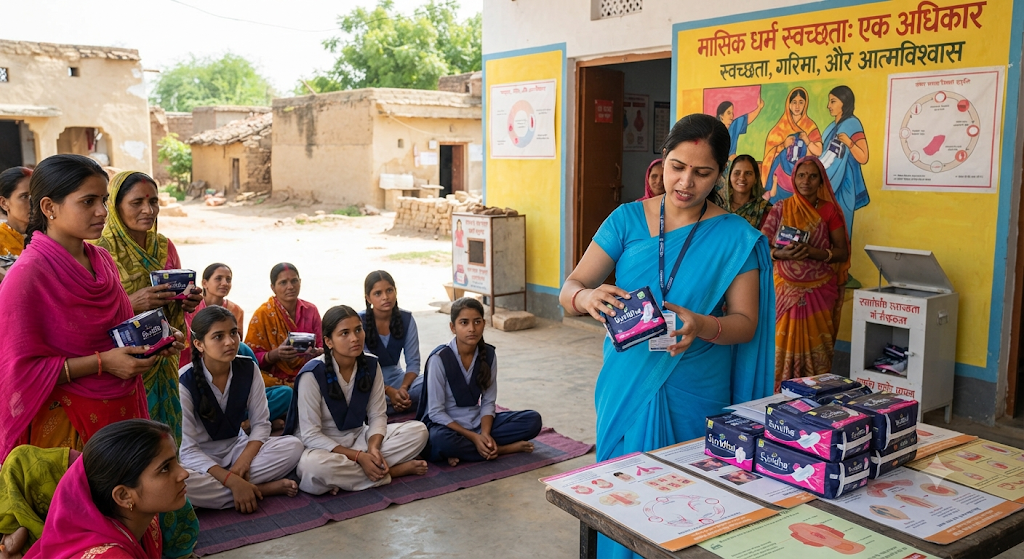
2. Government distribution schemes. Programs at both the central and state level have worked to supply subsidized or free sanitary pads through schools and primary health centres, particularly targeting rural and adolescent girls. Coverage is uneven, but the intent — and the infrastructure — now exists in places it didn’t before.

3. Menstrual health in the school curriculum. Several states have started integrating menstrual hygiene education into school health programs, training teachers and health workers to talk about periods without euphemism or embarrassment, and installing incinerators and sanitary vending machines in government schools.

4. NGOs closing the last-mile gap. Organizations working at the grassroots level — going village to village, training local women as menstrual health educators, manufacturing low-cost sanitary pads through community-run micro-enterprises — have often reached places that policy alone hasn’t. Some of the most effective models pair product distribution with education, because handing someone a pad without addressing the stigma around periods only solves half the problem.

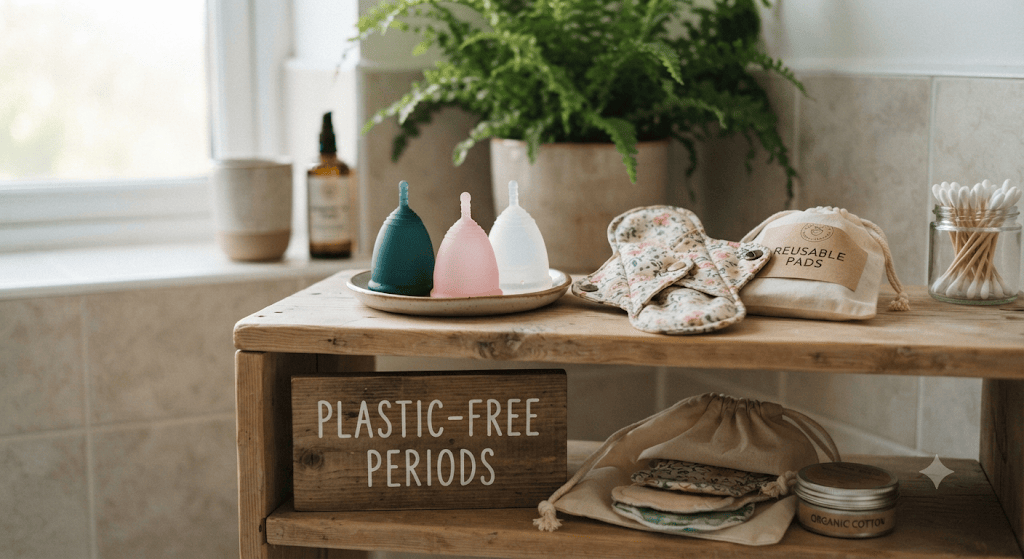
5. Sustainable and reusable alternatives. Menstrual cups, cloth pads, and period underwear are getting more visibility, both as a cost-saving option for low-income households and as a lower-waste alternative to disposable pads, which are a genuinely enormous environmental burden — most contain plastic and take centuries to break down.

Where the Gaps Still Are

For all this progress, period poverty hasn’t been solved — not close. Distribution schemes don’t always reach the most remote areas. Products supplied by some programs are inconsistent in quality. And the biggest gap of all is cultural: even where products are available, shame and silence still keep many girls from using them confidently, or from talking to a parent, teacher, or doctor when something feels wrong.

Access without education is a half-measure. A girl who has a pad but has never been told what a period actually is, why it happens, or that it’s nothing to be ashamed of, is still navigating this mostly alone.

What You Can Actually Do

You don’t need to run an NGO to make a dent in this. A few starting points:

  • Support grassroots organizations directly working on menstrual health in your city or state — many are chronically under-resourced and rely on small, recurring donations more than one-time large ones.
  • Normalize the conversation at home. If you have younger sisters, cousins, or nieces, be the person who talks about periods like it’s just biology — because it is.
  • Donate products, not just money, during pad drives, especially before monsoon season and before the school year starts, when supply often runs low.
  • Choose sustainable products where you can, and talk about them openly — cups and reusable pads are still seen as niche in a lot of households, and visibility helps.

Period poverty sits at the intersection of everything this blog cares about — women’s dignity, environmental impact, and access to basic health infrastructure. It’s a solvable problem. It just needs more people treating it like the public health issue it actually is, instead of a private embarrassment to whisper about.
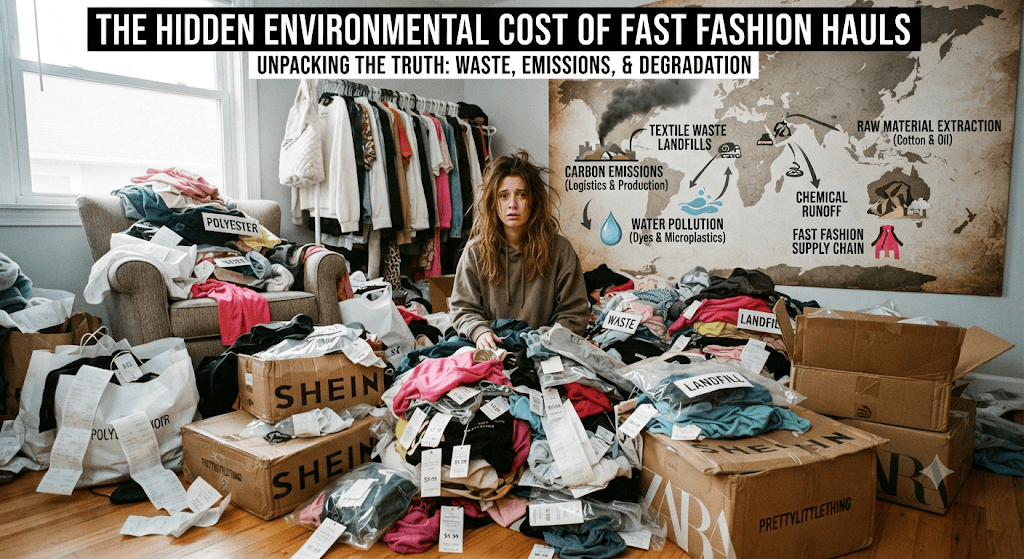

The Hidden Environmental Cost of Fast Fashion Hauls

A ₹300 top that’s trendy for one season and forgotten the next feels harmless in isolation. Multiplied across millions of similar purchases, though, fast fashion carries an environmental cost that rarely shows up on the price tag.

The Resource Cost Before It Even Reaches You

Producing a single garment involves significant water and energy use — particularly for cotton cultivation and dyeing processes — well before it ever reaches a store shelf. Fast fashion’s business model depends on producing at massive volume and speed, multiplying this resource cost across an enormous number of garments made to be worn only briefly.

The Waste Problem After You’re Done

Garments designed for short-term trend cycles are often made from cheaper, lower-quality materials that don’t hold up to repeated wear or resale. Much of this clothing ends up discarded within a year or two, contributing to a fast-growing volume of textile waste, most of which isn’t recycled and ends up in landfills.

Synthetic Fabrics and Microplastics

A large share of fast fashion is made from synthetic fibers like polyester, which shed microplastic fibers with every wash — fibers that eventually make their way into waterways and, ultimately, the food chain. This is a slower, less visible cost, but a real one.

The “Haul Culture” Problem

Social media content built around hauls and constant new outfits normalizes a pace of consumption that has little to do with actual need. It reframes buying and quickly discarding clothing as entertainment, which quietly increases demand for the fastest, cheapest production cycles.

What a Lighter Approach Looks Like

  • Buy fewer, better pieces that are likely to be worn repeatedly, not just once for content
  • Check fabric composition and lean toward natural fibers where possible, which tend to last longer and shed less
  • Repair before replacing — a small tear or loose button doesn’t always mean a garment is done
  • Resell or donate rather than discard, extending a garment’s life beyond your own closet

Bottom Line

Fast fashion’s low price hides a cost that shows up elsewhere — in water use, textile waste, and microplastic pollution that isn’t part of the transaction at checkout. None of this means giving up new clothes entirely; it just means being a little more deliberate about how often, and how much, gets bought and discarded.

Women Rangers and Forest Guards Protecting India’s Wildlife

Forest protection has long been seen as a man’s domain in India — long patrols, physical risk, remote postings. But across the country’s reserves, thousands of women are now doing exactly this work, often in some of India’s most challenging terrain.

Gir National Park: The Lionesses of Gujarat

<cite index=”1-1″>Gujarat’s Gir Forest appointed its first batch of 51 women forest guards in 2007</cite>. These women patrol vast stretches of forest protecting the world’s only wild population of Asiatic lions, regularly handling wildlife rescues — from injured lion cubs to venomous snakes — as part of routine duty rather than exceptional heroics.

Kaziranga’s “Van Durgas,” Assam

<cite index=”3-1″>At Kaziranga National Park, female forest guards known locally as “Van Durgas” come from rural communities and work to protect wildlife and habitat across the park’s roughly 430 square kilometers</cite>. <cite index=”4-1″>The park now includes around 40 female rangers across roles like Range Officers, Forest Guards, and Foresters</cite>, alongside a dedicated women’s unit within the Special Rhino Protection Force guarding the endangered greater one-horned rhinoceros from poaching.

Dudhwa Tiger Reserve, Uttar Pradesh

<cite index=”6-1″>Dudhwa Tiger Reserve has recruited young men and women as forest watchers</cite>, with officials describing it as a pioneering effort to bring women into forest protection roles that had rarely included them before.

Gurukula Botanical Sanctuary, Western Ghats

<cite index=”7-1″>In Kerala’s Western Ghats, an all-female team of 27 women serves as guardians of the region’s rare and threatened plant species</cite>, working to protect biodiversity in one of the world’s most ecologically significant and endangered mountain ranges.

Why This Shift Matters

Beyond conservation outcomes, women forest guards often bring specific advantages — better rapport with village women during community conflict resolution, and a visible signal to younger women in these regions that this kind of work is possible for them too. Several of the women in these programs have spoken about how their entry inspired others locally to apply.

The Work Isn’t Symbolic

These aren’t ceremonial postings. Women forest guards conduct real patrols, handle wildlife emergencies, and in some cases carry weapons as part of anti-poaching units — work that comes with genuine physical risk and long stretches away from family, often in remote, difficult terrain.

Bottom Line

India’s forests are being protected, in real and growing numbers, by women who chose this work deliberately — not as an exception, but as a profession. Their presence is reshaping who gets to be seen as a protector of India’s wildlife, one patrol at a time.

Plastic-Free Periods: Are Reusable Products Actually Worth It?

Reusable menstrual products get recommended constantly for their environmental benefits, but the practical side of actually switching — comfort, cost, hygiene, learning curve — gets far less honest discussion. Here’s a grounded look at what the switch actually involves.

The Waste Problem With Disposables

A single person using disposable pads or tampons generates a significant amount of non-biodegradable waste over their menstruating years — most of it made from plastic that will outlast the person who used it by centuries. This is the core environmental argument for reusables, and it’s a real one.

Menstrual Cups: The Learning Curve Is Real

Menstrual cups have the steepest initial learning curve of any reusable option — folding, insertion, and removal take a few cycles to get comfortable with. Most people who stick with it past the first two or three cycles report it becoming easy, but the early frustration is genuine and shouldn’t be dismissed.

Reusable Cloth Pads: The Gentler Switch

Cloth pads function almost identically to disposable pads, just washed and reused, making them a much easier first step into reusable products without requiring any new technique to learn. The tradeoff is needing proper washing facilities and a bit more laundry.

The Cost Math Over Time

Reusable products cost significantly more upfront — a good menstrual cup or a set of cloth pads can cost as much as several months of disposables. But since they last years, not months, the long-term cost is substantially lower, often paying for itself within a year or so of consistent use.

Hygiene Considerations

Reusable products require proper cleaning — boiling cups between cycles, thoroughly washing cloth pads — which takes more active effort than simply disposing of a used product. For people without reliable private washing access, this is a genuine practical barrier, not a minor inconvenience.

They’re Not All-or-Nothing

Many people who switch don’t go 100% reusable — using cups or cloth pads at home and disposables while traveling or in situations with limited hygiene facilities is a common, practical middle ground rather than an everything-or-nothing choice.

Bottom Line

Reusable menstrual products genuinely reduce waste and save money over time, but they come with real upfront cost, a learning curve, and hygiene logistics that aren’t right for every situation. They’re worth trying, but not something to feel obligated to switch to completely — a partial switch still meaningfully reduces waste compared to full reliance on disposables.

How to Travel Safely as a Woman: A City-by-City Checklist

Most travel safety advice for women stays frustratingly generic — “stay alert,” “trust your gut.” Useful in theory, but not something you can actually act on while planning a trip. Here’s a more concrete, practical checklist to run through for any new city.

Before You Arrive

  • Research the neighborhood, not just the city. Safety varies block by block; a general “is this city safe” search is far less useful than checking reviews for your specific accommodation’s area.
  • Book your first night’s stay in advance, even if you plan to figure out the rest as you go — arriving somewhere unfamiliar at night with no confirmed stay adds unnecessary risk.
  • Note the local emergency number and save it, along with your accommodation’s address, somewhere accessible offline.

On Arrival

  • Arrange airport/station transport in advance through a verified app or hotel-arranged pickup rather than picking an unmarked cab on arrival, especially late at night.
  • Get local SIM or data working immediately so navigation and communication don’t depend on unreliable wifi.
  • Do a short daylight walk around your immediate accommodation area before exploring further, to build a basic mental map of safe, familiar streets.

Day-to-Day Habits

  • Share your daily plan with someone back home or a trusted contact, even briefly — which area you’re heading to, expected return time.
  • Keep a downloaded offline map as backup in case of poor connectivity.
  • Carry a physical copy of key addresses (accommodation, embassy if abroad) in case your phone dies or gets lost.

Choosing How You Move Around

  • Prefer verified ride apps over street hailing, and share trip details with a contact when using them in unfamiliar cities.
  • Sit near the driver or in well-lit compartments on public transport late at night, rather than isolated sections.
  • Trust discomfort over politeness — leaving an uncomfortable situation early, even if it feels socially awkward, is always the safer choice.

Know the Local Norms

Dress codes, appropriate behavior in religious or conservative areas, and common local scams vary significantly by city. A quick check of destination-specific advice (not generic global tips) helps you blend in and avoid unnecessary attention.

Bottom Line

Safety while traveling isn’t about constant fear — it’s about a short list of concrete habits that reduce avoidable risk. A little city-specific preparation before arrival does far more than any generic “stay safe” advice ever could.

The Rise of Women-Led Farming Collectives in Rural India

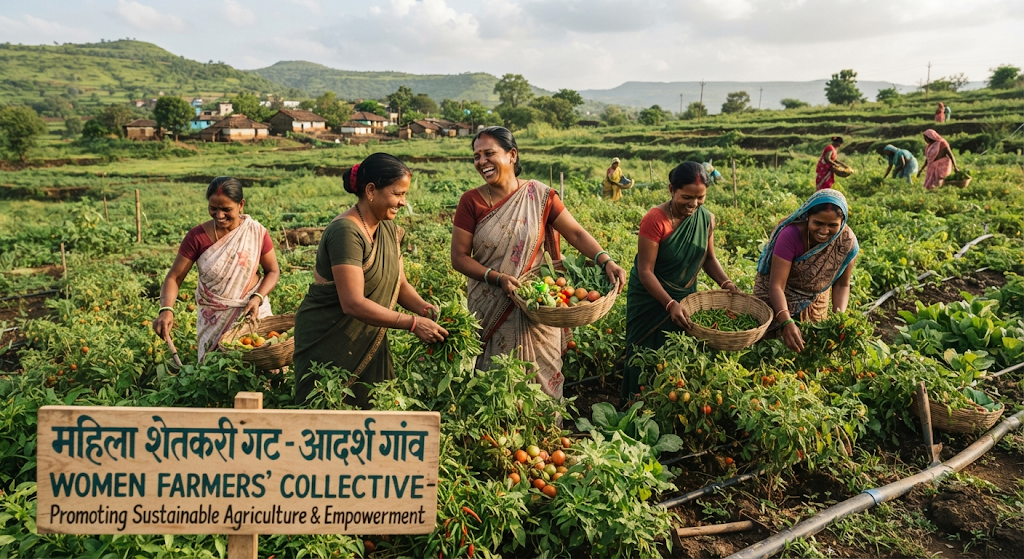
Women have always done a large share of farm labor in rural India — sowing, weeding, harvesting — without necessarily owning the land or having a say in how it’s managed. Women-led farming collectives are steadily changing that equation, giving women both economic control and collective bargaining power.

Why Collectives Formed in the First Place

Individual women farmers, especially those without land titles in their own name, historically had little access to credit, government schemes, or fair pricing for their produce. Pooling together into collectives gave them the scale and negotiating power that no single small farmer could achieve alone.

What These Collectives Actually Do

Beyond farming itself, many collectives handle shared resources — bulk seed purchasing, shared equipment, group access to credit — and collectively negotiate prices with buyers, cutting out the middlemen who traditionally captured most of the margin from individual small-scale farmers.

Shifting Who Owns the Decision

In many traditional setups, women did the labor while land and decision-making stayed with men in the household. Collectives built specifically around women members shift that dynamic — decisions about what to grow, how to sell, and how to reinvest profits are made by the women actually doing the work.

Government and NGO Support

Various state-level schemes and NGO partnerships have specifically targeted support toward women’s farming groups — training in sustainable practices, access to microfinance, and market linkage programs designed to help collectives sell directly rather than through multiple layers of traders.

The Ripple Effect Beyond Farming

Income earned through these collectives often goes directly toward things individual women prioritize — children’s education, household nutrition, healthcare — creating impact that extends well past the immediate farming income itself.

Challenges That Remain

Land ownership laws, deep-rooted social norms about who “should” make agricultural decisions, and uneven access to training or credit across regions mean collectives don’t fix the underlying structural issues everywhere equally — progress remains uneven and hard-won in many parts of the country.

Bottom Line

Women-led farming collectives aren’t a symbolic gesture — they represent a genuine shift in who controls agricultural income and decisions in rural India. Slow and regionally uneven as the progress is, it’s steadily reshaping what agricultural leadership looks like at the village level.

Budget Backpacking in India: Real Costs for a Week-Long Trip

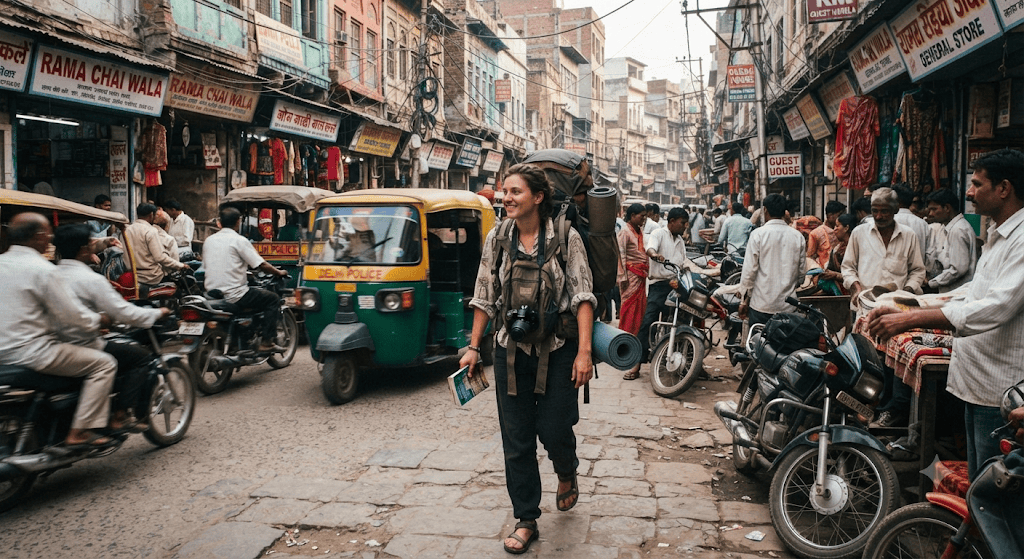
“Travel India for ₹500 a day” headlines make for good clicks, but rarely reflect what an actual week on the road costs once transport, food, and unexpected expenses are factored in. Here’s a more grounded, realistic breakdown.

Accommodation

Hostel dorm beds in popular backpacker circuits typically range from ₹300–800 a night, while budget guesthouses or basic homestays run somewhat higher, especially in tourist-heavy hill stations or coastal towns during peak season. Booking a few nights in advance in popular spots avoids scrambling for last-minute options at inflated prices.

Local and Intercity Transport

Sleeper class trains remain the cheapest way to cover long distances, often just a few hundred rupees for journeys that would cost far more by bus or flight. Local transport — autos, shared jeeps in hill areas, local buses — adds up gradually but stays manageable if you avoid tourist-rate private cabs.

Food

Eating at local dhabas and street food stalls instead of restaurants catering to tourists cuts food costs dramatically — a full day’s meals can often be managed within ₹300–500 if you’re not eating at cafés built around foreign backpacker prices.

The Costs Budget Guides Often Skip

  • SIM cards and data, especially if you need connectivity for bookings or safety check-ins
  • Entry fees for monuments, parks, or heritage sites, which add up faster than expected across a week
  • Buffer for delays — missed connections or weather-related detours that require an unplanned extra night somewhere
  • Basic travel insurance, often skipped by budget travelers but genuinely worth the small cost

A Realistic Weekly Range

Accounting for all of this, a genuinely budget-conscious week in India — not luxury, not uncomfortable either — tends to land somewhere in the ₹8,000–15,000 range per person, depending heavily on the region and season, rather than the unrealistically low figures often quoted online.

Where Real Savings Actually Come From

The biggest cost differences don’t come from squeezing every rupee on food, but from bigger decisions — traveling in off-season, choosing sleeper trains over flights, and picking fewer destinations to reduce transport costs, rather than rushing between too many places in one week.

Bottom Line

Budget backpacking in India is genuinely affordable compared to most parts of the world, but the “impossibly cheap” numbers online usually leave out real costs that add up. Planning around a realistic range, rather than an inflated best-case number, makes for a much less stressful trip.

Menstrual Leave Debate: What Indian Women Actually Think

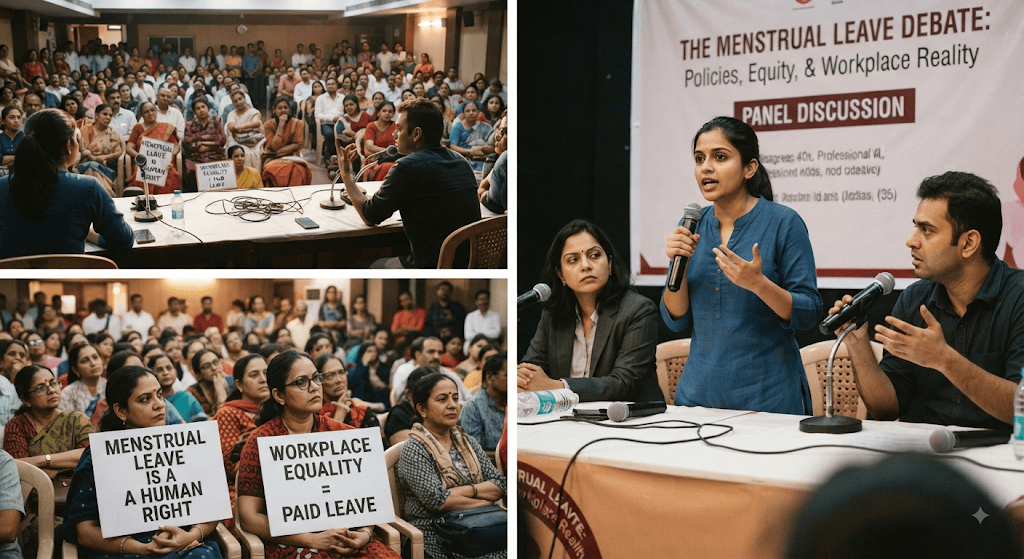
Menstrual leave resurfaces in Indian public conversation every year or two — a company announces a policy, a state proposes a bill, and the debate reignites. But between the headlines, the actual opinions of women who’d use such leave often get lost. Here’s a more grounded look at where the conversation stands.

What’s Actually Being Proposed

Menstrual leave generally refers to paid time off — usually one to two days a month — specifically for menstrual pain or discomfort, separate from standard sick leave. A few Indian states and companies have piloted such policies, though nationwide legislation has repeatedly been debated without becoming law.

The Case in Favor

Supporters argue that for a meaningful share of menstruating employees, symptoms like severe cramps or fatigue genuinely affect the ability to work productively, and that treating this as a normal, non-stigmatized part of employment — rather than something to push through silently — is simply overdue recognition of a real physical reality.

The Case Against (Even From Women)

A notable portion of the pushback doesn’t come from men, but from women themselves, worried that formal menstrual leave could reinforce workplace bias — that employers might hesitate to hire or promote women, consciously or not, anticipating “extra” leave usage. Some also feel it singles out a normal bodily function as a workplace liability rather than normalizing it.

A Third View: Flexibility Over Formal Leave

Many working women land somewhere in between — less interested in a rigid “menstrual leave” category, and more interested in flexible policies (like work-from-home options or flexible hours during difficult days) that don’t require formally naming the reason.

What This Reflects About Workplace Culture

The debate isn’t really only about a few days off — it’s a proxy for a bigger question about whether Indian workplaces can accommodate real, everyday realities of women’s health without treating them as either taboo or as grounds for discrimination.

Bottom Line

There’s no single “women’s opinion” on menstrual leave — it’s a genuinely split conversation, shaped as much by fear of workplace bias as by the real physical need the policy is meant to address. Any serious policy discussion probably needs to grapple with both sides, not just the loudest one.

Slow Travel vs Fast Travel: Why Fewer Places Might Mean More

Somewhere along the way, travel started being measured by how many places you can visit, not how well you actually experienced any of them. Slow travel pushes back against that — fewer destinations, more time in each, and a very different kind of trip.

What Fast Travel Actually Gives You

Fast travel — five countries in ten days, a new city every 48 hours — delivers photos, checkmarks, and a broad surface-level sense of many places. It works well for people who genuinely want a highlight-reel overview, or who may not get the chance to return.

What Fast Travel Costs You

The tradeoff is depth. A city seen for one rushed day rarely allows for the kind of unplanned moments — a conversation with a shopkeeper, getting comfortably lost, revisiting a spot that mattered — that tend to be what people actually remember months later.

What Slow Travel Looks Like in Practice

Slow travel means picking fewer destinations and staying longer in each — days or weeks instead of hours. It allows time to settle into a place: understanding the rhythm of daily life there, not just its landmarks.

The Case for Repetition

Returning to the same café, market, or neighborhood multiple times over a longer stay builds a kind of familiarity that a first visit never can. Slow travel often means less novelty per day, but more genuine connection to the place by the end.

It’s Often Kinder to Your Budget and Body Too

Constant movement — new hotels, new transport, new logistics every day or two — is exhausting and expensive. Staying longer in fewer places usually means better accommodation deals, less transit cost, and considerably less travel fatigue.

Choosing What’s Right for the Trip

Fast travel isn’t wrong — sometimes a short window genuinely calls for covering more ground. But when time allows, slow travel tends to leave a much stronger, more personal impression of a place than a checklist of destinations ever does.

Bottom Line

A trip isn’t measured by how many pins you can drop on a map. Spending real time in fewer places, letting a destination unfold slowly instead of rushing through it, often leaves you with something a fast itinerary simply can’t — an actual sense of having been somewhere, not just passed through it.

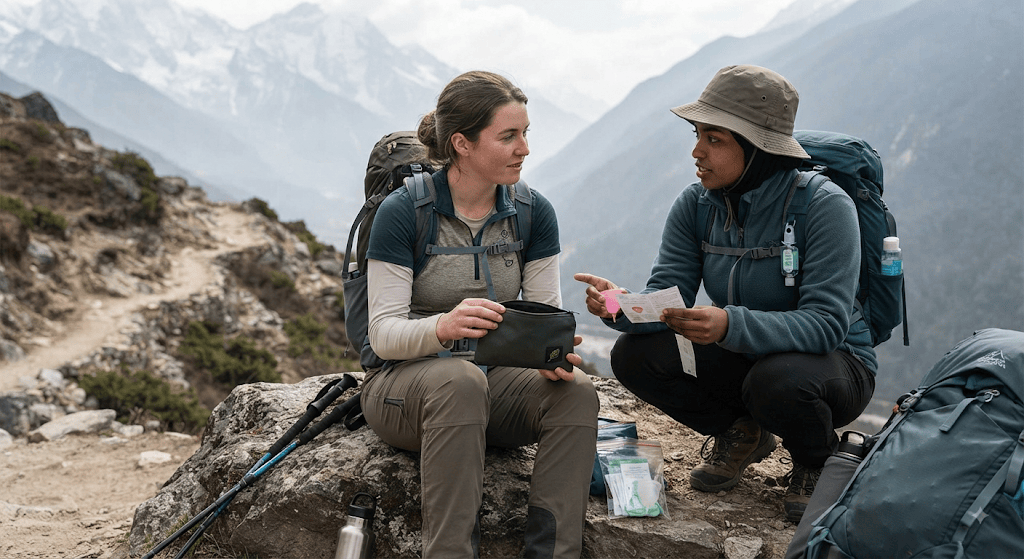
Menstrual Health on the Trail: What No One Tells You Before a Trek

Most trekking guides cover fitness, gear, and altitude in detail — but rarely address something half of all trekkers eventually deal with: managing a period on the trail. Here’s the practical information that’s usually left unsaid.

Trekking During Your Period Is Completely Possible

There’s a persistent myth that menstruating and high-altitude trekking don’t mix well. In reality, most people can trek comfortably during their period with the right preparation — it’s rarely a reason to cancel or delay a planned trek.

Choose the Right Products for the Terrain

Multi-day treks with limited access to disposal facilities make menstrual cups or period underwear far more practical than pads or tampons, which require more frequent changing and generate more waste to carry out. Trying a new product at home well before the trek — not for the first time on the trail — avoids unpleasant surprises.

Pack Out, Don’t Leave Behind

Any used menstrual products need to be carried out in a sealed bag, exactly like other non-biodegradable waste — leaving them on the trail (even buried) is both an environmental and hygiene issue in fragile mountain ecosystems.

Managing Hygiene With Limited Water

Carrying wet wipes, a small bottle of water for rinsing, and hand sanitizer covers most hygiene needs when a proper toilet or shower isn’t available for a day or two. Planning a private moment during breaks, rather than waiting for a “perfect” spot, usually works better than expecting ideal conditions.

Cramps and Altitude

Cramps can occasionally feel more intense at altitude due to increased blood flow and exertion. Carrying a basic pain reliever, staying hydrated, and pacing more gently on heavier flow days helps manage this without derailing the whole trek.

Talk to Your Trek Leader If Needed

A good trek leader has dealt with this before and can help plan slightly longer breaks or adjust pace if needed — bringing it up isn’t awkward, it’s practical trip planning, same as mentioning any other physical consideration.

Bottom Line

A period is not a valid reason to skip a trek you’ve been looking forward to. With the right products, a little extra planning, and a practical mindset about waste and hygiene, it’s entirely manageable — it just rarely gets talked about openly enough for first-timers to know that going in.