Packing for a Trip in Under 30 Minutes: A Practical System

Packing has a way of expanding to fill however much time you give it — an hour of deliberation over outfit combinations, second-guessing what to bring, refolding things that were already fine. With a repeatable system, most trips can be packed in well under 30 minutes.

Keep a Standing “Base Kit” Ready

Toiletries, chargers, adapters, and basic first-aid items are needed on nearly every trip, yet get re-packed from scratch each time. Keeping a dedicated, always-ready pouch with these essentials means one major packing category is already done before you even start.

Use the “3-Day Rule” for Clothing

Rather than packing a different outfit for every single day, plan around a small set of mix-and-matchable pieces that can be worn in different combinations across roughly three days, then repeated with minor variation — this alone cuts packing decisions dramatically for longer trips.

Pick a Color Scheme Before Choosing Items

Selecting clothes from within one or two coordinating color families means almost anything you grab can be paired with anything else, removing the need to individually plan each outfit combination in advance.

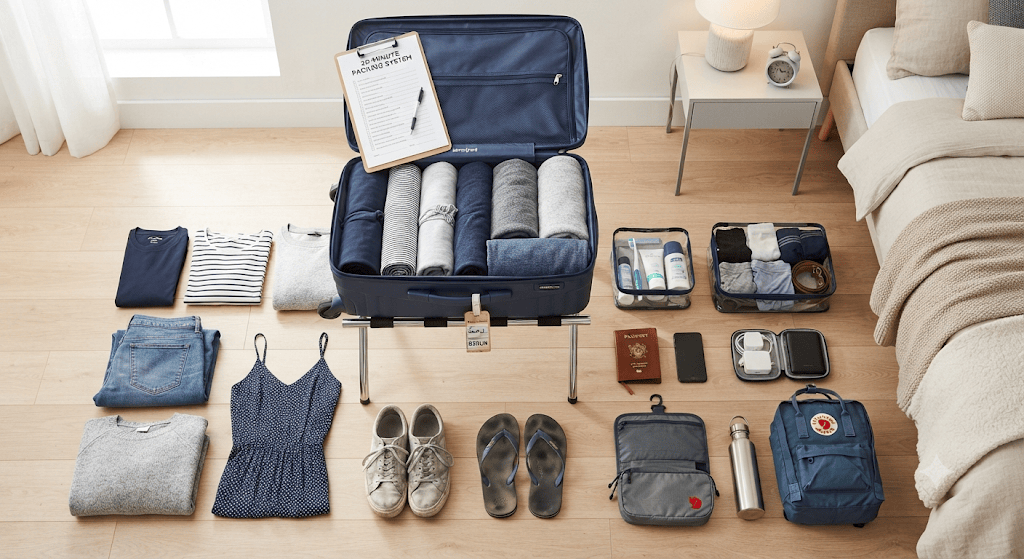
Lay Everything Out Before Packing the Bag

A quick flat layout of everything you’re bringing — clothes, essentials, extras — lets you spot immediately what’s missing or excessive, which is far faster than packing and repacking directly into the bag while second-guessing choices.

Roll, Don’t Fold

Rolling clothing instead of folding saves both space and time, and tends to reduce wrinkling as a side benefit — a small technique that speeds up the actual packing motion once everything is laid out and ready.

Use a Fixed Packing Order

Packing in the same sequence every time — bottom-heavy items first, then clothing, then anything fragile or frequently accessed on top — removes the decision fatigue of figuring out bag organization from scratch on every trip.

Keep a Reusable Packing Checklist

A saved checklist (digital or printed) covering your standard trip essentials means packing becomes a quick scan-and-confirm process rather than trying to mentally reconstruct everything you might need each time.

Accept That Minor Forgetting Is Fine

Most forgotten items are replaceable at the destination without much hassle. Letting go of the need to pack “perfectly” removes a significant chunk of the deliberation time that slows packing down in the first place.

Bottom Line

Fast packing isn’t about rushing — it’s about removing repeated decisions through a standing system: a ready base kit, a simple color scheme, and a fixed process. Once the system is set up once, most trips genuinely can be packed in well under half an hour.
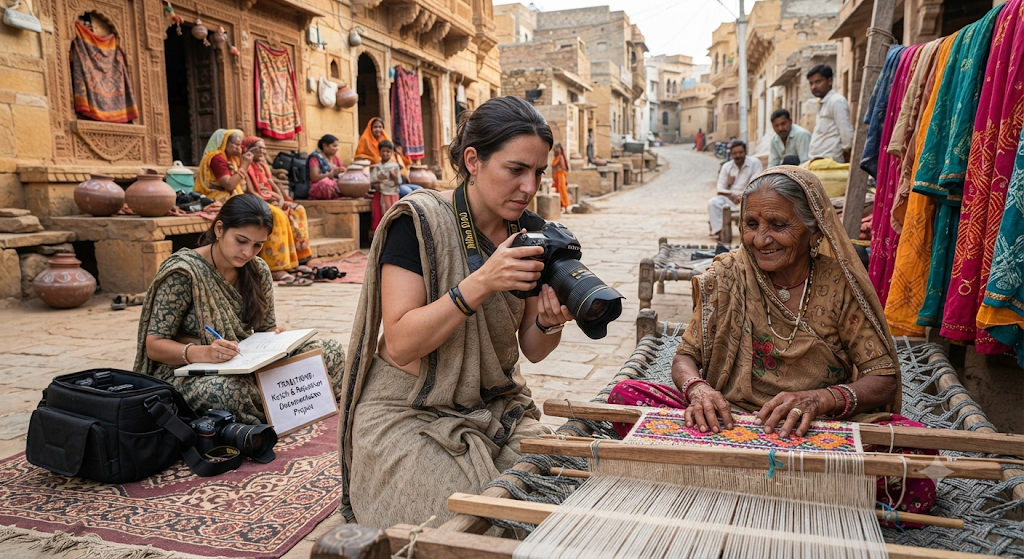
The Women Documenting India’s Disappearing Traditions Through Photography

Many of India’s traditional crafts, rural rituals, and regional ways of life are fading faster than they’re being recorded — a generational shift that risks losing not just skills but the visual memory of how things were done. A growing number of women photographers are working specifically to document this before it disappears entirely.

Why This Documentation Matters

Oral traditions and hands-on crafts often exist only in the memory and practice of an aging generation, with little formal documentation. Photography captures not just the final product of a tradition — a woven textile, a ritual object — but the process, the hands, and the context that a museum piece alone can never fully convey.

Access Built on Trust, Not Just Skill

Photographing intimate community rituals, women-only ceremonies, or closed craft workshops often requires a level of trust that’s easier to build as a woman photographer, particularly in more conservative or gender-segregated community settings where a male photographer might simply never be given access.

Documenting Craft, Not Just Culture

Beyond rituals and ceremonies, many women photographers focus specifically on documenting disappearing craft techniques — a particular embroidery style, a pottery method, a weaving technique — often working closely alongside the artisans themselves, sometimes over years, rather than a single visit.

The Race Against Time

Many of these traditions are held by artisans and practitioners now in their 70s and 80s, with no younger generation continuing the practice. Photographers working in this space often describe their work with real urgency — knowing that a specific technique or ritual may simply not exist to document again in a few years’ time.

Beyond Just Preservation

This work isn’t purely archival — much of it also aims to bring visibility and, ideally, economic support back to the communities and artisans being documented, connecting traditional practices to broader audiences who might otherwise never encounter them.

The Emotional Weight of the Work

Photographers doing this work often describe it as deeply personal, not purely professional — building real relationships with the people and communities they document over repeated visits, rather than treating subjects as simply visual material to be captured and left behind.

Bottom Line

As India modernizes rapidly, a quiet but important body of documentation work is being done by women photographers determined to make sure these disappearing traditions aren’t lost without a visual record. It’s patient, relationship-driven work — and increasingly urgent.

Solo Dining While Traveling: Getting Comfortable With Your Own Company

Solo travelers often say the same thing: navigating a new city alone feels fine, but sitting down alone at a restaurant table still triggers a wave of self-consciousness unlike almost anything else about traveling solo. Here’s how to work through that, and eventually enjoy it.

Why It Feels Different From Other Solo Moments

Walking around a city alone feels purposeful — you’re clearly doing something. Sitting at a table alone, with nothing to visibly “do,” can feel exposed in a way that triggers an irrational worry that everyone around you is noticing and judging. In reality, almost no one is paying attention at all.

Start With Lower-Pressure Settings

Cafés, casual street-food spots, or counter seating at a small eatery are far less intimidating first steps than a formal sit-down restaurant. Building comfort in lower-stakes settings first makes the transition to a proper solo restaurant meal feel much less daunting.

Bring Something, But Don’t Hide Behind It

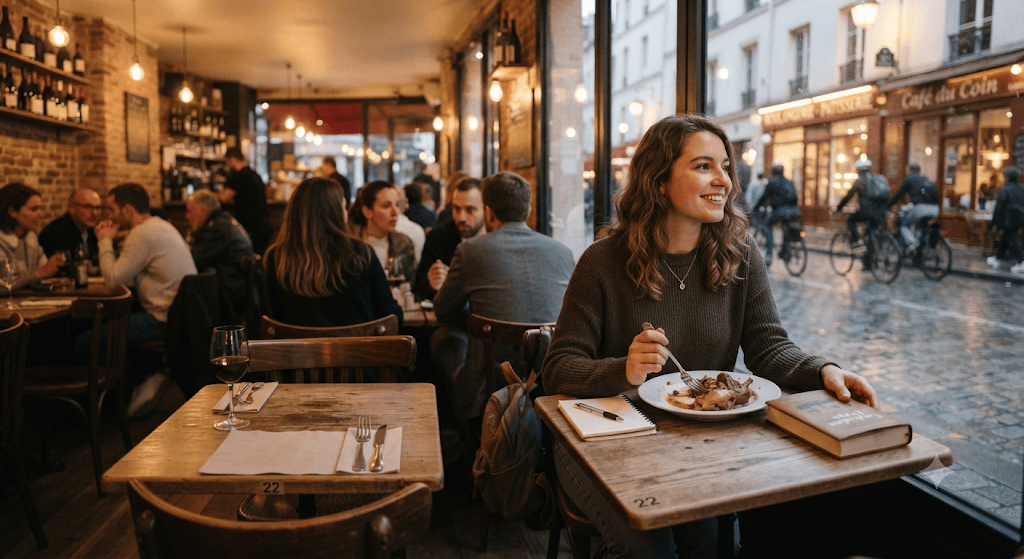
A book, journal, or phone can ease the initial self-consciousness, but constantly staring at it defeats part of the purpose of solo dining — actually noticing the place you’re in. A middle ground works well: something to glance at occasionally, without using it as a permanent shield.

Choose Seating That Feels Comfortable

Many restaurants offer counter seating, window tables, or people-watching spots that feel more natural for solo diners than a large table clearly meant for groups. Requesting this specifically, rather than defaulting to wherever you’re seated, makes a real difference.

Order With Confidence, Not Apology

There’s no need to explain or apologize for dining alone — a confident, simple order communicates that this is a normal, deliberate choice, not something requiring justification to the staff or anyone else in the room.

Use the Time Intentionally

Solo meals are a rare, uninterrupted window to actually notice a place — the way people talk, the specific flavors, the atmosphere — attention that’s often lost in group settings where conversation dominates. Framing it as an experience rather than something to get through changes how it feels.

It Gets Easier Fast

Almost every solo traveler describes the same arc — intense self-consciousness the first time or two, followed by growing comfort, and eventually genuine enjoyment of solo meals as one of the more reflective parts of traveling alone.

Bottom Line

Solo dining feels like the hardest part of traveling alone mostly because it’s unfamiliar, not because anyone is actually watching. A few deliberate first attempts in lower-pressure settings usually turns this into one of the more rewarding parts of solo travel, not the most dreaded.

Traveling on Your Period: Products, Prep, and Peace of Mind

A trip landing right on your period can feel like an added complication on top of everything else travel already requires. With a bit of preparation, though, it’s entirely manageable — and doesn’t need to change how much you enjoy the trip.

Choosing the Right Product for the Trip

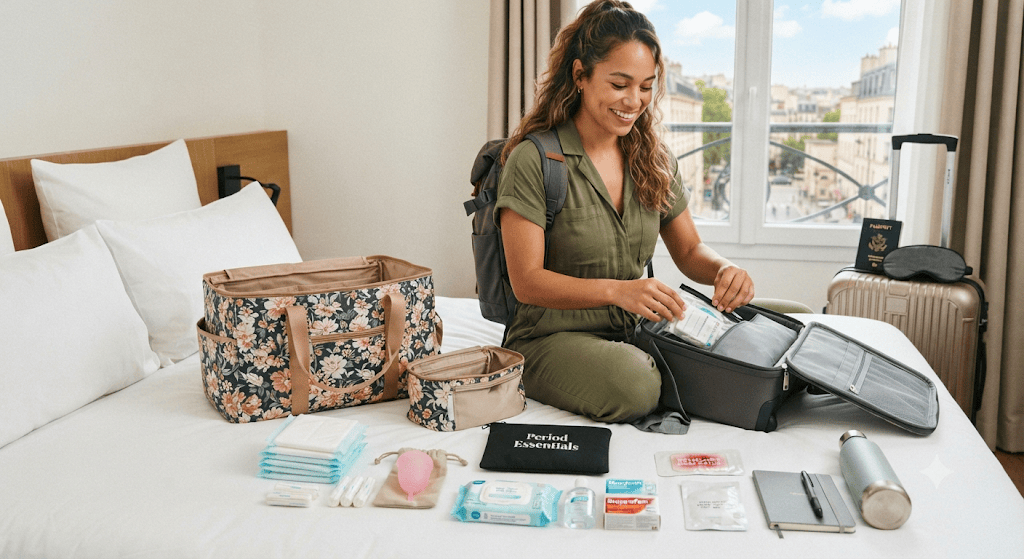
  • Menstrual cups work well for longer trips with limited access to frequent changing facilities, since they can be worn for extended periods safely
  • Period underwear is a low-effort backup or standalone option, especially useful on travel days involving long transit
  • Tampons or pads remain simplest for shorter trips or destinations where familiarity and convenience matter more than sustainability

Trying any new product well before the trip — not for the first time while traveling — avoids unnecessary stress from an unfamiliar routine.

Packing Smart

Carrying more supplies than you think you’ll need, plus a few extra just in case of delays or unexpectedly heavy flow days, avoids the stress of hunting for specific products in an unfamiliar place, especially abroad where preferred brands may not be available.

Managing Cramps While in Transit

Packing pain relief medication in your carry-on (not checked luggage), along with a small heating patch for long flights or train journeys, helps manage discomfort without needing to search for a pharmacy immediately upon arrival.

Hygiene During Long Travel Days

Wet wipes, a small pouch for used products, and hand sanitizer make managing hygiene easier during long flights, train rides, or bus journeys where clean facilities may not always be readily available.

Planning Activities Around Your Cycle, If Helpful

For trips with flexible itineraries, scheduling more intense activities (like a long trek or a full day of sightseeing) around lighter flow days, where possible, can make the overall trip feel more comfortable — though it’s entirely optional, not a requirement.

A Quick Pre-Trip Checklist

  • Pack more supplies than the trip length suggests you’ll need
  • Carry pain relief in your immediate hand luggage
  • Research pharmacy or product availability at your destination in advance
  • Pack a small, discreet hygiene pouch for transit days

Bottom Line

A period during travel isn’t a reason to alter plans or feel anxious about the trip — a little product preparation and a small hygiene kit handle most of what actually comes up. It’s a manageable, ordinary part of travel, not a genuine obstacle to it.

Women Mountaineers Who Made History Before It Was “Normal”

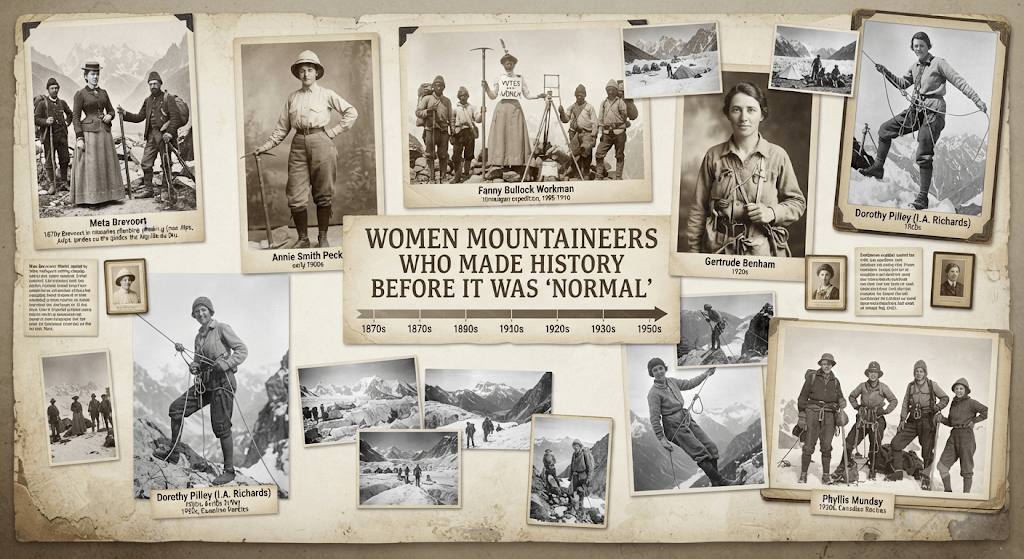
Adventure sports and mountaineering are increasingly common pursuits for Indian women today, but that normalcy was built by a small number of climbers who took on the world’s highest peaks when the field was overwhelmingly male, and the odds — logistical, social, and physical — were stacked against them.

Bachendri Pal: The First to Summit Everest

Bachendri Pal became the first Indian woman to reach the summit of Mount Everest in 1984. She began mountaineering at just 12 years old, scaling a peak over 13,000 feet high during a school picnic, and was the first girl in her village to become a graduate — before going on to a career that reshaped what was considered possible for women in Indian mountaineering. She later launched a fitness initiative for women over 50, aiming to prove that adventure has no age or gender limit.

Chandraprabha Aitwal: A Quiet Pioneer

Chandraprabha Aitwal, born in 1941 in Dharchula, Uttarakhand, is recognized as one of the pioneers of Indian women’s mountaineering, having climbed peaks including Nanda Devi, Kangchenjunga, and Trishuli. She received the Tenzing Norgay National Adventure Award for Lifetime Achievement in 2009 — recognition for decades of climbing at a time when few women in India were doing so at all.

Premlata Agrawal: Starting Late, Going Further

Premlata Agrawal became the first Indian woman to complete the Seven Summits — the highest peaks on each continent. What makes her story distinct is timing: she didn’t start mountaineering until age 36, after entering a hill-climbing competition in Jamshedpur, and went on to summit Everest in 2011 at age 48, becoming the oldest Indian woman to do so at the time.

Anshu Jamsenpa: Redefining Speed and Repetition

Anshu Jamsenpa holds the record for being the first woman to summit Everest twice in a single season, along with the fastest double ascents by a woman — an achievement that pushed the boundaries not just of whether women could summit, but how they could redefine what elite performance at altitude looked like.

Why These Stories Matter Beyond the Summit

Between 1965 and 2018, Indian women climbers made 81 attempts on Everest across 74 individual climbers — a number that grew steadily in large part because these early pioneers proved it was possible, then went on to train and mentor the generations that followed them.

Bottom Line

Every Indian woman climbing today is walking a trail — sometimes literally — first cleared by women who had no precedent to point to, no visible path showing it could be done. Their achievements weren’t just personal records; they were the foundation that made mountaineering a realistic pursuit for the women who came after them.

The Environmental Impact of Tourist Overcrowding in Hill Stations

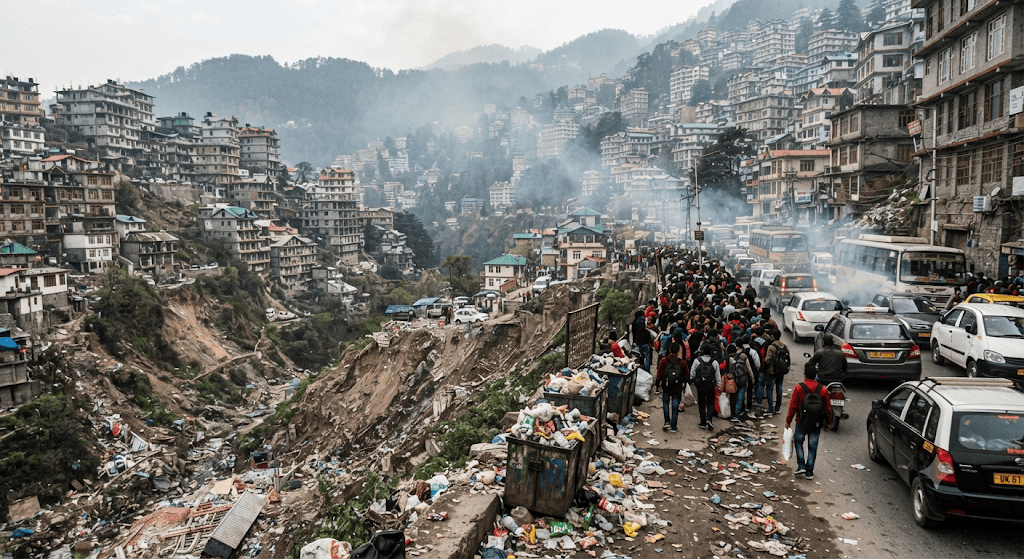
Every summer and long weekend, India’s popular hill stations see traffic jams stretching for kilometers, hotels overbooked well past reasonable capacity, and a strain on infrastructure never built for these numbers. The scenery that draws people there is quietly paying the price.

Water Systems Under Pressure

Many hill towns rely on limited natural water sources — springs, small reservoirs — that were never designed to support the seasonal population spikes tourism now brings. Water shortages during peak season have become a recurring issue in several well-known hill destinations, ironically driven by the very visitors drawn to their natural beauty.

Waste Management Falling Behind

Hill towns typically lack the large-scale waste processing infrastructure of bigger cities, and tourist season generates waste volumes far beyond what local systems can handle. This often results in visible littering, overflowing landfills at town edges, and waste finding its way into streams and forest areas.

Traffic and Air Quality

Long queues of idling vehicles on narrow hill roads, combined with unregulated parking on slopes never meant for heavy vehicle traffic, contribute to localized air pollution and slope stability concerns — a particularly serious issue in landslide-prone regions.

Construction Racing to Keep Up

Rising tourist demand has driven rapid, sometimes poorly regulated construction of new hotels and guesthouses, often on unstable slopes or encroaching on forest land — development that increases both environmental strain and genuine safety risk in these areas.

Impact on Local Wildlife and Vegetation

Increased foot traffic, off-trail wandering, and noise from a high volume of visitors disturbs local wildlife patterns and puts pressure on native vegetation, particularly in areas without clearly marked and enforced trail boundaries.

What More Sustainable Hill Station Travel Looks Like

  • Visit during shoulder seasons rather than peak weekends, spreading demand more evenly
  • Choose smaller, less-visited hill towns as alternatives to the most crowded, well-known destinations
  • Carry out your own waste, especially in areas without visible processing infrastructure
  • Support locally-run accommodations over large new constructions that add strain without local benefit
  • Stick to marked trails rather than off-path exploration that damages fragile vegetation

Bottom Line

The hill stations most affected by overcrowding are often loved precisely for qualities that overcrowding itself is steadily eroding. A more spread-out, mindful approach to visiting these places isn’t about avoiding them — it’s about making sure they’re still worth visiting years from now.

Women-Only Travel Groups: Are They Actually Safer?

Women-only travel groups have grown significantly in recent years, often marketed primarily around one promise: safety. But does traveling exclusively with other women actually reduce risk, or does the reassurance outpace the reality? Here’s a closer look.

What These Groups Typically Offer

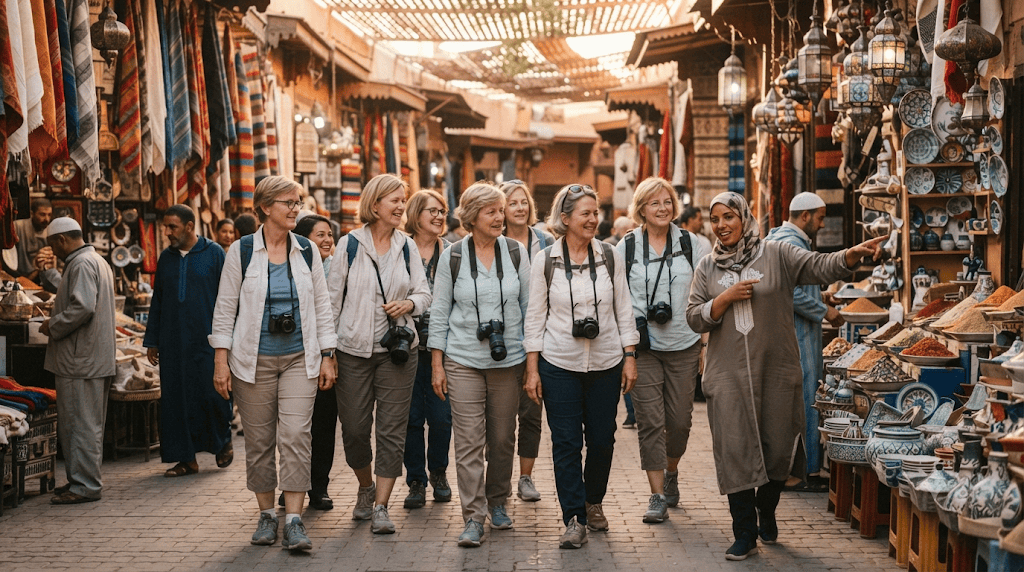
Most women-only travel groups combine shared accommodation, pre-vetted itineraries, and — often the biggest draw — the reassurance of not navigating an unfamiliar destination entirely alone. Many also include a female trip leader with local knowledge of the destination.

Where the Safety Argument Genuinely Holds

Numbers do offer some real protection — a group is generally a less appealing target for harassment or theft than a lone traveler, and shared accommodation reduces the vulnerability of staying somewhere unfamiliar and unverified alone. A trip leader who knows the destination well also removes a lot of the guesswork that creates risk for solo, first-time visitors.

Where the Promise Gets Overstated

Group travel doesn’t eliminate risk — it changes its shape. Groups can still be pickpocketed, still encounter unsafe situations in transit, and group dynamics themselves can sometimes create their own friction or discomfort that has nothing to do with external safety at all.

It’s Not a Substitute for Basic Precautions

Some travelers relax basic safety habits once in a group setting, assuming numbers alone provide protection — skipping the same location-sharing or research they’d otherwise do solo. The safety benefit of a group is additive, not a replacement for individual awareness.

The Real Value May Be Different Than Advertised

For many participants, the standout benefit of women-only trips isn’t safety in the strictest sense — it’s the comfort of shared understanding, not needing to explain certain concerns, and often a stronger sense of connection with fellow travelers than mixed-group trips tend to produce.

What to Actually Check Before Booking One

  • The organizer’s track record and reviews from past participants, not just marketing claims
  • What’s actually included in terms of guide presence, accommodation vetting, and emergency support
  • Group size, since very large groups can dilute both the safety benefit and the personal connection that’s often the real draw

Bottom Line

Women-only travel groups do offer genuine practical benefits, but “safer” isn’t an automatic guarantee just because the group is exclusively female — it depends heavily on how well-organized and experienced the specific group actually is. They’re a solid option for many first-time or hesitant travelers, but not a replacement for ordinary travel safety awareness.

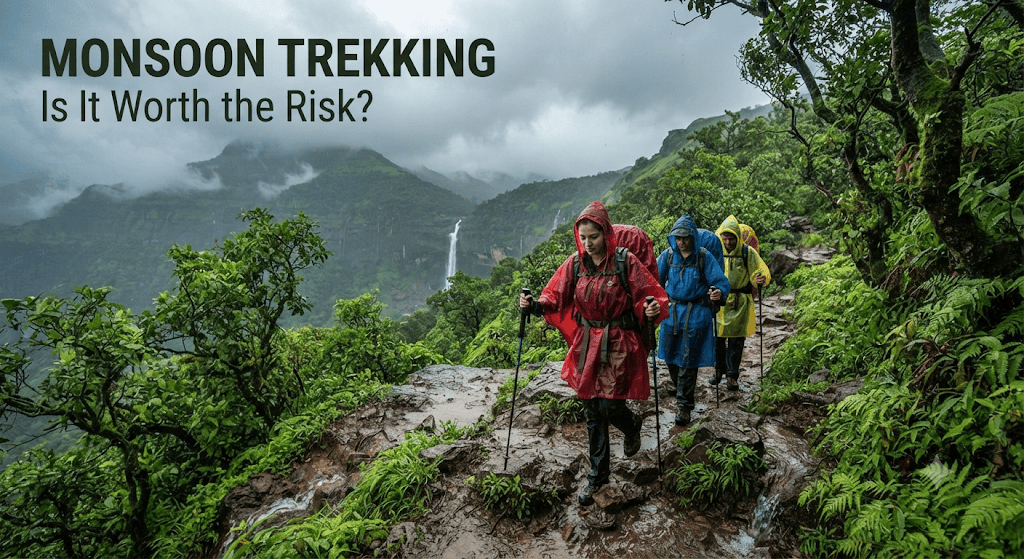
Monsoon Trekking: Is It Worth the Risk?

Monsoon turns familiar trails into something else entirely — waterfalls appear overnight, hillsides turn a deep green, and the whole landscape feels alive in a way summer treks rarely capture. It’s also, without question, riskier. Here’s an honest look at the trade-off.

Why Trekkers Are Drawn to Monsoon Treks

Monsoon transforms otherwise dry, dusty trails into lush, waterfall-lined landscapes that simply don’t exist the rest of the year. For trekkers chasing dramatic scenery and fewer crowds, this narrow seasonal window offers something genuinely unique.

The Real Risks Involved

  • Slippery, unstable terrain — mud and wet rock significantly increase the risk of slips and falls, especially on steep or rocky sections
  • Leeches and increased insect activity, particularly in forested, humid trail sections
  • Landslide and flash flood risk, especially in hill regions with loose soil or near river crossings
  • Reduced visibility from fog and heavy rain, making navigation harder on unmarked or less-trodden trails
  • Swollen rivers and streams that may be safely crossable in dry season but become dangerous during monsoon

Which Treks Handle Monsoon Better

Some regions — particularly in the Western Ghats and parts of the Sahyadri range — are specifically known and prepared for monsoon trekking, with well-established trails and local guides experienced in monsoon conditions. Higher Himalayan treks, by contrast, are generally far riskier and less advisable during peak monsoon months due to landslide-prone terrain.

How to Trek More Safely If You Choose To

  • Go with a local guide who knows current trail conditions, not just the route itself
  • Check recent weather and landslide advisories specific to the exact trail, not just the general region
  • Carry proper gear — grippy waterproof shoes, dry bags, and a raincoat rather than just an umbrella
  • Avoid river crossings during or right after heavy rainfall, even if the crossing seemed manageable before
  • Have a flexible itinerary that allows turning back if conditions worsen, rather than pushing through to stick to a fixed plan

Who Monsoon Trekking Isn’t Right For

First-time trekkers, anyone trekking solo without local knowledge, or routes without established monsoon-season precedent are generally better attempted in drier months. Monsoon trekking rewards experience and preparation far more than trekking in more forgiving seasons.

Bottom Line

Monsoon trekking can be genuinely spectacular, but it demands real respect for the added risk — proper gear, local knowledge, and a willingness to turn back. It’s not inherently reckless, but it’s also not something to attempt casually or without real preparation.

How to Plan a Girls’ Trip That Works for Every Budget in the Group

Group trips rarely fall apart over the destination — they fall apart over money. Someone wants a nicer stay, someone else is watching every rupee, and nobody wants to be the one who brings it up first. Here’s how to plan around that honestly.

Talk Budget Before Talking Destination

Choosing a destination first and discussing budget later almost guarantees mismatch — a dream location might be unaffordable for one or two people who then either overspend or drop out. Getting a rough number from everyone upfront should shape the destination choice, not follow it.

Use a Range, Not a Fixed Number

Asking “what’s your budget?” often gets vague or overly generous answers out of politeness. Asking for a comfortable range instead — “what’s the most and least you’d want to spend?” — tends to surface more honest numbers.

Separate “Must-Do” From “Nice-to-Have” Expenses

Splitting the trip into non-negotiables (accommodation, transport) and optional extras (spa day, a fancy dinner, shopping) lets everyone opt into the shared essentials while choosing individually on the optional spending, rather than forcing a single shared standard on everything.

Choose Accommodation With Flexible Options

Picking a stay with multiple room types — some shared dorms or triple rooms alongside private options — lets people self-select their comfort level and cost without an awkward conversation about who’s paying for what kind of room.

Avoid the “We’ll Split Everything Evenly” Trap

Splitting every cost evenly sounds fair but often isn’t — someone who skips the expensive dinner still ends up paying an equal share. Tracking who actually spent what, and settling based on real usage, avoids resentment that builds quietly over a trip.

Use a Shared Expense App

A simple shared-expense tracking app removes the awkwardness of manually calculating who owes what, and keeps the money conversation transparent and low-drama throughout the trip rather than as one big confrontation at the end.

Give Space for Someone to Opt Out of Certain Plans

Not every activity needs full group participation. Letting people skip an expensive add-on without guilt-tripping keeps the trip enjoyable for everyone, rather than pressuring the group into a single, uniformly priced experience.

Bottom Line

A girls’ trip that respects different budgets isn’t less fun — it’s usually more relaxed, because nobody’s quietly stressed about money the whole time. A little upfront honesty about spending goes further toward a good trip than any destination choice ever could.

Women Rangers and Forest Guards Protecting India’s Wildlife

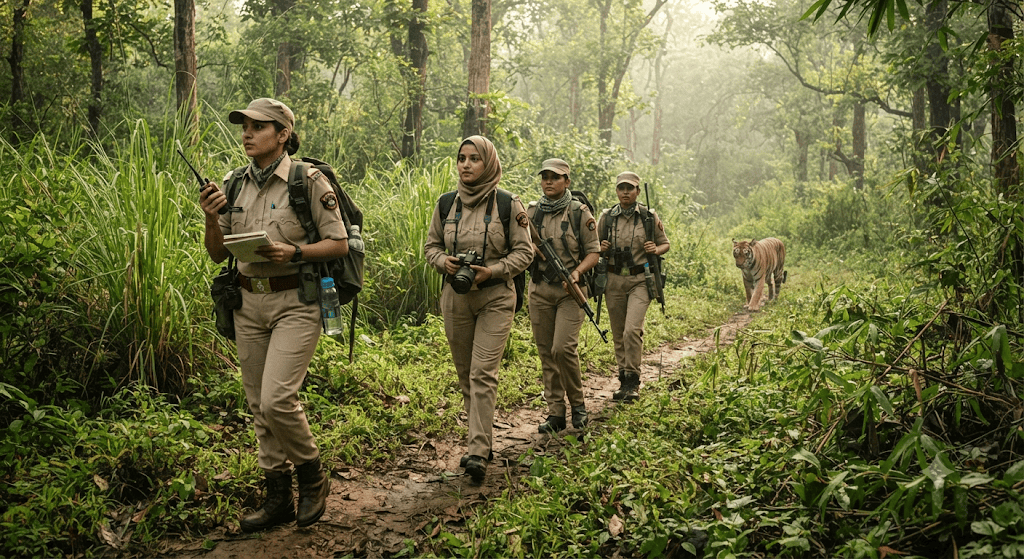
Forest protection has long been seen as a man’s domain in India — long patrols, physical risk, remote postings. But across the country’s reserves, thousands of women are now doing exactly this work, often in some of India’s most challenging terrain.

Gir National Park: The Lionesses of Gujarat

<cite index=”1-1″>Gujarat’s Gir Forest appointed its first batch of 51 women forest guards in 2007</cite>. These women patrol vast stretches of forest protecting the world’s only wild population of Asiatic lions, regularly handling wildlife rescues — from injured lion cubs to venomous snakes — as part of routine duty rather than exceptional heroics.

Kaziranga’s “Van Durgas,” Assam

<cite index=”3-1″>At Kaziranga National Park, female forest guards known locally as “Van Durgas” come from rural communities and work to protect wildlife and habitat across the park’s roughly 430 square kilometers</cite>. <cite index=”4-1″>The park now includes around 40 female rangers across roles like Range Officers, Forest Guards, and Foresters</cite>, alongside a dedicated women’s unit within the Special Rhino Protection Force guarding the endangered greater one-horned rhinoceros from poaching.

Dudhwa Tiger Reserve, Uttar Pradesh

<cite index=”6-1″>Dudhwa Tiger Reserve has recruited young men and women as forest watchers</cite>, with officials describing it as a pioneering effort to bring women into forest protection roles that had rarely included them before.

Gurukula Botanical Sanctuary, Western Ghats

<cite index=”7-1″>In Kerala’s Western Ghats, an all-female team of 27 women serves as guardians of the region’s rare and threatened plant species</cite>, working to protect biodiversity in one of the world’s most ecologically significant and endangered mountain ranges.

Why This Shift Matters

Beyond conservation outcomes, women forest guards often bring specific advantages — better rapport with village women during community conflict resolution, and a visible signal to younger women in these regions that this kind of work is possible for them too. Several of the women in these programs have spoken about how their entry inspired others locally to apply.

The Work Isn’t Symbolic

These aren’t ceremonial postings. Women forest guards conduct real patrols, handle wildlife emergencies, and in some cases carry weapons as part of anti-poaching units — work that comes with genuine physical risk and long stretches away from family, often in remote, difficult terrain.

Bottom Line

India’s forests are being protected, in real and growing numbers, by women who chose this work deliberately — not as an exception, but as a profession. Their presence is reshaping who gets to be seen as a protector of India’s wildlife, one patrol at a time.