How to Choose a Responsible Wildlife Safari Operator in India

Why the Operator You Choose Matters

Tiger reserves and sanctuaries run on strict carrying-capacity rules — limits on how many vehicles and tourists can enter at a time. The National Tiger Conservation Authority’s own 2012 guidelines require tourist vehicles to stay a minimum distance apart to avoid crowding animals, and cap how much of a reserve’s area can be used for tourism at all. A good operator works within these limits. A bad one pressures forest guides to bend them for a better photo.

Recent Rules Are Getting Stricter, Not Looser

In November 2025, the Supreme Court tightened controls further — pushing tiger safaris toward buffer and non-forest land and banning night tourism in core zones. That direction matters for travellers too: an operator who still promises unrestricted night drives or guaranteed close-up sightings in core areas is not one working within current rules.

Signs of a Responsible Operator

  • Follows official carrying-capacity and vehicle-distance rules without complaint
  • Employs and trains local guides and drivers
  • Limits group size and vehicle speed inside the park
  • Briefs guests on not baiting animals, playing loud sounds or leaving the vehicle
  • Supports, or is transparent about, conservation or anti-poaching contributions
  • Doesn’t promise a guaranteed sighting — no ethical operator can promise wild animal behaviour

Questions to Ask Before Booking

  1. How many vehicles does your group send in per slot?
  2. What happens if we don’t spot the animal — do you follow the vehicle to force a sighting?
  3. Are your naturalists trained and are guides from the local community?
  4. What’s your policy on maintaining distance from animals?

Red Flags

  • Ads promising “100% tiger sighting”
  • Vehicles clustering around one animal
  • No mention of forest department permits
  • Guides encouraging loud calls or off-road driving to chase wildlife

Bottom Line

A responsible safari operator protects the very thing you paid to see. Choosing one carefully means fewer crowded jeeps around a stressed animal — and a better, more honest wildlife experience for you.

Women-Led NGOs Fighting Plastic Pollution in Coastal India

The Scale of What Coastal Communities Are Facing

In parts of coastal Karnataka, local fishing boats reportedly bring in catches where plastic waste makes up nearly half of what’s pulled from the water — a daily reality for around 700,000 people living in those communities. Coastal litter in Kerala has been measured at roughly three times the global average, layering an environmental crisis directly on top of existing economic hardship.

Turning Waste Collection Into Formal Employment

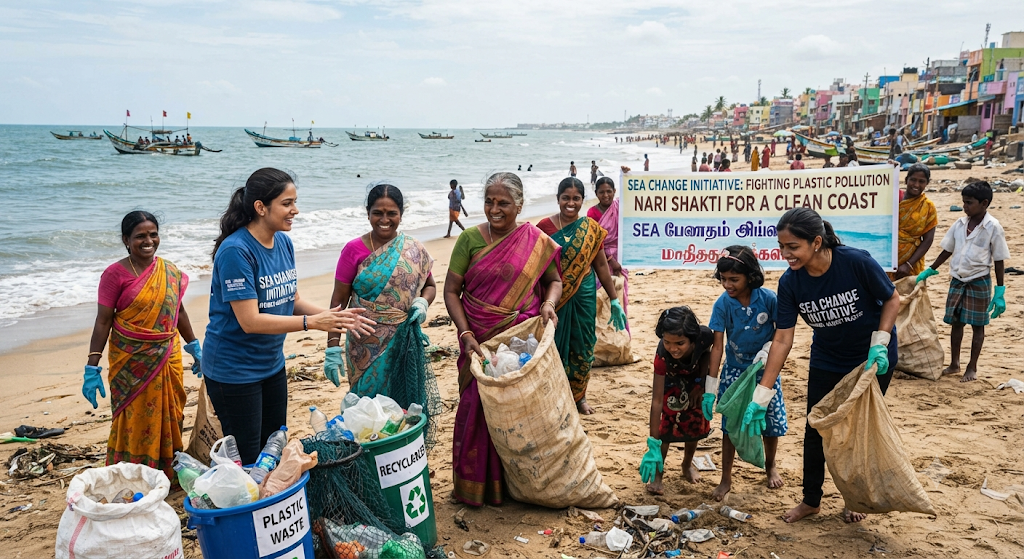
Baeru, founded by Divya Hegde, trains women in coastal Karnataka to run structured waste collection and segregation systems rather than leaving the work informal and unpaid. The initiative has helped divert large volumes of waste from contaminating the coast and the Western Ghats while creating predictable income — with social security — for over 150 women who were previously working without either protection.

Kerala’s Self-Help Group Model

In Kerala, where coastal litter runs unusually high and female workforce participation runs unusually low, projects like rePurpose’s Hara Kal have built almost entirely women-led (over 98 percent) first-mile plastic collection networks in partnership with local self-help groups. The model treats plastic interception and women’s income generation as the same project, not two separate goals.

Kudumbashree: A Template Built Two Decades Ago

Kerala’s Kudumbashree network, a state-run women’s self-help group system established in 1998, has become the backbone many newer waste-management initiatives build on — organizing women into enterprises that now also produce plastic alternatives and manage municipal waste operations under formal government partnership.

Bottom Line

The most durable answers to coastal plastic pollution in India aren’t just cleanup drives — they’re systems that pay women fairly to do work that was already happening informally, and give that work the infrastructure to actually scale.

The Hidden Cost of “Instagrammable” Tourist Spots

A Feed Full of the Same Ten Places

Social media has a habit of funneling tourists toward the same narrow set of viewpoints, cafes, and trails — the ones that photograph well. What looks like organic discovery is often just an algorithm repeating the same dozen locations until they’re overwhelmed by visitors chasing an identical shot.

What Overcrowding Actually Does on the Ground

Popular hill stations and viewpoints across India have reported visible degradation tied directly to tourist volume — trail erosion from foot traffic that was never designed for that scale, litter accumulation, water stress in towns whose infrastructure serves a fraction of the population that shows up in peak season, and disruption to wildlife that once had those spaces to itself.

The Local Cost Nobody Photographs

Beyond the environment, overcrowding changes the character of a place for the people who live there year-round — rising costs, traffic in towns not built for it, and a shift toward businesses that cater purely to quick photo-stop tourism rather than to residents. The “hidden gem” era of a location is often also its most sustainable one.

How to Actually Travel Differently

Choosing a lesser-known viewpoint over the famous one, visiting in the off-season, and following local guidance about which trails or areas are under ecological stress does more good than any single “sustainable travel” hashtag. Sometimes the most responsible photo is the one you decide not to chase.

Bottom Line

A photogenic destination isn’t automatically a healthy one to visit at scale. The most Instagrammable spot in India might also be the one that most needs tourists to look elsewhere for a while.

Why More Indian Women Are Switching to Cycling Commutes

The Gap Is Real, and It’s Been Huge

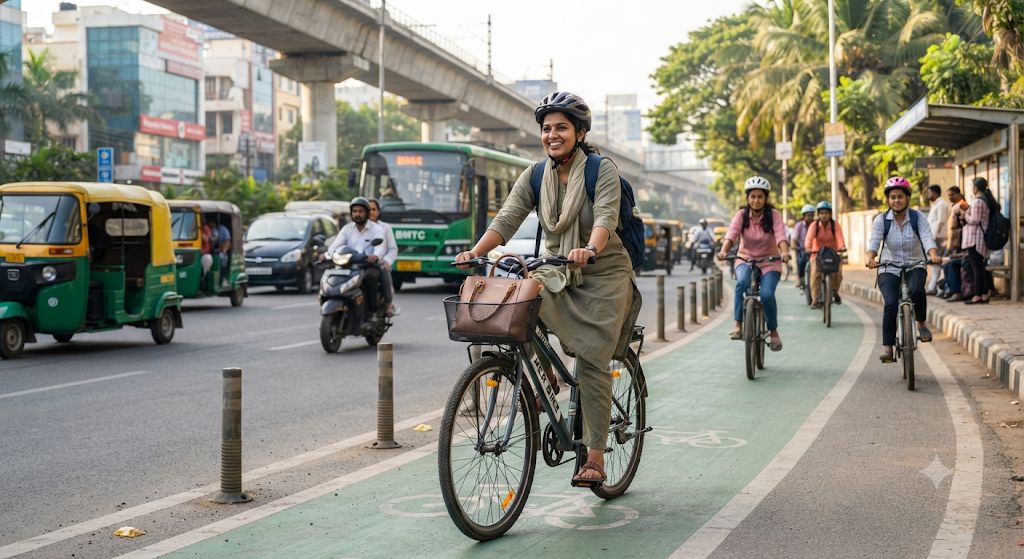
As of the 2011 census, roughly 20 percent of Indian men commuted by bicycle compared to under 5 percent of women — a gender gap researchers have called among the highest in the world for cycling specifically. That number is the backdrop against which any “rise in women’s cycling” story has to be told honestly.

Where the Real Movement Is Happening

The most measurable shift so far isn’t in cities — it’s among rural schoolgirls. A peer-reviewed study tracking national survey data found cycling among rural girls more than doubled between 2007 and 2017, a change researchers linked to free bicycle distribution schemes originally designed to keep girls in school by cutting down long, exhausting walks. Researchers have described it as a quiet but genuine revolution in female mobility.

Urban Women Are Starting to Follow

In cities, the shift is slower but visible — driven partly by rising health consciousness and partly by advocacy groups documenting women reclaiming road space that’s historically felt unsafe or unwelcoming to them. Manufacturers have also started designing bicycles with women’s comfort specifically in mind, rather than treating cycling gear as a one-size-fits-all category.

Why This Isn’t Just a Fitness Trend

Cycling addresses something bicycles have historically done for women everywhere — independence of movement that doesn’t depend on being driven, escorted, or waiting for shared transport. In a country where women’s mobility outside the home is still measurably constrained, a bicycle is a small but concrete tool for autonomy.

Bottom Line

Indian women aren’t cycling at parity with men yet, not close. But the direction of change — especially among the next generation of girls — suggests this gap is finally starting to narrow, one commute at a time.

The Women Reviving India’s Dying River Ghats

A Crisis Hiding Behind Postcard Photos

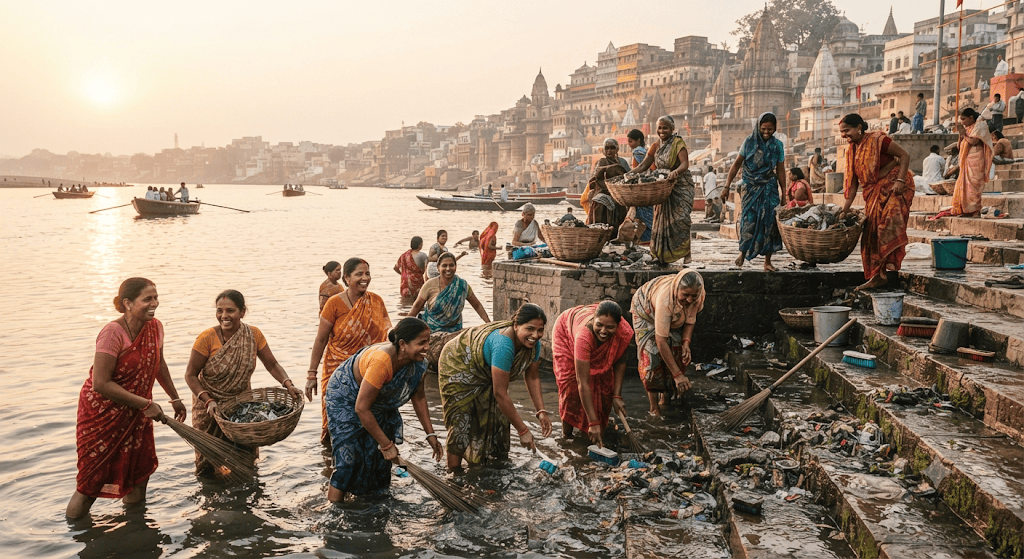
Research from India’s Central Pollution Control Board has identified over 350 polluted river stretches across the country — a scale of degradation that rarely shows up in the postcard shots of ghats at sunrise. Behind that gap between image and reality, a quiet restoration movement has been building, and women are disproportionately leading it.

When a Town Decides to Listen to Its River

In Churachandpur, Manipur, the Rural Women Upliftment Society and Highland Impact Foundation began organizing local restoration work by asking residents a simple question: how do you reclaim a river people had started treating as disposable? Their women-led approach treated the river’s health as inseparable from community resilience, health, and dignity — not a separate environmental issue to solve later.

The Numbers Behind the Movement

In river rejuvenation projects run under India’s rural employment guarantee scheme, women have made up the overwhelming majority of on-ground workers in several districts — in one Tamil Nadu project, close to 90 percent of workers were women. Programs like this have trained hundreds of local “water warriors” to lead grassroots restoration in their own villages.

Why Women End Up Leading This Work

Water collection and household water management has traditionally fallen to women in rural India, which means they’re often the first to feel a river’s decline and the first to organize around fixing it. That lived proximity to the problem translates into restoration work that’s rooted in daily necessity, not just environmental idealism.

Bottom Line

River restoration in India isn’t only happening through large government missions — it’s also happening step by step, ghat by ghat, led by women who were never going to wait for someone else to notice the river was dying.

Women Who Built Their Own Eco-Resorts From Scratch

From Finance to Forest Stays

Aditi Balbir left a decade-long career in finance, including stints at firms like McKinsey, to found V Resorts, a company that partners with small, remote properties and helps them meet sustainable operational standards. Her model showed that even a modest 15-room resort could generate meaningful local jobs and income while limiting environmental impact — proof that ecotourism could be both a business and a community investment.

Verifying Sustainability, One Stay at a Time

Prerna Prasad built Ecoplore after leaving a career in news journalism, spending her first two years personally visiting and vetting eco-friendly hotels across India before listing a single one. Her platform requires strict criteria — meaningful tree cover, plastic-free operations, rainwater harvesting, and composting — and is run by an almost entirely female team, partly to make solo travel verification safer for women.

Turning Fisherfolk Into Tour Guides

Rashmi Sawant’s Culture Aangan took a different route entirely — instead of building resorts, she built experiential rural tourism around existing village livelihoods. In Maharashtra’s Sindhudurg district, women from local fishing communities now lead tourists on boat rides through mangrove creeks as an additional, dignified income stream alongside their traditional work.

The Common Thread

None of these ventures started with hospitality credentials. What they shared was a willingness to spend years on unglamorous groundwork — vetting properties, building trust with village communities, negotiating with vendors — before any of it looked like a “resort” in the traditional sense.

Bottom Line

The women reshaping India’s eco-tourism sector didn’t inherit a hospitality legacy — they built one, one relationship and one sustainability standard at a time.

The Environmental Cost of Destination Weddings

The Guest Travel Problem

The single biggest environmental cost of a destination wedding often isn’t the venue — it’s getting a hundred-plus guests there by flight for a single weekend. Multiply that across India’s peak wedding season and the cumulative footprint is significant, even before a single flower is arranged.

Single-Use Decor, Multiplied

Elaborate floral installations, printed welcome kits, single-use drapes, and themed props are frequently built for one event and discarded after. What looks like abundance in photographs is, functionally, a large volume of short-lived material waste — much of it non-biodegradable.

Water-Stressed Destinations, Water-Heavy Events

Many popular Indian wedding destinations — hill towns, desert palaces, lakeside venues — already deal with seasonal water stress. Multi-day events with pools, elaborate catering, and daily linen changes place real strain on local water systems that locals live with long after the wedding party leaves.

What a Lower-Impact Version Looks Like

Couples opting for local sourcing of flowers and food, rental decor instead of custom-built installations, digital invites, and smaller guest lists are quietly changing what a “big fat Indian wedding” can look like — without giving up the celebration itself.

Bottom Line

Destination weddings aren’t going away, but the assumption that scale and spectacle are the only way to celebrate is worth questioning — especially in places that will carry the environmental cost long after the guests go home.

Women Beekeepers of India: Sweetening Livelihoods Sustainably

A Livelihood That Fits Around Everything Else

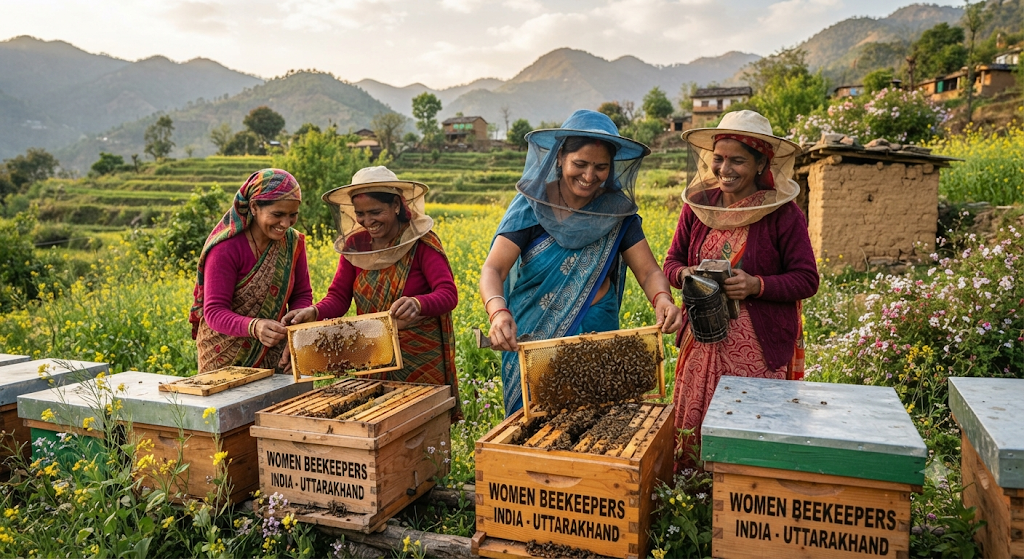
Beekeeping has an underrated advantage for rural women: it doesn’t compete with existing responsibilities the way a full-time job might. Hives can be tended in the early morning or evening, fitting around farm work and household duties, which is part of why self-help groups across states like Maharashtra, Uttarakhand, and Bihar have adopted it as a collective income source.

The Nilgiris Model

In the Nilgiri Biosphere Reserve, a beekeeping initiative trained Indigenous women from communities that had traditionally practiced wild honey hunting — a skill that’s both risky and increasingly restricted under forest protection laws. Managed beekeeping using hive boxes gave the same women a safer, more predictable version of a craft they already understood, using native bee species suited to the local ecosystem.

From Bihar’s Farmlands to Family Income

In Muzaffarpur district, Bihar, a group of women from below-poverty-line families who previously worked as temporary farm hands started an all-women beekeeping enterprise to build a steadier income stream. Their story reflects a broader pattern — beekeeping enterprises frequently start with a handful of women pooling resources and scale through shared training and equipment.

More Than Honey

Beyond income, the ecological ripple effect is real: more managed hives mean better pollination, which supports crop yields and biodiversity in the surrounding area. Several beekeeping programs pair training with tree-planting to strengthen the nectar and pollen sources hives depend on — a rare case where the economic and environmental incentives point the same direction.

Bottom Line

Beekeeping isn’t a novelty project in rural India anymore — it’s a functioning income model that’s letting women earn on their own terms while quietly supporting the ecosystems around them.

How Climate Change Is Reshaping Himalayan Trekking Routes

The Glaciers Are Moving Faster Than the Maps

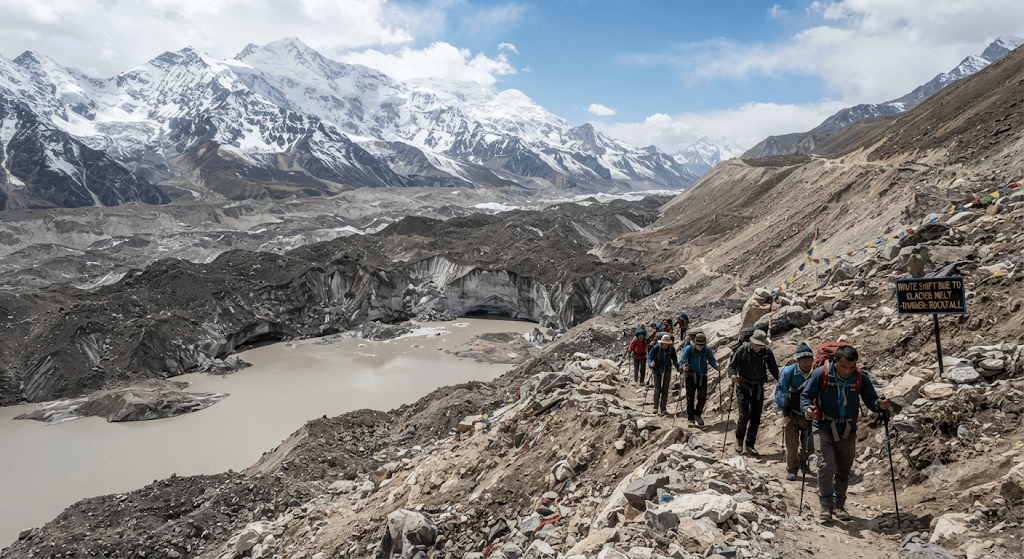
The Gangotri Glacier, source of the Ganga, has retreated more than 1.5 kilometers over the past century, with the pace accelerating in recent decades. Trekkers returning to routes they walked five years ago are describing landscapes that no longer match their memory — snowfields replaced by exposed rock and loose scree.

Sikkim’s Wake-Up Call

In October 2023, a section of frozen moraine above South Lhonak Lake in North Sikkim collapsed, triggering a glacial lake outburst flood. The lake had grown roughly eightfold since 1976 as it filled with meltwater — a slow build that scientists had been monitoring for years before the break. Since then, the permitted trekking endpoint for the popular Goechala trek has been moved back from the original pass to an earlier viewpoint as a safety measure.

Water Sources You Can No Longer Rely On

Streams and springs that trekkers once used as reliable refill points along established trails are now either running dry earlier in the season or flooding unpredictably during the monsoon. Guides across the region report having to rebuild their mental maps of where water actually is, season by season.

What This Means If You’re Planning a Trek

Routes considered fixed for decades are now being reassessed every single season by local operators. High-altitude camps are being relocated, permitted endpoints are shifting, and “the trail I did last year” is no longer a safe assumption. Booking with operators who actively track these changes — rather than running the same fixed itinerary every year — matters more now than it used to.

Bottom Line

Himalayan trekking isn’t disappearing, but the version of it built on fixed, unchanging trails is. The mountains are rewriting their own maps, and trekkers need to travel with that reality in mind.

The Rise of Eco-Friendly Period Products in Indian Villages

A Problem Hiding in Plain Sight

Disposable sanitary pads don’t biodegrade for decades, and in villages without formal waste management, they’re routinely burned or buried near homes. For years, the environmental cost of periods was rarely discussed alongside the more visible issue of period poverty — but the two problems share a solution.

Cloth Pads Are Having a Comeback

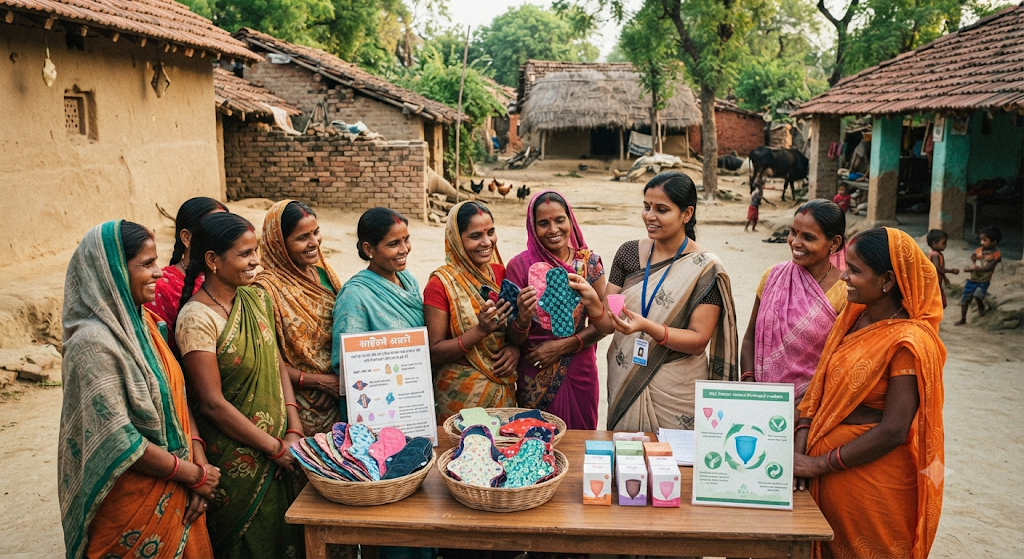
Reusable cloth pads, once dismissed as outdated, are being redesigned by women-led self-help groups and social enterprises with better absorbency, washable liners, and dignity-focused packaging. Several rural manufacturing units now train local women to stitch and sell these pads within their own communities, creating both income and access in one move.

Menstrual Cups Enter the Conversation

Menstrual cups are a newer addition to rural health workshops, though adoption is slower — it requires comfort with the body that many first-time users need guided support to build. NGOs running these workshops often pair the product demo with basic menstrual health education, since the two barriers (cost and stigma) rarely get addressed separately.

Why the Environmental Angle Matters Here

Framing reusable products purely as “eco-friendly” can miss the point in a village context — the bigger win is often affordability and reduced dependence on shops that may not stock pads reliably. The environmental benefit is real, but it works best as a bonus argument, not the opening one.

Bottom Line

The eco-friendly period movement in rural India isn’t a trend borrowed from urban sustainability circles — it’s a practical answer to cost, access, and waste, built by women for women.