Urban Gardening: Growing Your Own Vegetables in a Small City Home

Growing your own vegetables sounds like something reserved for people with a farm or a sprawling backyard. In reality, a few pots, some sunlight, and a bit of consistency are enough to start — even in a compact city apartment.

Start With What Gets Sunlight

Most vegetables need at least 4-6 hours of direct sunlight. Before choosing what to grow, observe your balcony or window ledge across a day to see where light actually falls — this single factor determines more about your success than almost anything else.

Easiest Vegetables for Beginners

Leafy greens like spinach and fenugreek (methi), along with herbs like mint and coriander, grow quickly and forgive beginner mistakes more easily than fruiting vegetables like tomatoes or chillies, which need more consistent care and space.

Containers Don’t Need to Be Fancy

Grow bags, old buckets with drainage holes, or even repurposed plastic containers work just as well as expensive ceramic pots. What matters more is adequate depth for root growth and proper drainage to avoid waterlogging.

Get the Soil Mix Right

A simple mix of garden soil, compost, and coco peat (roughly equal parts) gives most vegetables enough nutrients and drainage to thrive in containers, where nutrients deplete faster than in open ground.

Water Consistently, Not Excessively

Overwatering is one of the most common mistakes in container gardening. Checking whether the top inch of soil is dry before watering again — rather than watering on a fixed daily schedule — prevents root rot and keeps plants healthier.

Compost What You Can

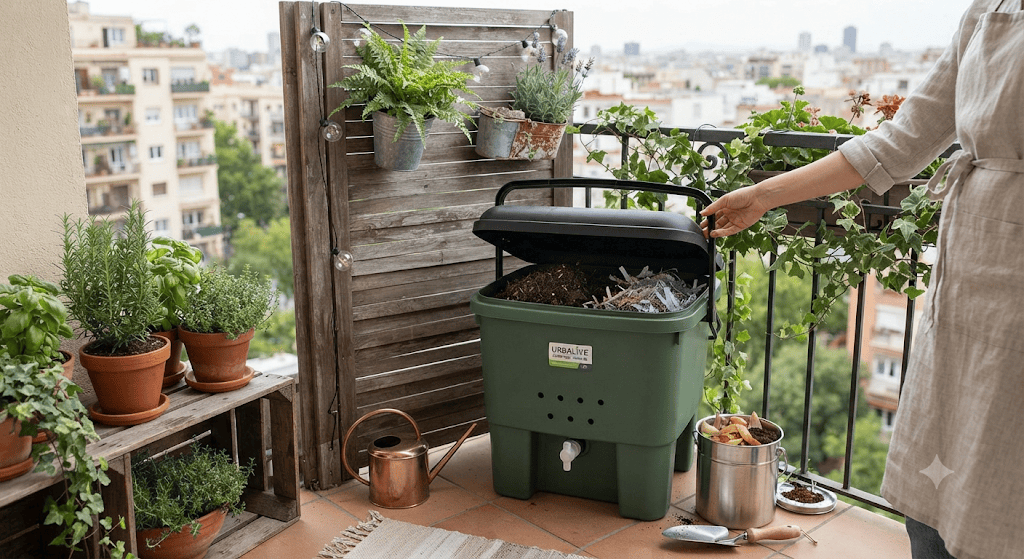
Kitchen scraps composted at home (even a small balcony setup) provide a steady, free nutrient source for your containers, closing the loop between your kitchen waste and your garden’s growth.

Manage Expectations

Urban gardening won’t replace your grocery shopping, and that’s fine — even a small harvest of fresh herbs or greens reduces some dependency on store-bought produce while giving a satisfying, hands-on connection to your food.

Bottom Line

A small city home doesn’t need to rule out growing your own food. A few well-chosen pots, some consistent care, and a little patience are often all it takes to turn an unused balcony corner into a small, functioning garden.

How to Choose Eco-Friendly Homestays While Booking Online

Booking platforms are full of listings tagged “eco-friendly” or “sustainable” — but the label alone doesn’t mean much without digging a little deeper. Here’s how to actually evaluate a homestay before booking, instead of taking the tag at face value.

Look Past the Tag, Into the Description

A genuinely sustainable homestay usually describes specific practices — solar power, rainwater harvesting, composting, local sourcing — rather than just the word “eco-friendly” sitting alone in the listing title. Vague labeling with no specifics is often a sign the tag is more marketing than practice.

Check for Local Ownership and Employment

Homestays run by local families, employing local staff, tend to have a smaller footprint and a more direct positive impact than larger properties built and staffed from outside the region. Listings that mention this directly are usually more transparent about their model.

Read Reviews for Specifics, Not Just Ratings

A high star rating alone doesn’t confirm sustainability. Reviews that mention things like “loved the solar-heated water” or “they compost all kitchen waste” are far more reliable indicators than a generic five-star rating with no detail.

Ask Before You Book

Most hosts are happy to answer direct questions about water sourcing, waste management, or energy use if asked. A quick message before booking — “how do you manage waste and water here?” — often reveals more than the listing itself.

Watch for Over-Construction

A homestay advertised as eco-friendly but built with heavy concrete construction, large manicured lawns, or excessive amenities is often working against the very label it’s using. Simpler, more traditional construction methods usually align better with genuine sustainability.

Prioritize Small Over Large

Smaller, family-run homestays generally have a lighter environmental footprint than larger resort-style “eco” properties, simply due to scale — fewer rooms, less infrastructure, less resource consumption per guest.

Bottom Line

“Eco-friendly” is an easy word to add to a listing and a harder one to actually practice. A little extra reading — and a direct question or two before booking — goes a long way toward finding a stay that’s genuinely living up to the label, not just wearing it.

The Women Behind India’s Handloom Revival

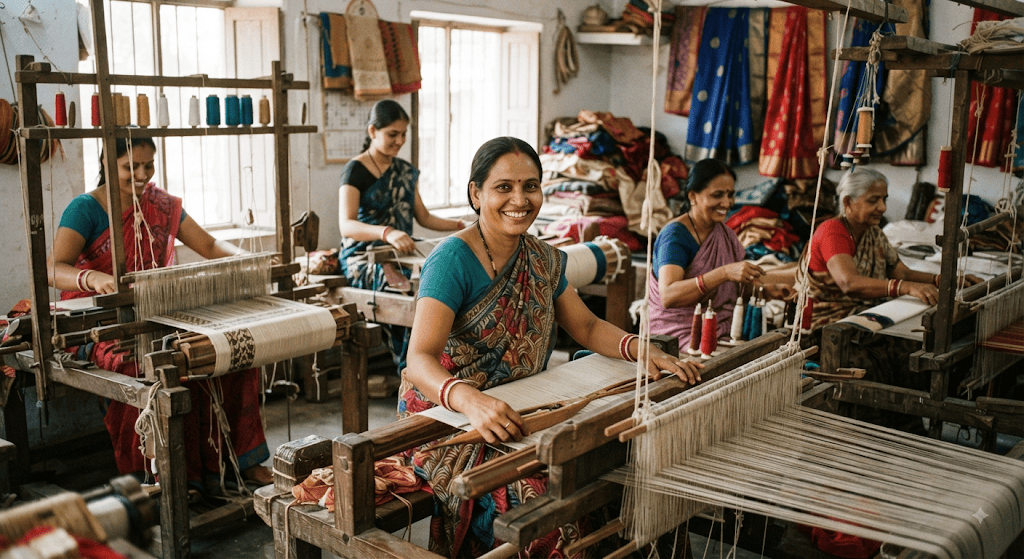
Handloom weaving is one of India’s oldest crafts, and today, much of its quiet revival is being carried forward by women — as weavers, cooperative leaders, and entrepreneurs bringing traditional textiles back into modern relevance.

A Craft Historically Carried by Women

In many weaving communities, spinning, dyeing, and finishing work has traditionally fallen to women, even when the loom itself was operated by men. Today, that role is expanding — more women are running looms directly, not just supporting the process around them.

Cooperatives Changing the Economics

Handloom work has long struggled with unfair pricing, as individual weavers often had little bargaining power against middlemen. Women-led cooperatives are changing that by pooling production, negotiating collectively, and connecting weavers directly to buyers — cutting out layers that used to eat into their earnings.

Reviving Techniques That Were Nearly Lost

Several regional weaving techniques had dwindled to a handful of practitioners, mostly older women holding onto skills with no one to pass them to. Deliberate revival efforts — training programs, design collaborations, documentation projects — are helping some of these near-extinct techniques find a new generation of weavers.

Bringing Handloom Into Contemporary Design

Rather than treating handloom as purely traditional, many women-led initiatives are pairing it with contemporary silhouettes and designs, making the fabric appealing to younger, urban buyers who might otherwise never consider a handwoven piece.

The Economic Stakes

For many rural women, handloom work isn’t a hobby or a cultural footnote — it’s a primary source of income, sometimes the only one available locally. A stronger handloom market directly translates into greater financial independence for the women producing it.

Bottom Line

India’s handloom revival isn’t just a design trend — it’s substantially a women’s economic movement, powered by skill passed down through generations and a growing market willing to pay for what that skill actually represents.

Zero-Waste Travel: Packing Light Without the Plastic

Travel has a strange relationship with plastic — the more we try to pack light and stay convenient, the more disposable items tend to sneak in. A zero-waste approach doesn’t mean packing more; it usually means packing smarter.

Rethink Toiletries First

Mini plastic bottles are the biggest repeat offender in most travel bags. Solid shampoo and soap bars, refillable silicone bottles, and a reusable toothbrush cut out an entire category of single-use plastic without adding any real bulk.

Carry Your Own Water Solution

A reusable bottle paired with a portable purification option (like a filter bottle or purifying tablets) removes the need to keep buying plastic water bottles at every stop — one of the most common sources of travel waste, especially on longer trips.

Pack Reusable Bags, Plural

One tote isn’t enough. A small stash of reusable bags — for laundry, shoes, snacks, or shopping — replaces the plastic bags that hotels, markets, and transport hubs hand out by default.

Bring Your Own Cutlery and Container

A compact cutlery set and a foldable container handle both street food and leftovers without relying on plastic forks or takeaway boxes. It sounds minor, but over a multi-day trip, it adds up to a noticeable reduction in throwaway plastic.

Choose Snacks Without the Wrapping

Buying local, unpackaged snacks — fruit, roasted nuts, bakery items — instead of individually wrapped packets cuts waste and often means fresher, more interesting food along the way.

Say No Before You’re Offered

Many single-use items — extra bags, straws, disposable amenities — are handed out by default, not because they’re needed. A simple “no, thank you” at the point of offering prevents most of this waste before it even starts.

Bottom Line

Zero-waste travel isn’t about carrying more stuff — it’s about carrying a few reusable essentials that quietly replace a dozen disposable habits. The bag ends up lighter, not heavier, and the trip leaves a little less behind.

Solo Women Trekkers of India: Stories From the Trail

Trekking alone is still seen as unusual for women in India — met with a mix of admiration and quiet skepticism. But a growing number of women are quietly rewriting that narrative, one solo trail at a time.

Why More Women Are Choosing to Trek Alone

For many, solo trekking isn’t about avoiding company — it’s about pace, freedom, and not waiting for someone else’s schedule to align. Group treks come with compromises: pace, route, rest stops. Going solo means the mountain answers only to you.

The Extra Planning That Comes With It

Solo women trekkers often plan more meticulously than their male counterparts — researching villages with reliable homestays, checking in regularly with someone back home, and choosing well-trodden trails over completely isolated ones, at least for the first few solo trips.

Communities Making It Easier

Online groups and trekking communities specifically for women have grown significantly, offering everything from trail recommendations to trusted local guide contacts — lowering the barrier for first-timers who want the solo experience without starting from zero information.

What Keeps Them Going Back

Almost every woman who treks solo mentions the same thing eventually: a sense of self-reliance that’s hard to replicate elsewhere. Navigating a trail, managing unexpected weather, and simply being alone with your own thoughts for days builds a kind of confidence that carries over well beyond the mountains.

Bottom Line

Solo trekking isn’t about proving a point — for most women who do it, it’s simply the most honest way to experience a mountain. And every trail walked alone makes the next woman’s first solo trek feel a little less radical.

Composting for Beginners: A Simple Balcony Guide

Composting sounds like something that needs a big backyard or a rural setup — but it’s entirely doable on a city balcony, with nothing more than a small bin and some patience. Here’s a simple starting guide for anyone who wants to turn kitchen waste into something useful instead of trash.

Why Bother Composting on a Balcony

A large share of household waste is organic — vegetable peels, fruit scraps, tea leaves — and most of it ends up in landfills, where it breaks down slowly and releases methane. Composting it at home instead turns that same waste into nutrient-rich soil for your own plants, cutting down what you send out while feeding what you grow.

What You’ll Need

  • A compost bin or container with a lid — a simple plastic bucket, terracotta pot, or a stacked compost bin works fine
  • Some drainage holes drilled into the container if it doesn’t already have any
  • A base layer of dry material like dried leaves, newspaper, or coco peat
  • A small stick or trowel for turning and mixing

What You Can (and Can’t) Compost

Yes: vegetable and fruit peels, tea leaves, coffee grounds, eggshells, dry leaves, paper (non-glossy)

No: cooked food, oily or dairy items, meat, citrus peels in large quantities, diseased plant matter

Sticking to this list keeps the compost from smelling and prevents pest issues, which is the number one reason beginners give up early.

The Balance: Greens and Browns

Compost needs two types of material — “greens” (wet, nitrogen-rich scraps like vegetable peels) and “browns” (dry, carbon-rich material like dried leaves or shredded paper). A rough ratio of one part greens to two or three parts browns keeps the mix balanced, odor-free, and breaking down properly.

The Basic Routine

  1. Layer it — browns at the bottom, then alternate with greens as you add kitchen scraps
  2. Turn it every few days — mixing the pile with a stick or trowel adds air, which speeds up decomposition and prevents smell
  3. Keep it moist, not wet — it should feel like a damp sponge, not soaked
  4. Be patient — balcony composting typically takes 4 to 8 weeks to produce usable compost, depending on conditions

Signs It’s Working (or Not)

A healthy compost pile smells earthy, not rotten. If it smells bad, it usually means too many wet “greens” and not enough dry “browns” — add more dry material and turn it more often. If nothing seems to be breaking down, it may be too dry — add a little water and mix.

What to Do With Finished Compost

Once it looks dark, crumbly, and smells like soil rather than food waste, it’s ready. Mix it into potting soil for your balcony plants, or share it with a neighbor who gardens — either way, waste that would have gone to a landfill is now feeding something living.

Bottom Line

Balcony composting isn’t about doing it perfectly — it’s about doing it consistently. Even a small bin, tucked into a corner of an apartment balcony, can meaningfully cut down kitchen waste while giving your plants something landfill-bound scraps never could.

How Indian Villages Are Leading Grassroots Water Conservation

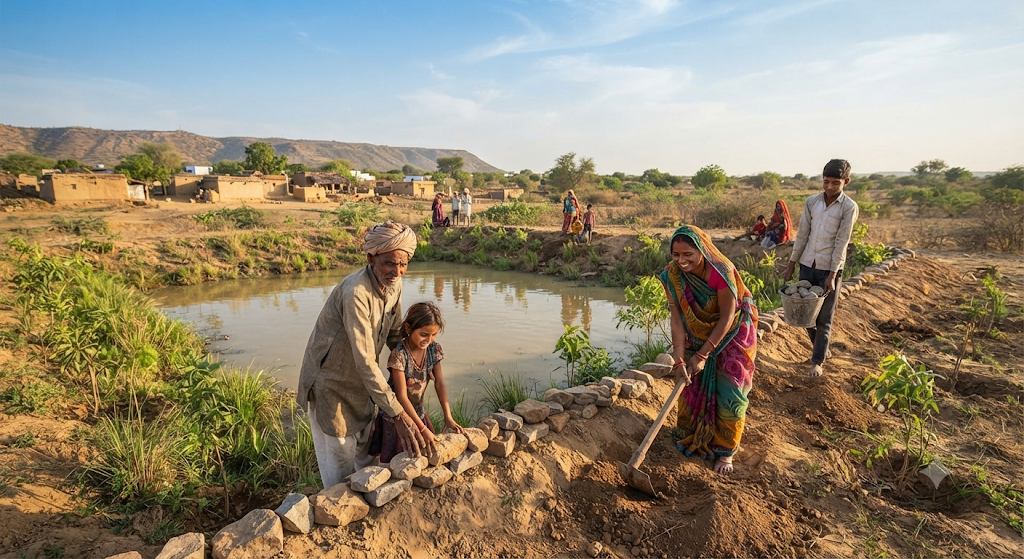
Large dams and canal projects tend to dominate the conversation around water security in India. But some of the most effective, lasting solutions are happening at a much smaller scale — in villages where residents themselves are rebuilding ponds, digging trenches, and reviving traditions that outdate any modern engineering project.

Sukhomajri, Haryana: Where It Started

In the 1970s, the village of Sukhomajri in Haryana faced a familiar crisis — torrential runoff stripping the soil, a silted-up lake, and dry wells. Villagers, working with scientists from the Indian Council of Agricultural Research and the Haryana Forest Department, fenced off slopes from grazing, dug contour trenches, and built small earthen dams to capture rainwater for gravity-fed irrigation. It became one of the earliest and most-cited models of community-led watershed management in the country.

Kothapally, Telangana: Measurable Results

In Kothapally, farmers combined simple methods like contour bunds with better seeds and intercropping. Within five years, groundwater levels rose by up to 45%, and maize yields quadrupled — numbers substantial enough that families began diversifying into chickpeas and vegetables once water and income were secured.

The Arvari Sansad, Rajasthan: A River Parliament

Along the Arvari River, 70 villages formed the Arvari Sansad, or River Parliament — a community governance body that manages water use, prevents over-extraction, and resolves disputes without waiting on government intervention. It’s a striking example of communities becoming the direct guardians of a shared water resource, rather than relying on external authorities.

Jakhni, Uttar Pradesh: A Model That Spread

In the drought-affected Bundelkhand region, Jakhni village became known for building bunds, desilting wells, and constructing new ponds. Its success was significant enough that district officials later used it as a template, redirecting available funds to replicate the same model across the wider region.

Tamil Nadu’s Kudimaramathu: Reviving Ancient Systems

Rather than build something new, the Kudimaramathu scheme in Tamil Nadu revived centuries-old irrigation tanks through public participation. Farmers, engineers, and local youth worked together to desilt tanks, repair sluices, and clear catchments — rejuvenating thousands of hectares of farmland across drought-hit districts.

Why Grassroots Models Work

These efforts share a common thread: they’re decentralized. Instead of concentrating water storage and distribution in a single large point, community-led catchment management spreads it across many small, locally-managed structures — ponds, bunds, and trenches that villagers themselves maintain and have a direct stake in protecting.

Bottom Line

Water conservation in India isn’t only a policy conversation happening in government offices. In villages across Haryana, Telangana, Rajasthan, Uttar Pradesh, and Tamil Nadu, it’s already being lived out — often led by the same communities who stand to lose the most if it fails.

The Environmental Cost of “Fast Beauty” (Skincare & Makeup Waste)

Fast fashion gets most of the criticism, but the beauty industry runs on a nearly identical model — cheap, frequently replaced products, endless new launches, and packaging designed to be thrown away, not reused. “Fast beauty” is the quieter cousin of fast fashion, and its environmental footprint deserves just as much attention.

The Packaging Problem

Skincare and makeup packaging is notoriously hard to recycle. Small plastic components, mixed materials (like a plastic tube with a metal cap), and leftover product residue mean most beauty packaging never actually makes it through standard recycling systems, even when it carries a recycling symbol.

The “Empties” Culture

Social media has turned finishing a product into content — “empties” videos and hauls celebrate rapid consumption as a lifestyle. This normalizes buying and discarding at a pace that has little to do with actual need, driven more by trend cycles than genuinely running out of something.

Ingredients Have a Footprint Too

Beyond packaging, many beauty ingredients carry their own environmental cost — palm oil linked to deforestation, mica linked to unregulated mining, and synthetic microbeads that persist in waterways long after they’re washed down the drain.

Expiry-Driven Waste

Skincare and makeup have shorter shelf lives than most products people own, and much of what’s purchased is never fully used before it expires or goes out of trend. Half-used products piling up in drawers is its own quiet form of waste.

What a Lighter Beauty Routine Looks Like

  • Buy what you’ll actually finish, not what’s trending this week
  • Choose multi-use products over single-purpose items that duplicate what you already own
  • Look for refillable packaging, which is slowly becoming more available from larger brands
  • Support brands with take-back or recycling programs, where empties are collected and properly processed
  • Resist the urge to constantly rotate — a smaller, well-used collection beats a large, half-finished one

Bottom Line

Beauty products aren’t going away, and they don’t need to. But the pace at which they’re bought, used, and discarded is where the real environmental cost lies. A slower, more intentional approach to skincare and makeup doesn’t mean giving anything up — it just means using what you already have a little more fully before reaching for the next thing.

What I Wish I Knew Before My First Trek

Every first-time trekker imagines the trail before actually walking it — and almost always gets a few things wrong. It’s not about lacking fitness or gear; it’s the small, practical lessons that only show up once you’re actually on the mountain. Here’s what tends to surprise most people the first time around.

Fitness Isn’t the Same as Trek-Readiness

Being generally active doesn’t automatically prepare your body for hours of continuous incline, altitude changes, and uneven terrain. Trek-specific training — stairs, weighted walks, longer walking sessions — matters far more than general gym fitness.

Breaking In Shoes Is Non-Negotiable

New trekking shoes worn for the first time on the trail is one of the most common rookie mistakes. Blisters that seem minor on day one can derail an entire trek by day two. Shoes need to be worn and walked in well before the actual trip.

Layering Beats Bulk

Carrying one heavy jacket “just in case” is less effective than multiple thin layers. Weather on a trek can shift quickly — layers let you adjust in minutes instead of overheating or freezing for hours.

Pace Yourself, Not the Group

New trekkers often try to match the pace of fitter or more experienced people in the group, which leads to early exhaustion. A slow, steady pace almost always outperforms a fast start followed by a forced crawl.

Altitude Sickness Doesn’t Care About Fitness Level

Even strong, fit trekkers can be hit by altitude sickness, since it’s about acclimatization, not stamina. Ignoring early symptoms like headaches or nausea, hoping they’ll pass, is a mistake that can escalate quickly.

Pack Less Than You Think You Need

First-time trekkers tend to overpack “just in case” items that never get used, while underestimating how much extra weight slows them down. A tighter, well-thought-out pack beats a heavier “prepared for everything” one.

The Silence Is the Real Reward

No amount of research prepares you for how different the mountains feel in person — the quiet, the scale, the disconnect from everyday noise. It’s usually not the summit photo that stays with people, but that unexpected stillness along the way.

Bottom Line

A first trek always teaches more than any blog or packing list can. But knowing what’s coming — the blisters, the pacing mistakes, the altitude surprises — makes that first trail a little less overwhelming, and a lot more enjoyable.

Women-Owned Cafes and Homestays Worth Supporting on Your Next Trip

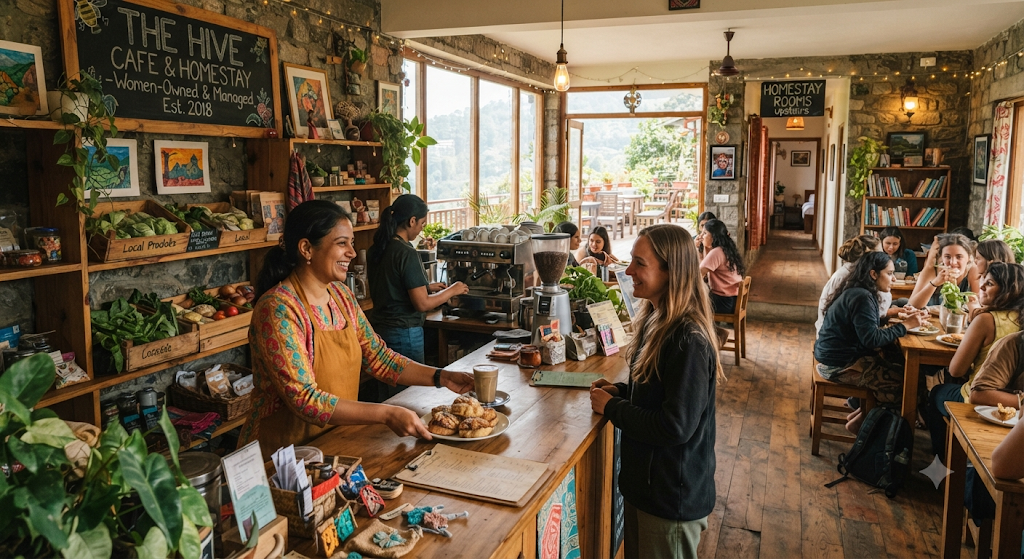
Every trip involves dozens of small spending decisions — where to eat, where to stay, whose business gets your money. Most of these choices are made on convenience alone. But a growing number of travelers are starting to ask one more question: who actually owns this place? Seeking out women-owned cafes and homestays is a small shift that adds up to real support.

Why It Matters

Women entrepreneurs, especially in hospitality and food service, often face harder paths to funding, land ownership, and business credit than their male counterparts. A homestay or café run by a woman — particularly in smaller towns or rural areas — frequently represents not just a business, but a hard-won foothold in local economic life. Choosing to spend there is a direct, tangible way to back that effort.

What These Places Often Offer

Women-run homestays in particular tend to lean into hospitality that feels personal rather than transactional — home-cooked meals, local recipes passed down through family, and a level of care that larger commercial stays rarely replicate. Cafés run by women often double as community spaces, sometimes hiring other local women and reinvesting in the neighborhood around them.

How to Find Them While Traveling

  • Ask locally, not just online. Tourism boards and local women’s self-help groups often know of homestays that never make it onto big booking platforms.
  • Look for cooperative and self-help group listings. Many regions have women-run hospitality collectives, especially in rural and hill areas, that list multiple homestays together.
  • Check reviews for ownership mentions. Guests often note “run by [name] and her family” — a good sign of a woman-led stay.
  • Support cafés that hire visibly. A café that trains and employs local women, not just serves good coffee, extends the impact further.

Beyond the Trip

Supporting women-owned spaces while traveling isn’t just a nice gesture — it directly channels tourist spending into hands that often see the least of it. It’s a small, deliberate choice that turns an ordinary trip into something with a slightly wider impact.